
How to Paint Watercolor Balloons That Actually Look Like They’re Floating Off the Page
How to Paint Watercolor Balloons That Actually Look Like They’re Floating Off the Page
Contents
- How to Paint Watercolor Balloons That Actually Look Like They’re Floating Off the Page
- Why Everyone’s Obsessed With Painting Balloons
- Gathering Your Supplies Without Breaking the Bank
- The Step-by-Step Process That Actually Works
- Step 1: Sketch Without Overthinking It
- Tips for sketching:
- Step 2: The Magic of the Light Wash
- How to create the perfect base wash:
- Step 3: Adding Depth While Everything’s Still Wet
- The technique that makes balloons look three-dimensional:
- Step 4: The Waiting Game Nobody Talks About
- Step 5: Adding Strings That Look Like They Belong
- How to paint strings that don’t look like weird worms:
- Step 6: Optional Details That Make People Think You’re a Professional
- Details that elevate your balloon painting:
Watercolor balloons have been showing up everywhere lately—from handmade birthday cards tucked into envelopes to those Pinterest-perfect nursery walls that make you wonder if you’re creative enough to be a parent.
I started painting these cheerful orbs about three years ago when my niece’s birthday card budget got completely out of hand.
Seven dollars for a card that someone reads for thirty seconds?
No thanks.
Now I paint my own, and people actually keep them.
Why Everyone’s Obsessed With Painting Balloons
Here’s the thing about watercolor balloons: they’re deceptively simple.
They look impressive enough that people think you spent hours hunched over your kitchen table, but honestly? You can knock out a whole bouquet in about twenty minutes once you get the hang of it.
The technique teaches you everything you need to know about watercolor without making you feel like you’re back in high school art class.
What makes them perfect for beginners:
- Mistakes look intentional (happy accidents, as Bob Ross would say)
- No pressure to make them perfectly round—balloons in real life aren’t perfect either
- You learn color mixing without a boring color wheel lecture
- Instant gratification—you’ll have something frame-worthy in one session
Gathering Your Supplies Without Breaking the Bank
I’m not going to tell you to buy a hundred-dollar watercolor set when you’re just starting out.
That’s ridiculous.
You need maybe five things, and three of them you probably already own.
The essential shopping list:
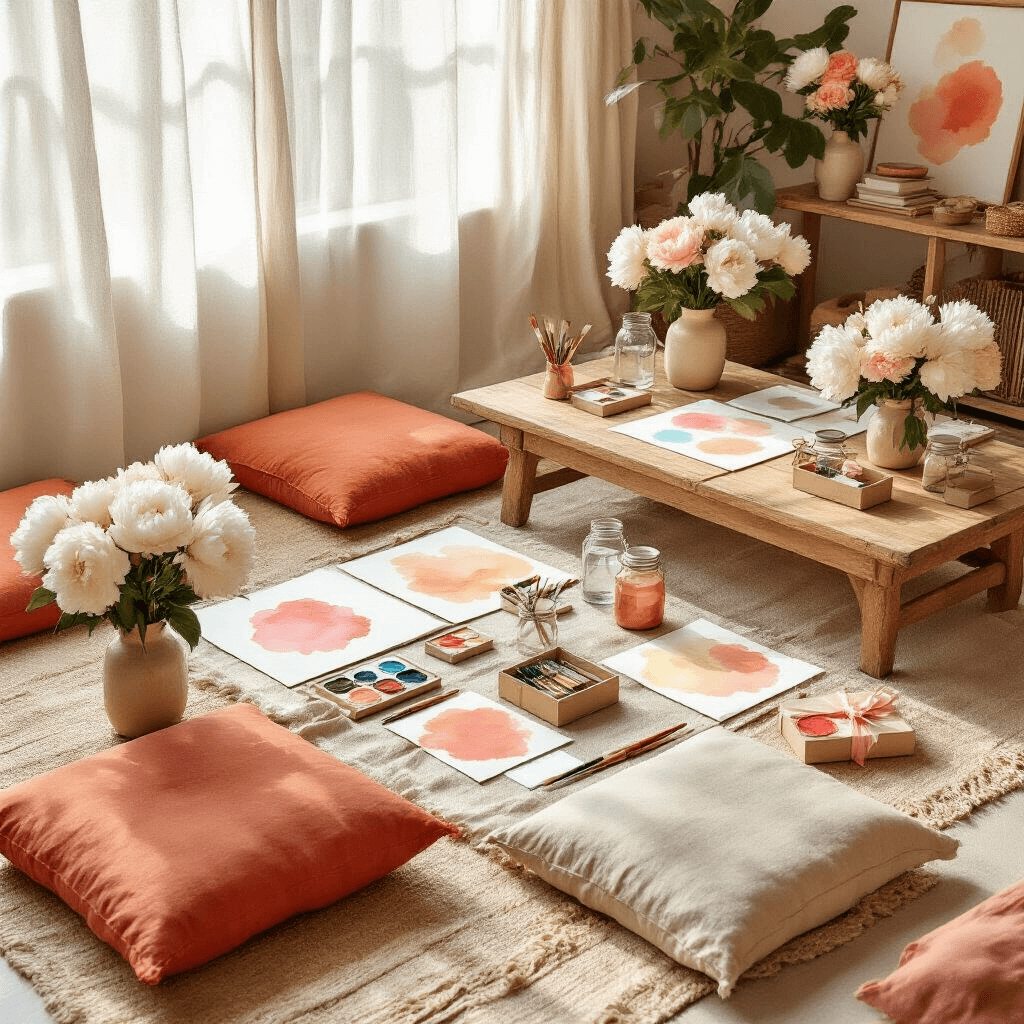
- Watercolor paint set with at least primary colors (Cadmium Red, Cadmium Yellow, Ultramarine Blue)
- Watercolor paper that can handle wet paint without turning into soggy cereal (140lb weight minimum)
- Watercolor brush set including a size 8 round brush and a liner brush
- Two jars of clean water (one for rinsing, one for clean water)
- Paper towels or an old rag
I learned the hard way that regular printer paper turns into a disaster when you add water.
My first attempt looked like something a kindergartener brought home on a rainy day.
Spend the extra few dollars on proper watercolor paper pad and thank me later.
The Step-by-Step Process That Actually Works
Forget those tutorials that skip over the messy middle parts.
I’m giving you everything, including the bits where things go wrong.
Step 1: Sketch Without Overthinking It
Grab a pencil and draw balloon shapes.
They should overlap because that’s what creates visual interest.
Tips for sketching:
- Make them different sizes (variety keeps the eye moving)
- Place them at varying heights like they’re actually floating
- Don’t worry about erasing perfectly—watercolor is forgiving
- Add a tiny oval at the bottom of each balloon for the tied part
I used to stress about making perfect circles until I realized that real balloons aren’t perfect either.
They’re squishy and weird-shaped and that’s what makes them charming.
Step 2: The Magic of the Light Wash
This is where beginners usually panic.
You’re going to water down your paint until it looks almost transparent.
How to create the perfect base wash:
- Load your size 8 brush with water
- Touch it to your paint color
- Test it on scrap paper—it should look whisper-light
- Paint the entire balloon shape quickly and confidently
- Don’t go back over it while it’s drying (I know it’s tempting, but resist)
The first time I did this, I thought I’d made it too light.
I hadn’t.
Trust the process.
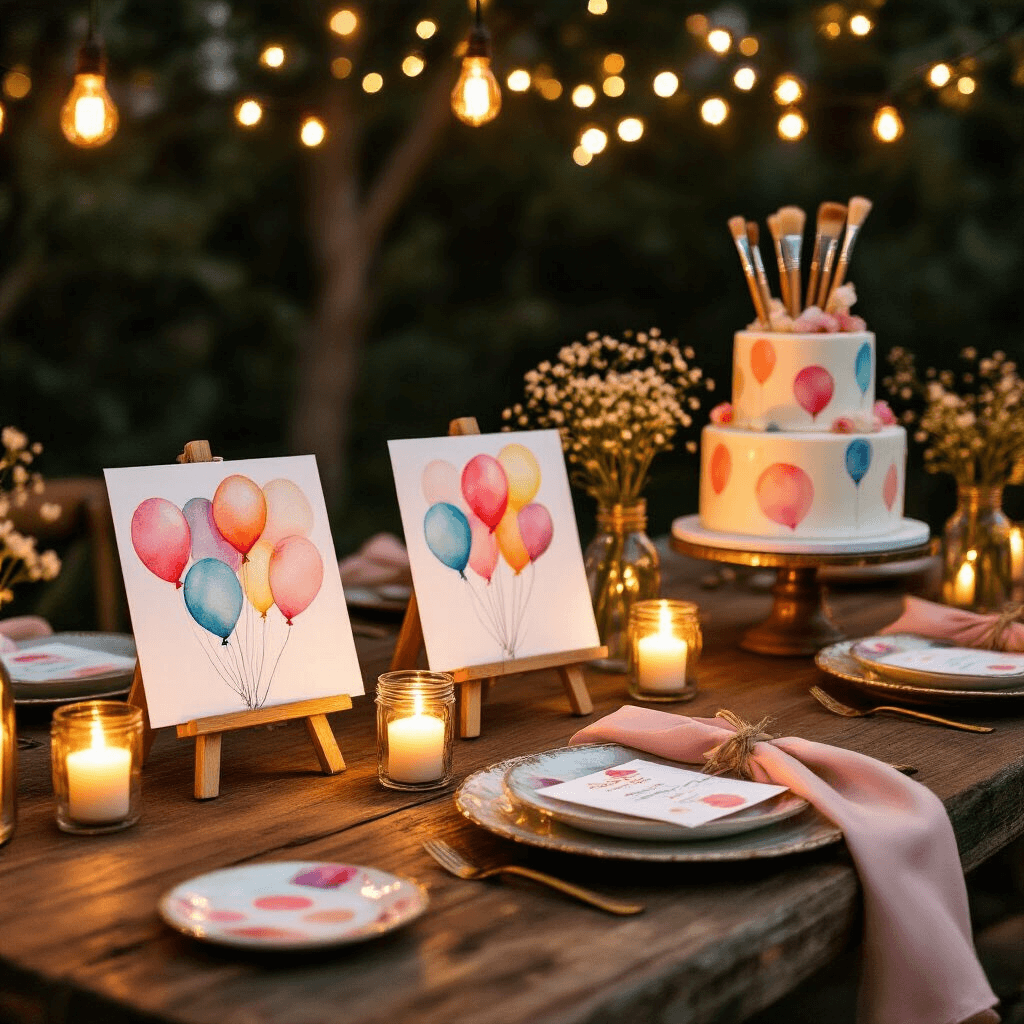
Step 3: Adding Depth While Everything’s Still Wet
Here’s where the magic happens.
While that first wash is still glistening wet, you’re going to add concentrated color around the edges.
The technique that makes balloons look three-dimensional:
- Dip your liner brush or the tip of your round brush into less-diluted paint
- Carefully trace around the outer edge of the balloon
- Watch as the color bleeds naturally into the wet wash
- Add a slightly darker shade to the bottom half to create shadow
- Leave the top portion lighter to suggest where light hits
This wet-on-wet technique is what separates amateur watercolor from paintings that make people say “Wow, you made that?”
The colors blend themselves.
You’re just giving them a gentle push in the right direction.
Step 4: The Waiting Game Nobody Talks About
Step away from the painting.
Go make coffee.
Check your phone.
Do literally anything except touch those balloons.
Watercolor needs to dry completely before you add strings, or everything turns muddy.
I’ve ruined more paintings by being impatient than by any actual lack of skill.
Step 5: Adding Strings That Look Like They Belong
Once everything’s bone dry (I’m talking wait-longer-than-you-think-you-should dry), it’s time for strings.
How to paint strings that don’t look like weird worms:
- Use a fine detail brush or liner brush
- Mix paint with less water for a more opaque line
- Paint quick, confident strokes downward
- Vary the string colors—they don’t all need to match the balloons
- Make them slightly curved, not ruler-straight
My strings looked shaky for about a dozen paintings.
That’s normal.
Your hand gets steadier with practice.
Step 6: Optional Details That Make People Think You’re a Professional
These finishing touches take thirty seconds but add so much personality.
Details that elevate your balloon painting:
- Tiny highlights on the top-left of each balloon using white gouache or a white gel pen
- Small oval shapes