
How to Make DIY Hot Air Balloons That Actually Fly (Without Burning Down Your House)
How to Make DIY Hot Air Balloons That Actually Fly (Without Burning Down Your House)
Contents
DIY hot air balloons are one of those projects that sound complicated but honestly aren’t.
I remember the first time I tried making one with my kids. We were stuck indoors on a rainy Saturday, bored out of our minds, when I stumbled across this idea online. Thirty minutes later, we were watching our homemade creation float across the living room like some kind of magical trash bag.
My daughter’s face lit up brighter than the candles keeping that thing airborne.
Look, you don’t need an engineering degree or fancy equipment for this. You need stuff you probably already have shoved in a drawer somewhere.

Why Your First Hot Air Balloon Might Fail (And How to Fix It)
Before we dive in, let me save you some frustration.
The biggest mistake people make? Using materials that are too heavy.
I learned this the hard way when my first attempt sat there on the floor like a deflated disappointment. The science is brutally simple—if your balloon and the air inside it weigh more than the same volume of regular air, it’s not going anywhere.
Think of it like trying to make a brick float. Not happening.
The Dead-Simple Birthday Candle Method
This is where I recommend everyone start.
It’s quick, it’s cheap, and if you mess up, you’ve wasted maybe ten minutes and a plastic bag.
What You Actually Need
Forget the shopping list from hell. Here’s what matters:
- Ultra-thin plastic bags (those flimsy produce bags from the grocery store are perfect)
- Birthday candles (grab 3-4 of them)
- Aluminum foil (you’re making a tiny basket)
- Plastic straws or thin wire
- Clear tape or a glue gun
That’s it. No specialty stores required.
Building This Thing Step by Step
I’m going to break this down like you’re five years old. Not because you’re dumb, but because simple instructions actually work.
Step 1: Make Your Frame
Take two straws and cross them to form an X shape. Tape them together in the middle where they meet.
This frame needs to fit inside the opening of your plastic bag without being too tight or too loose. Think Goldilocks here.
Step 2: Create the World’s Tiniest Basket
Tear off a piece of aluminum foil about 4 inches square. Fold up the edges to make a shallow basket shape.
This doesn’t need to win any design awards. It just needs to hold candles without catching fire immediately.
Step 3: Attach Everything Together
Tape your foil basket to the center of your straw frame. Make sure it’s secure because nothing kills the magic like watching your heat source plummet to the ground mid-flight.
Step 4: Connect to Your Balloon
Open up your plastic bag completely. Tape the straw frame to the opening of the bag.
Make sure there are no gaps or holes anywhere. Air leaks are your enemy.
Step 5: Add Your Heat Source
Glue or tape your birthday candles inside the foil basket. Space them out evenly if you’re using multiple candles.
I usually use three or four candles for a standard produce bag.

Launch Time (The Exciting Part)
Here’s where it gets real.
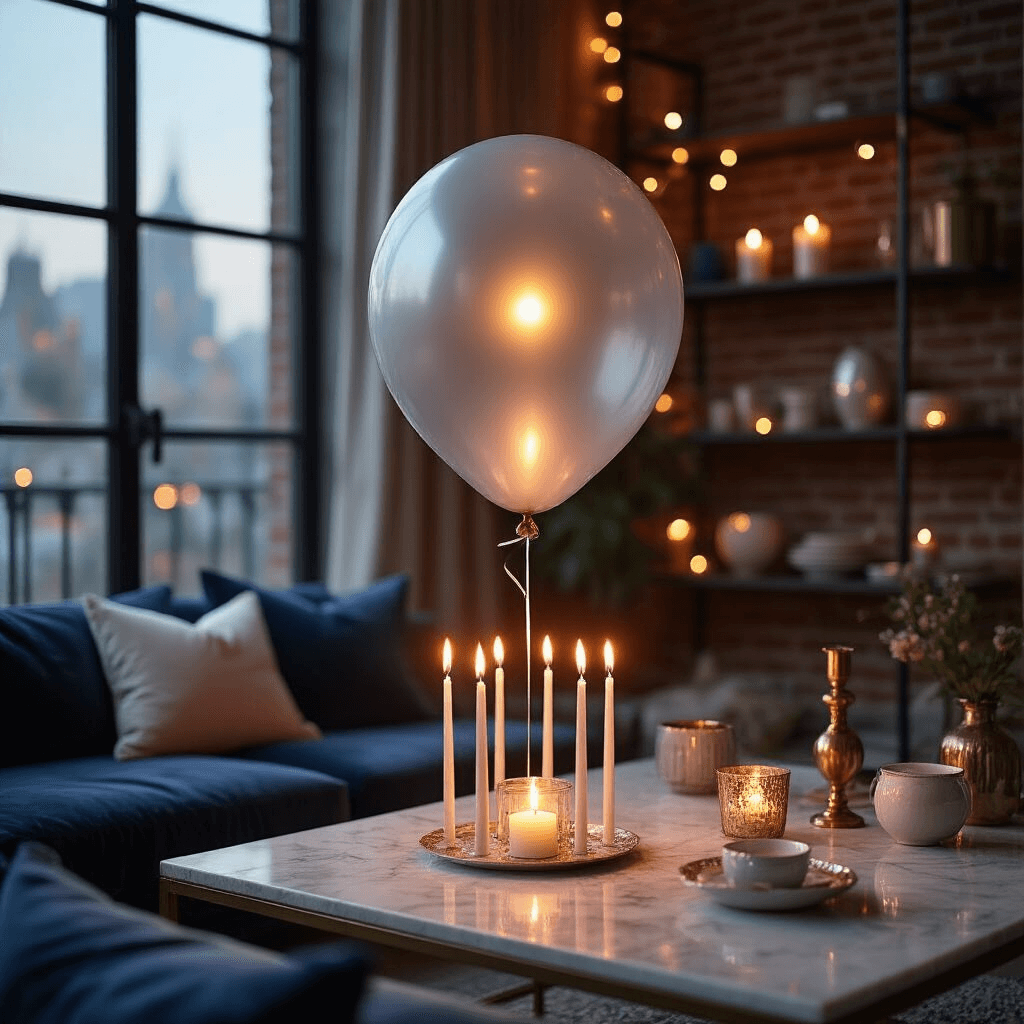
Light your candles and hold the balloon upright with the opening facing down. Keep your hands on the sides of the bag, away from the flames.
Watch as the plastic starts to inflate. You’ll feel it getting lighter in your hands.
After about 45 seconds to a minute, the balloon will want to escape your grip.
Let it go.
Important safety note: Do this outside or in a room with high ceilings and nothing flammable nearby. I cannot stress this enough. Hot air balloons are essentially controlled fire hazards.
The No-Flame Hairdryer Hack
If you’re terrified of fire (valid) or have overly cautious smoke detectors, there’s another way.
I discovered this method after setting off the smoke alarm at 9 PM on a school night. My neighbors loved that.
What Makes This Different
Instead of candles, you use a hair dryer to heat the air.
Grab a lightweight plastic grocery bag. Fold the bottom closed and secure it with a few paperclips.
Hold the bag upside down so the closed bottom is now at the top. Point your hairdryer (set to high heat, low fan speed) into the bag opening.
The bag will inflate and eventually pull away from your hands.
The catch? It doesn’t stay airborne as long as the candle version. Once you remove the heat source, physics takes over pretty quickly.
But for a quick demonstration or indoor experiment, it’s perfect.
Building Giant Tissue Paper Balloons (For Overachievers)
After you’ve successfully launched a few plastic bag balloons, you might get ambitious.
I did.
Tissue paper balloons are stunning when done right. They’re also significantly more work.
What This Actually Involves
You’ll need 20 or more sheets of tissue paper glued together in a specific pattern.
The balloon is made from curved panels called “gores.” Think of an orange with its segments—same concept.
Each gore is cut from tissue paper following a template. You glue them together along the edges to form a balloon shape.
At the bottom opening, you’ll need a wire reinforcement ring to maintain the shape and prevent tearing.
Why I Almost Gave Up Halfway Through
This project took me an entire weekend.
My dining room table looked like a craft store exploded. Tissue paper everywhere. Glue on surfaces that shouldn’t have glue on them.
But when we finally launched it using a small propane burner as the heat source? Absolutely worth it.
The thing soared 30 feet in the air.
Real Talk About Tissue Paper Balloons
These aren’t beginner projects. They require patience, precision, and a propane heat source you can’t use indoors.
If you’re just starting out, stick with the plastic bag method. Save the tissue paper masterpiece for when you’ve got the basics down.