
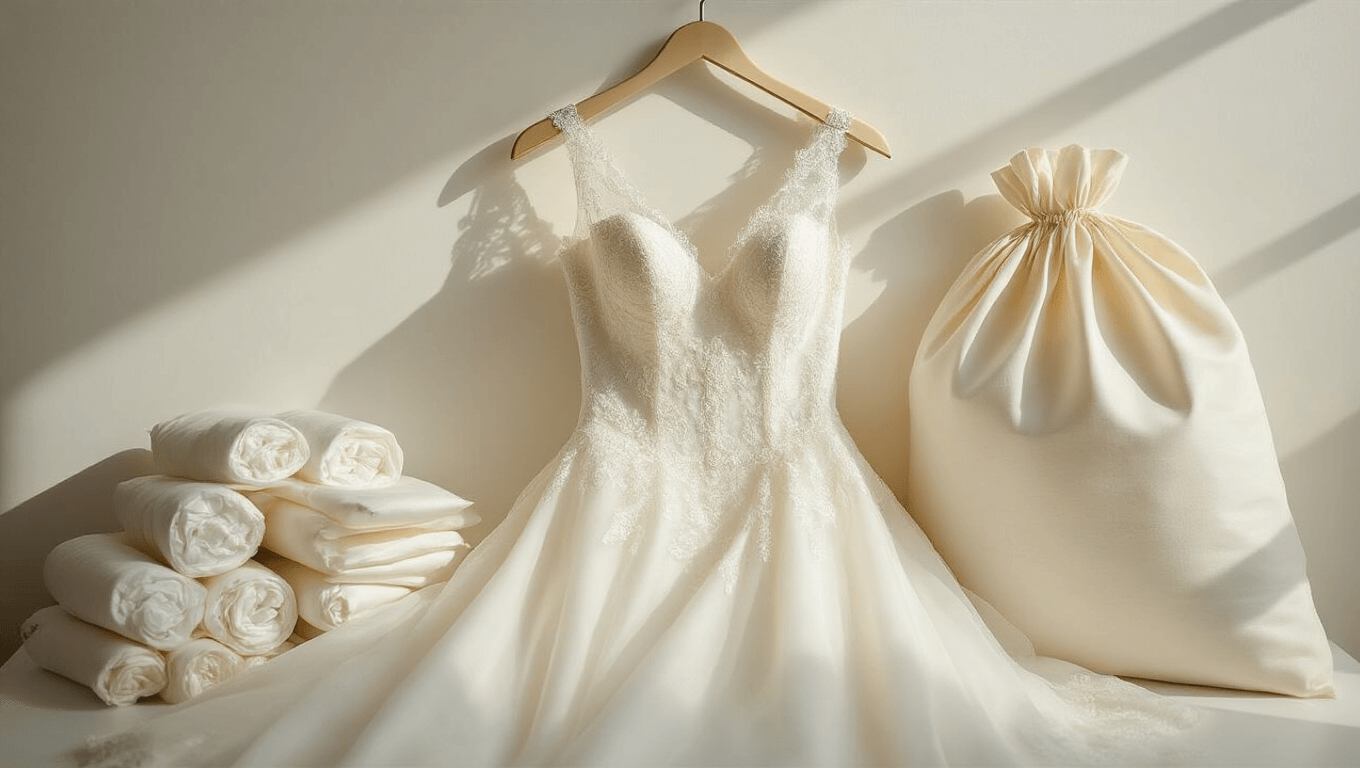
How to Store a Wedding Dress: The Complete Guide to Keeping Your Gown Perfect
Why Wedding Dress Storage Actually Matters
Contents
Okay so here’s the thing. Wedding dresses aren’t like your everyday clothes. They’re made from delicate fabrics like silk, lace, tulle, and satin that can break down over time if they’re not stored correctly. Add in beading, sequins, or embroidery, and you’ve got a garment that needs some serious care. Moisture, sunlight, heat, and even the wrong kind of tissue paper can ruin your dress faster than you’d think. I’ve seen dresses that looked perfect on the wedding day turn yellow or develop weird spots just because they got tossed in a plastic bag in the basement. So yeah, storage matters more than most people realize.
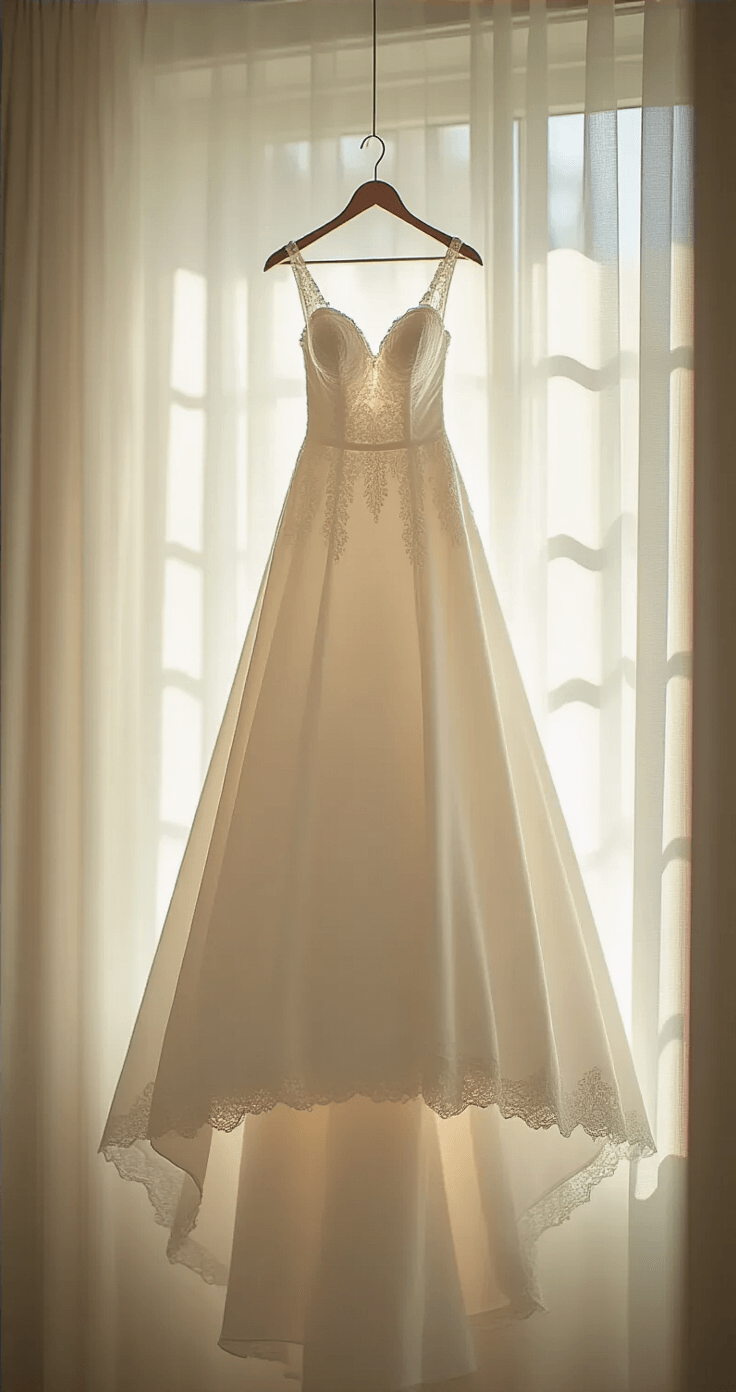
Where Should You Store Your Wedding Dress?
Location is honestly the first thing you need to get right. You want a cool, dry, dark place with stable temperatures. That means inside your home—not in the attic, garage, or basement where temps and humidity can swing all over the place.
Here’s what works best:
- Bedroom closet: This is my top pick because it’s climate-controlled and easy to access.
- Under the bed: If you’re storing the dress flat in a box, this spot works great.
- Spare room closet: As long as it’s temperature-controlled, you’re good.
And here’s what to avoid:
- Attics: Too hot in summer, too cold in winter.
- Basements: Damp and prone to mold.
- Garages: Temperature swings and exposure to fumes from cars or chemicals.
- Anywhere with direct sunlight: UV rays will yellow and weaken fabric fast.
Basically, if you wouldn’t store your favorite sweater there, don’t store your wedding dress there either.
Hanging vs. Laying Flat: What’s Better?
This is one of those debates that comes up all the time, and honestly, both can work depending on your dress.
Laying Flat (My Favorite for Heavy Dresses)
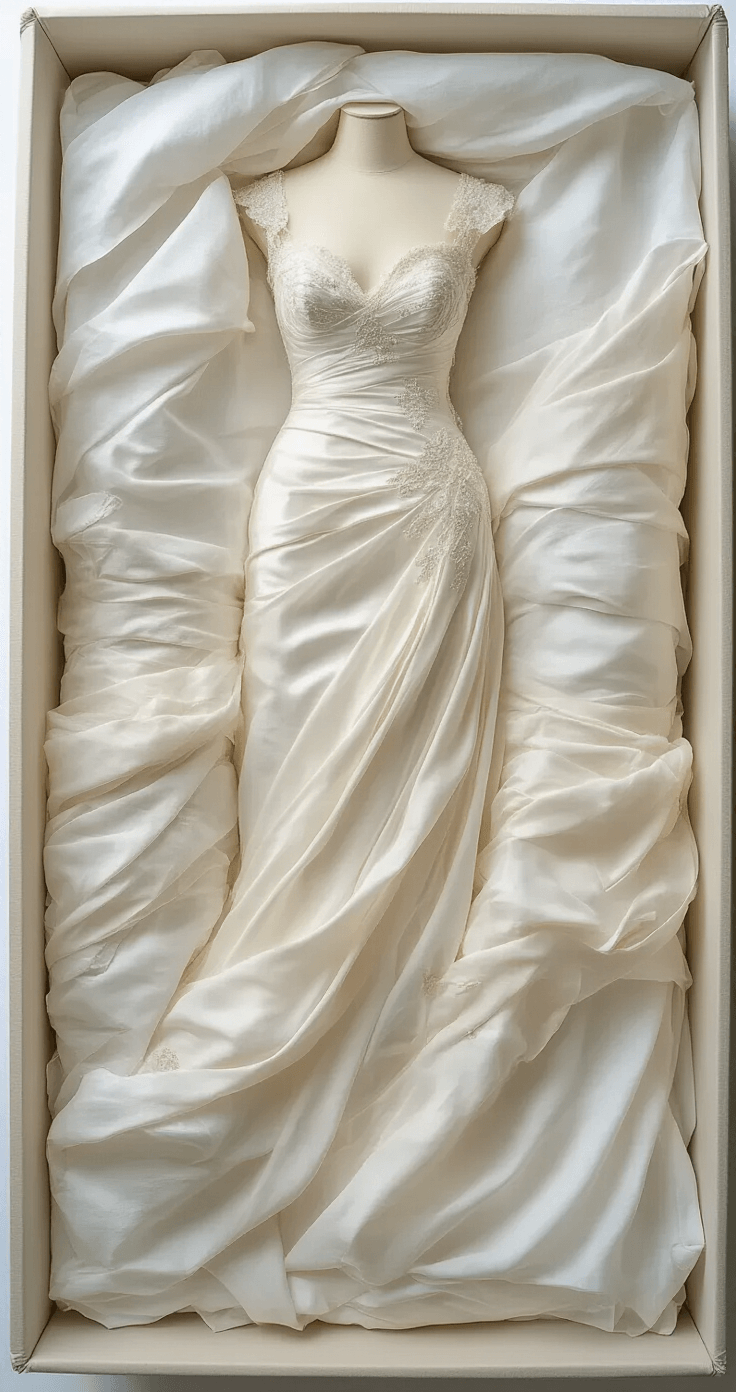
If your dress is heavy or has a ton of beading, laying it flat is the way to go. Wedding dresses are way heavier than regular clothes, and hanging them can put stress on the straps, shoulders, and seams. Over time, that weight can actually stretch or tear the fabric.
Here’s how to do it right:
- Lay the dress on clean white sheets or a clean surface.
- Fold it carefully if you need to (more on that in a sec).
- Place acid-free tissue paper between the folds to cushion the fabric.
- Cover it with another clean sheet or breathable fabric to protect it from dust and light.
You can store it under the bed or in a large acid-free storage box if you want extra protection.
Hanging (Works for Lightweight Dresses)
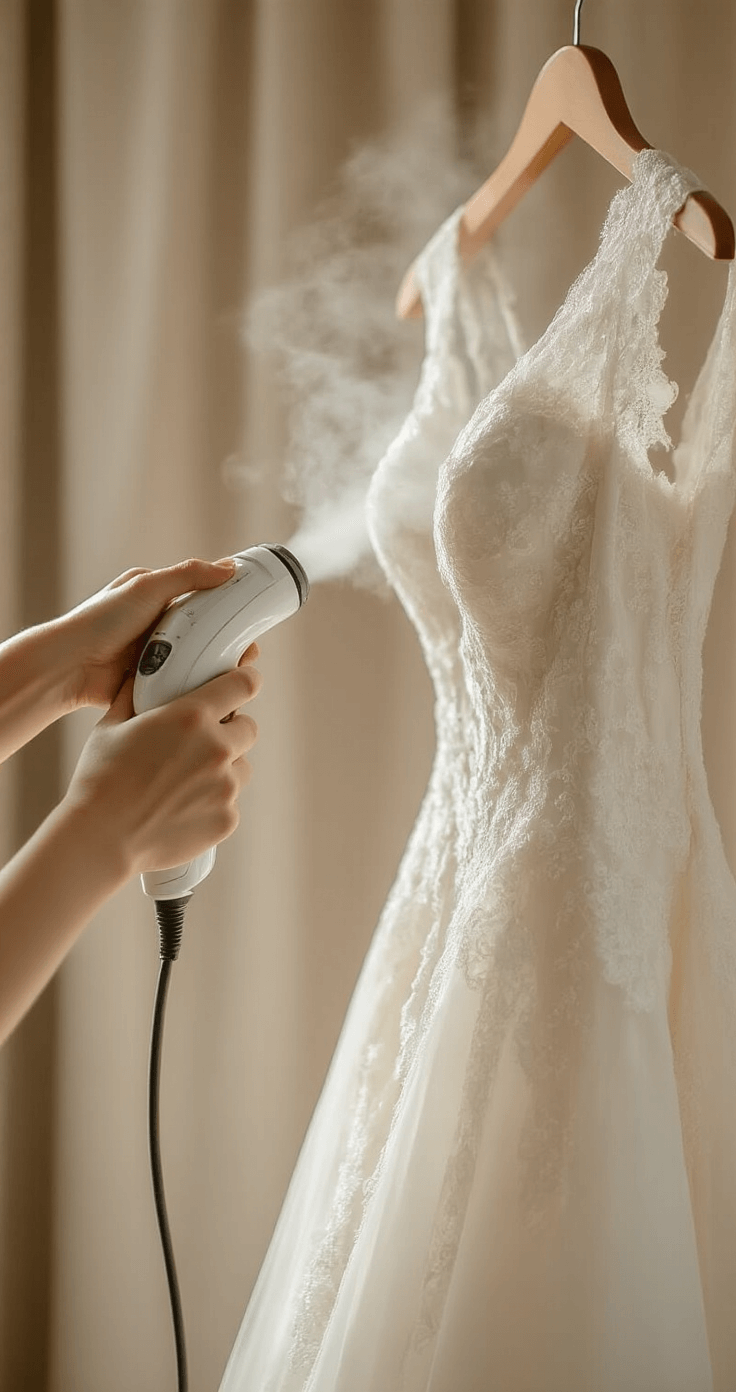
If your dress is lightweight—like a simple sheath or A-line without a ton of embellishments—hanging can work. But you gotta do it the right way.
Use a padded hanger to distribute the weight evenly and avoid stretching the shoulders. Even better, check if your dress has built-in hanger loops at the waist or hips (some designers add these specifically for storage). If it doesn’t, you can actually have a seamstress sew them in, which takes the pressure off the shoulders completely.
Then cover the dress with a breathable fabric garment bag—not plastic. Plastic traps moisture and can release chemicals that damage the fabric over time. A cotton garment bag is perfect because it lets the dress breathe while keeping dust and pests out.

The Right Materials Make All the Difference
I can’t stress this enough: what you store your dress in matters just as much as where you store it.
Acid-Free Tissue Paper
Regular tissue paper has chemicals in it that can actually cause your dress to yellow over time. Acid-free tissue is specially made to be safe for long-term fabric storage.
Use it to:
- Stuff the bodice, sleeves, and any hollow areas to help the dress keep its shape.
- Cushion folds so the fabric doesn’t crease permanently.
- Wrap delicate areas like lace or beading for extra protection.
Breathable Garment Bags or Boxes
If you’re hanging your dress, a breathable garment bag is a must. Cotton or muslin bags work great—they keep dust and bugs out while letting air circulate. If you’re storing it flat, go with an acid-free box designed specifically for wedding dresses. These boxes are big enough to hold the dress without squishing it, and they’re made from materials that won’t damage the fabric.
What NOT to Use
Here’s a quick list of what to avoid:
- Plastic garment bags: They trap moisture and can release harmful chemicals.
- Vacuum-seal bags: These flatten the dress and create wrinkles that are basically impossible to remove.
- Regular cardboard boxes: The cardboard contains acid that can transfer to the fabric.
- Regular tissue paper: Contains chemicals that cause yellowing.

How to Fold a Wedding Dress for Storage
If you’re storing your dress in a box, you’ll need to fold it. I know, it sounds scary, but it’s not as bad as you think. Here’s a simple method:
- Lay the dress flat on a clean surface with the front facing down.
- Fold the train up toward the waist if your dress has one.
- Fold the sides in so the dress forms a long rectangle.
- Place acid-free tissue paper between each fold to cushion the fabric and prevent creasing.
- Fold the dress in half or thirds depending on the size of your box.
- Stuff the bodice and sleeves with more tissue to help them keep their shape.