
White Wedding Decor: How to Create an Elegantly Monochromatic Celebration That Doesn’t Feel Sterile
What Makes White Wedding Decor Actually Work (Beyond Just Looking Boring)
Contents
- What Makes White Wedding Decor Actually Work (Beyond Just Looking Boring)
- Building Your White Floral Foundation (Because Plain Roses Aren’t Cutting It)
- The Centerpiece Strategy That Actually Creates Visual Interest
- Lighting: The Secret Weapon That Changes Everything
- Creating Statement Pieces That Make Your Venue Feel Designed
Here’s the truth that nobody tells you: white wedding decorations rely entirely on your ability to create visual interest without relying on bold colors.
This sounds scarier than it actually is.
The moment you start thinking about texture, dimension, and layering instead of “what color should this be,” everything clicks into place.
I learned this the hard way while planning my sister’s wedding three years ago.
She wanted all white.
I panicked.
Then I started pulling together florals of different shapes, mixing matte with shiny surfaces, and introducing varying heights across the venue.
Suddenly, the white palette became the elegant backdrop we’d envisioned instead of a clinical nightmare.
Here’s what you absolutely need to understand about white wedding decor:
- It’s not about matching perfectly — it’s about contrasting undertones and finishes
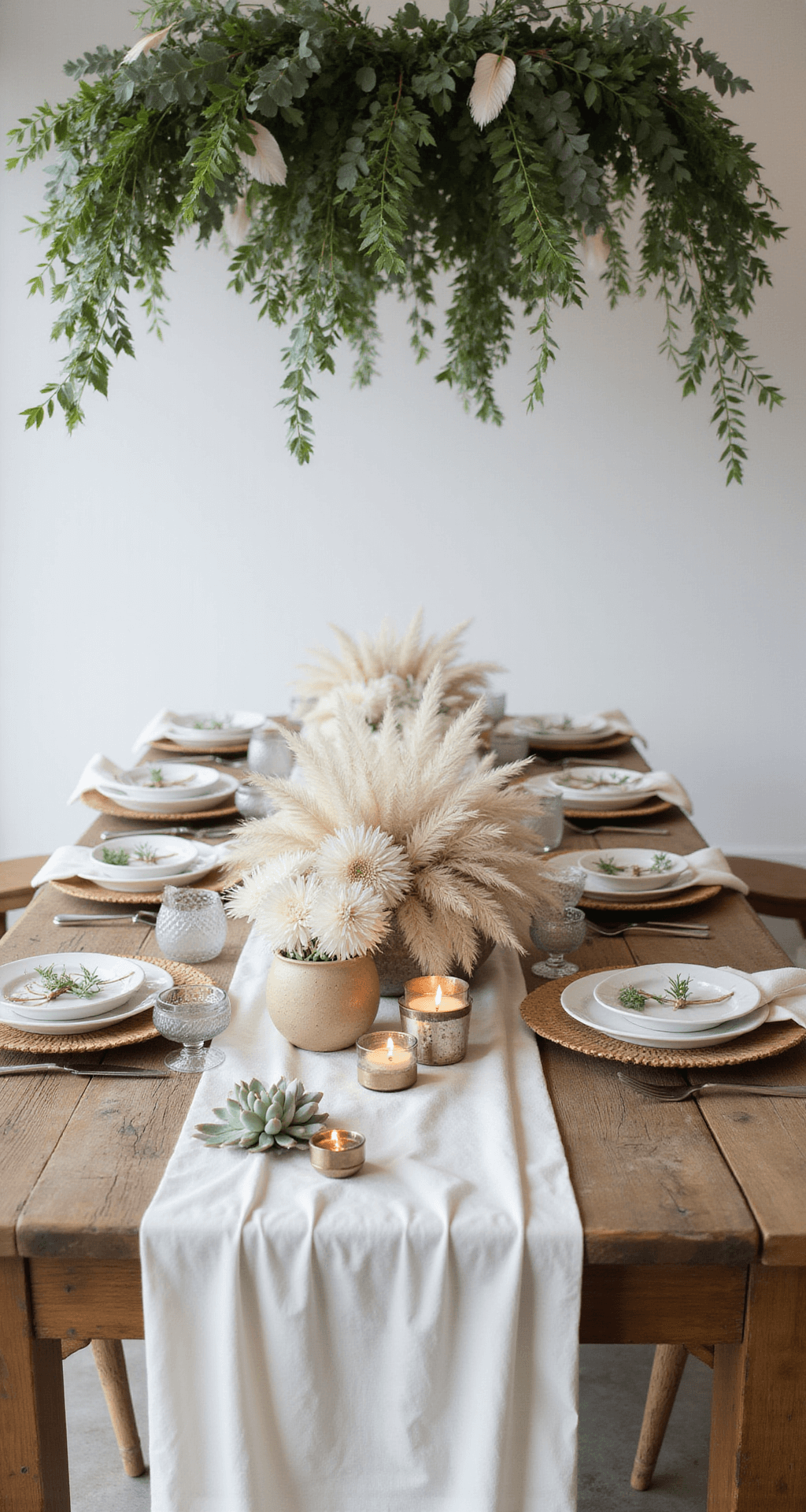
- Texture is everything — smooth surfaces need to sit next to rough, fluffy, and dimensional elements
- Height variation prevents flatness — short arrangements next to tall ones creates visual rhythm
- Lighting transforms the entire vibe — from warm and intimate to cool and modern, depending on how you light it
- Metallic accents prevent washed-out feeling — gold, silver, and copper add richness without introducing color
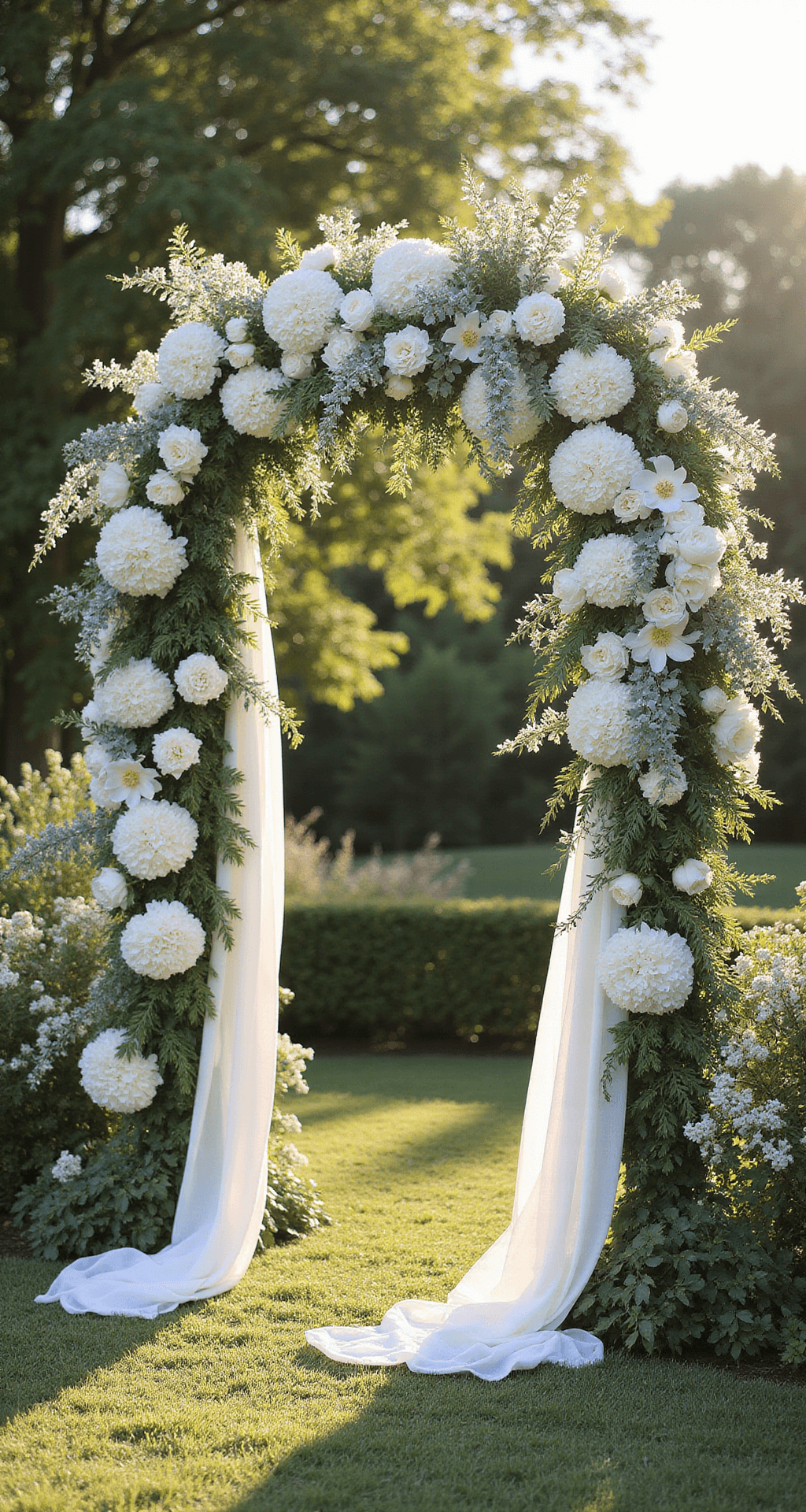
Building Your White Floral Foundation (Because Plain Roses Aren’t Cutting It)
Let’s talk flowers because this is where most people get it wrong.
They think “white wedding” means ordering a bunch of white roses and calling it done.
That approach will leave you with arrangements that look like a funeral setup from a 1980s movie.
Instead, think of building a bouquet of white flower varieties the same way a musician builds a song — you need different instruments playing together to create something interesting.
The flowers that actually work for white wedding decor:
- White hydrangeas — these fluffy, full flowers are your textural anchor
- White roses — go for garden roses over florist roses; they’re fuller and more romantic-looking
- Ranunculus — delicate, layered petals that add intricate detail
- Peonies — if you’re doing spring or early summer, these are absolute game-changers for texture
- White orchids — tall, architectural, modern-feeling
- Gardenias — fragrant and surprisingly dimensional
- Lilies of the valley — tiny, delicate, adds sophistication
- Anemones — modern feel with that black center creating subtle contrast
Here’s what works in practice: pair your fluffy hydrangeas with something architectural like orchids.
Add ranunculus for delicate detail.
Include some greenery with interesting texture — not just filler greenery, but eucalyptus with silver undertones or white-dusted dusty miller.
This combination already looks intentional and expensive instead of “whatever was on sale.”
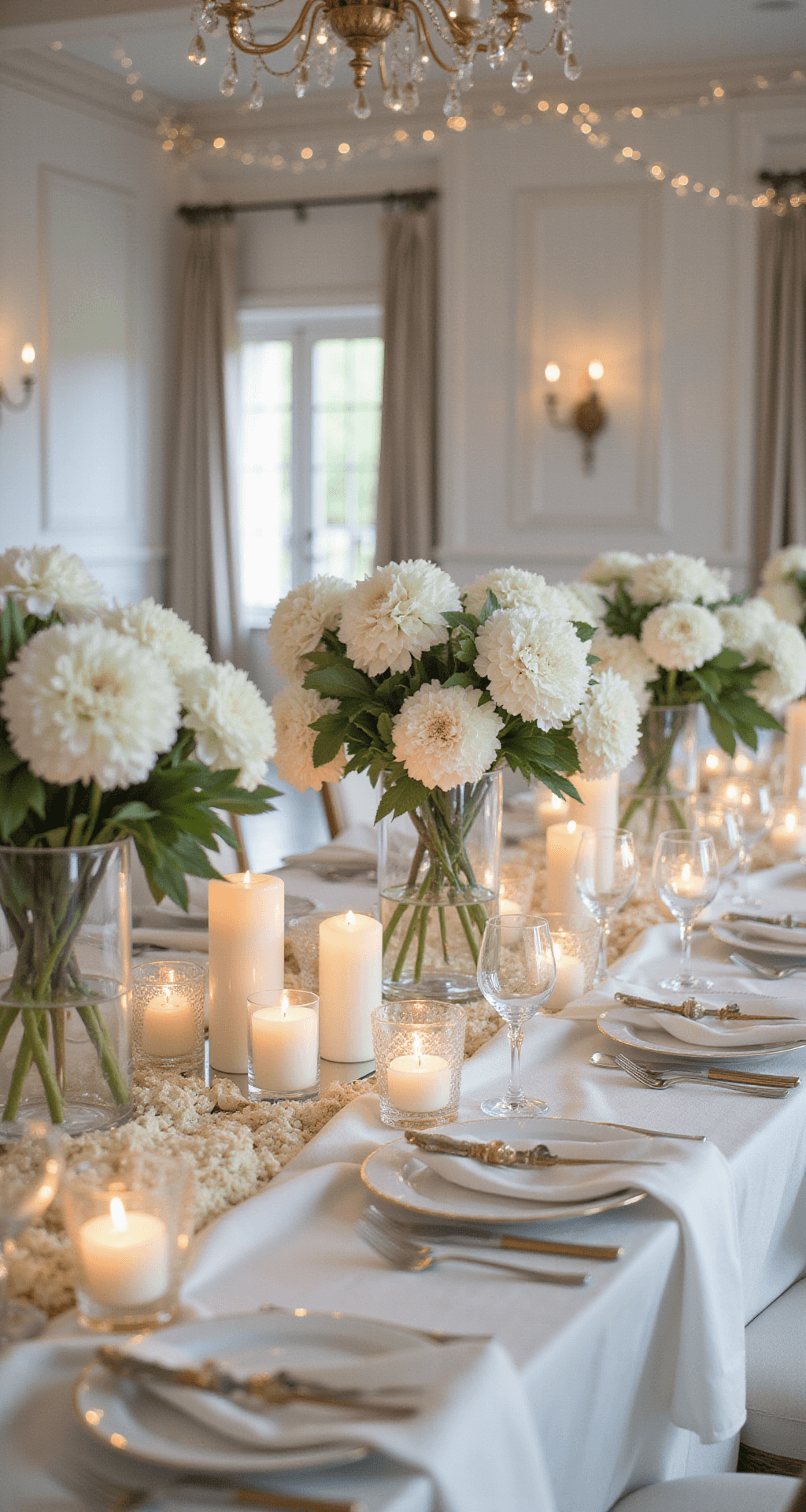
The Centerpiece Strategy That Actually Creates Visual Interest
Your reception tables are where guests spend the most time, which means your white wedding centerpieces need to pull serious weight.
This is not the place to get lazy.
A basic white flower arrangement in a clear vase?
That’s the starting point, not the finish line.
Building a centerpiece that actually works:
Start with a quality clear glass vase or vessel — this is your canvas.
Add your floral mix, keeping it lower than eye level so guests can actually talk across the table without playing floral peek-a-boo.
Introduce textured elements around the base:
- Pillar candles in varying heights (place them on a mirrored surface for added reflection)
- Cream or ivory ribbon wrapped around the vase
- Scattered white stones or faux pearls
- Small metallic gold or silver votives
- Eucalyptus sprigs placed casually around the arrangement
The magic happens when you stop thinking of this as “a centerpiece” and start thinking of it as a small tableau.
Each table becomes a mini-installation rather than just a flower arrangement with a candle next to it.
Lighting: The Secret Weapon That Changes Everything
Here’s something I didn’t understand until I actually planned an event: lighting is basically free redecoration throughout the night.
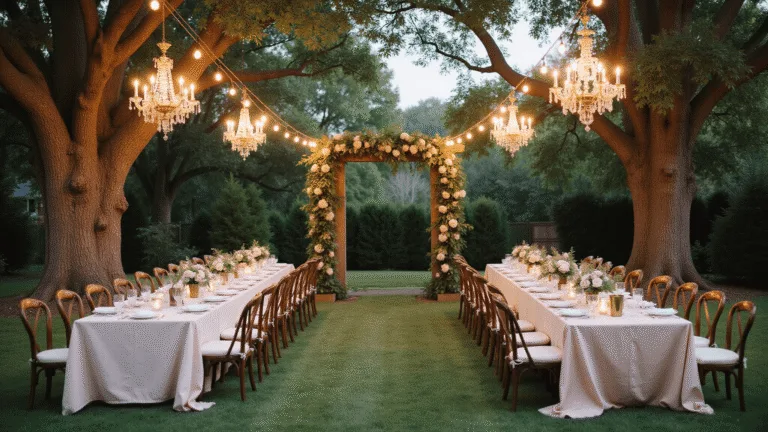
The same white floral arch looks romantic and dreamy under warm, dim lighting.
Under bright overhead lights, it looks clinical.
Under cool blue uplighting, it becomes modern and sophisticated.
You’re literally controlling the entire mood by adjusting how light hits your white decor.
The lighting approach that works:
- Warm uplighting on white flowers — creates that romantic, luxury hotel vibe
- White string lights or fairy lights — adds softness and romance, especially for evening receptions
- Candlelight as primary lighting — if you’re going for intimate and elegant, rely heavily on pillar candles and votives
- Spotlights on key installations — if you have a statement floral arch or backdrop, light it specifically to draw attention
- Avoiding harsh overhead lighting — seriously, turn it off if possible
The difference between a mediocre white wedding and a stunning one often comes down to lighting more than anything else.
I’ve seen the same venue transform completely based on how they lit the space.
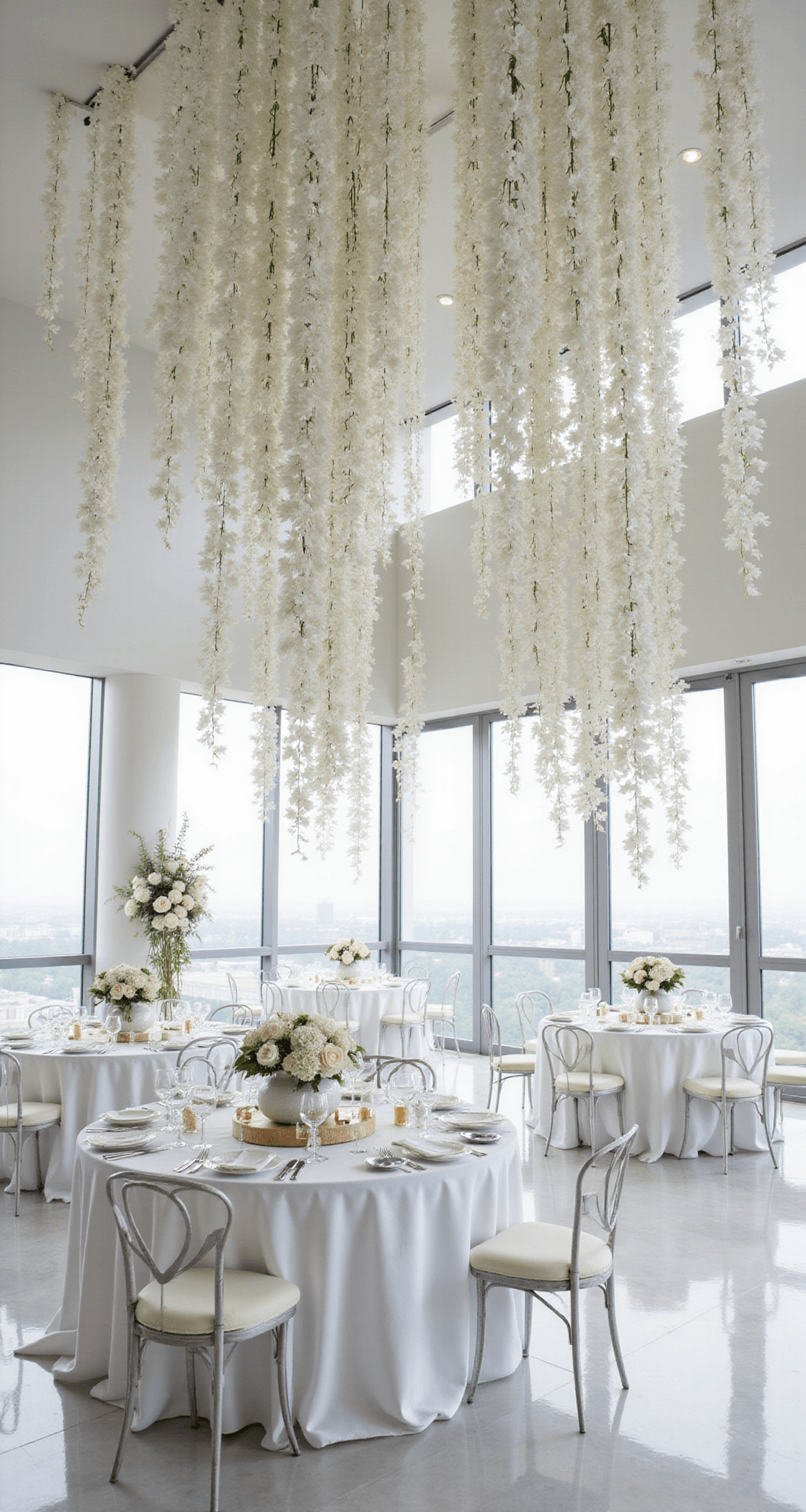
Creating Statement Pieces That Make Your Venue Feel Designed
Going all-white doesn’t mean everything gets equal visual weight.
You need focal points — moments where guests stop and actually notice the design