Wedding Room Decor: Create a Stunning Space Without the Wedding Industry Markup
Wedding Room Decor: Create a Stunning Space Without the Wedding Industry Markup
You’re standing in an empty room right now, aren’t you?
Maybe it’s a blank ceremony space, a reception hall with fluorescent lights, or a small indoor venue that feels more “corporate event” than “the most important day of your life.”
And you’re wondering: How do I make this feel like a wedding without spending a fortune or making it look like a Pinterest explosion happened?
Here’s what I know after styling countless spaces.
Most people overcomplicate wedding room decor.
They think they need florals everywhere, dramatic ceiling installations, and enough candles to light up a small town.
But that’s not how you create a stunning, memorable space.
What actually works is intentional restraint, a clear vision, and focusing your money and energy on the moments people actually notice.
Let me walk you through exactly how to do this.
Define Your Wedding Room Decor Style First (Before You Buy Anything)
This is where everything starts.
I’ve watched couples spend thousands on beautiful decor that clashes because they never nailed down a clear aesthetic.
Pick one style and commit to it.
Are you going romantic and soft?
Minimalist and modern?
Boho and relaxed?
Classic and elegant?
Rustic and warm?
This decision shapes every single choice you make next.
Here’s the thing about color palettes that actually work:
Limit yourself to 2–3 main colors plus neutrals.
That’s it.
More than that and your room starts looking confused, like you couldn’t decide what you wanted.
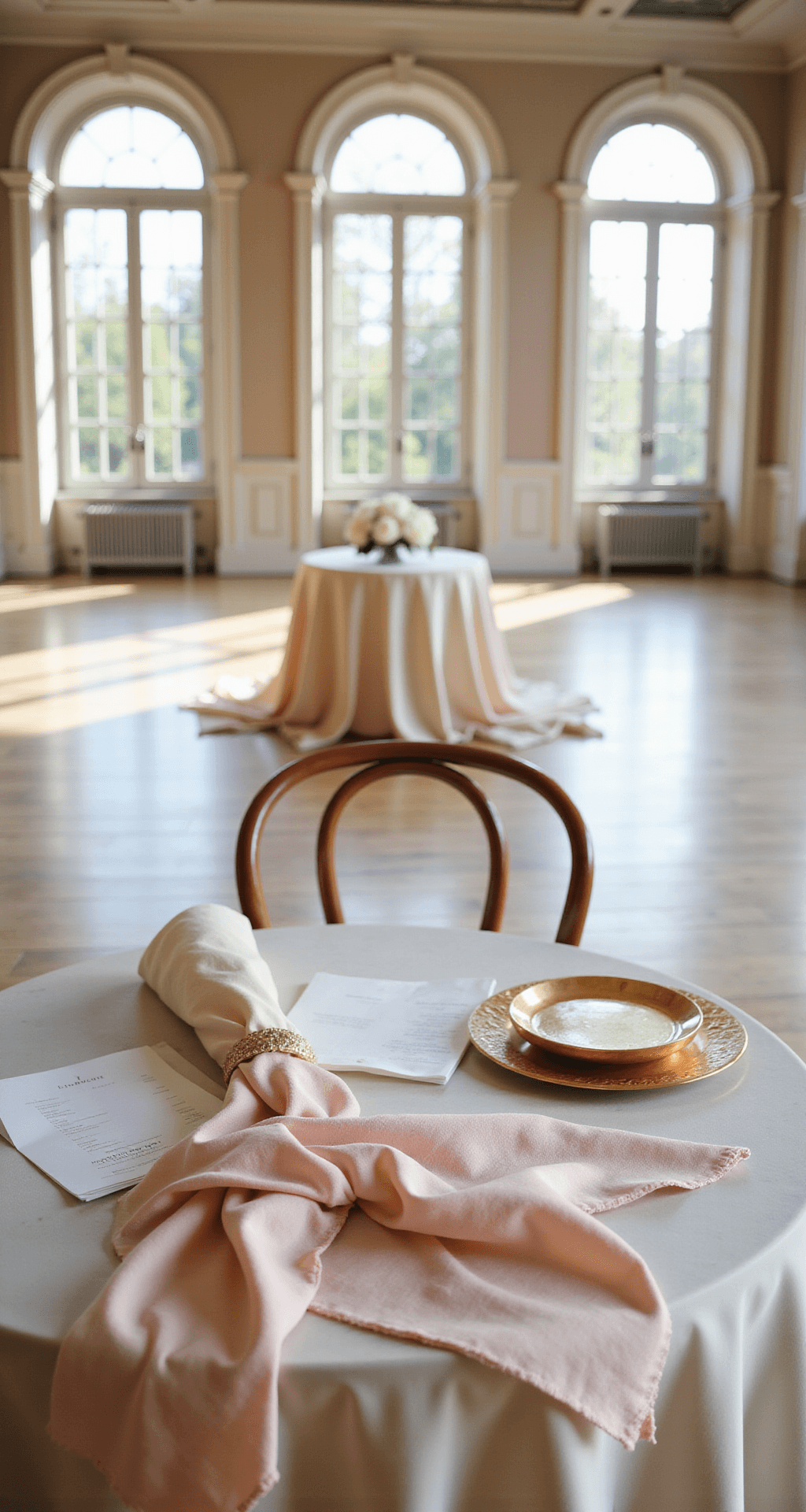
Soft neutrals like ivory, blush, and champagne paired with metallic accents (gold or rose gold) create that luxurious, effortlessly elegant feel without trying too hard.
If you want drama and depth, add a deeper hue like navy or emerald to balance the lighter tones.
But here’s the critical part: look at what’s already in your room.
Those walls, the flooring, the natural wood beams, the brick—these aren’t obstacles to hide.
They’re part of your design.
Your color palette should complement what’s already there, not fight against it.
Choose High-Impact Focal Points (Skip Decorating Everything Else)
This is the secret most wedding planners won’t tell you.
You don’t need to decorate every inch of your room.
You need to decorate the spots your guests actually look at.
Focus your energy and budget here:
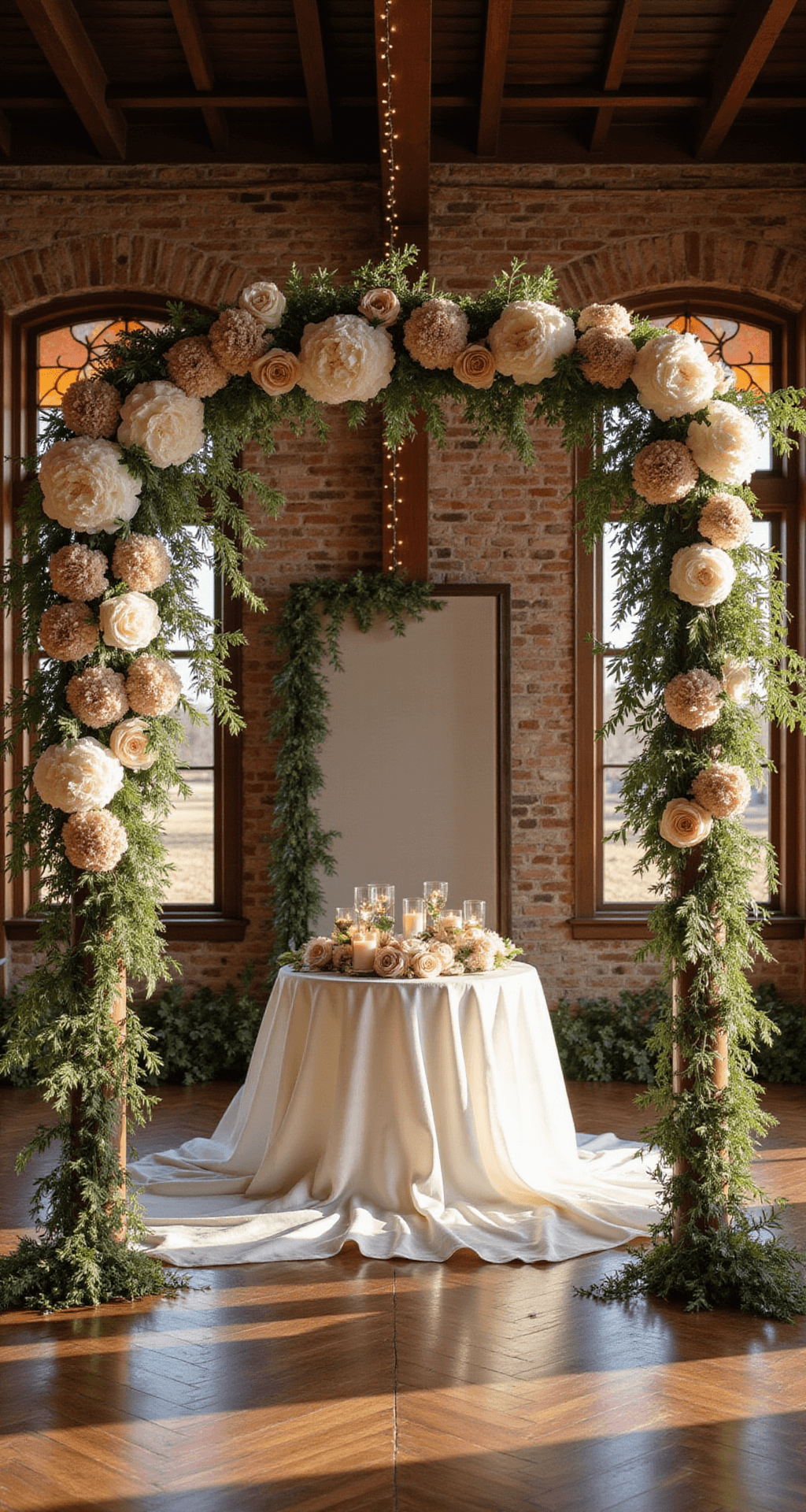
- The ceremony backdrop or altar (where everyone’s eyes are during the vows)
- Your head table or sweetheart table (where the couple sits, the most photographed spot)
- The cake or dessert table (people gather here all night)
- The entrance or entryway (the first impression)
- One strong photo backdrop (a flower wall, draped fabric, or statement piece)
When you have a few standout focal points, your room automatically feels “done.”
Guests’ eyes land on these beautiful moments, and their brains fill in the rest.
It’s the same psychology retail stores use to make spaces feel larger and more expensive than they are.
Use your room’s existing architecture to your advantage too.
Save this article
Enter your email and we'll send it straight to your inbox.
If there’s an arch, fireplace, or columns, emphasize them with draping or dramatic lighting rather than hiding them.
These architectural bones are free decor—leverage them.
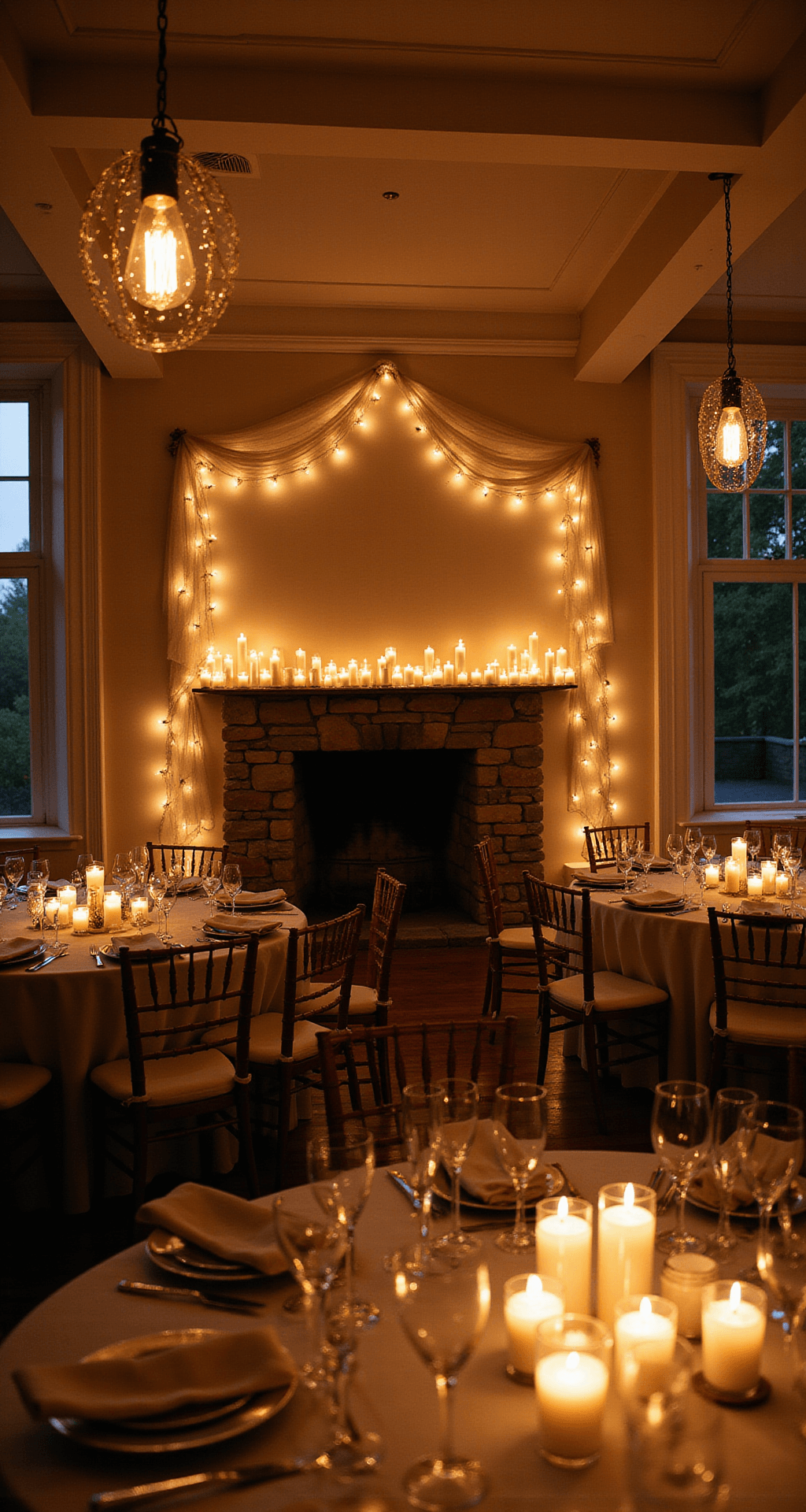
Transform the Room With Lighting (The Cheapest Trick That Works Best)
Here’s a fact that changed how I think about event design:
Lighting is one of the most affordable ways to completely transform a space and make it feel like an actual wedding rather than a conference room.
Seriously.
Bad lighting makes a $10,000 floral installation look mediocre.
Good lighting makes a simple room look magical.
Soft, ambient lighting is non-negotiable.
Pillar candles, votive candles, and floating candles scattered across tables and ledges create immediate warmth.
String lights (also called fairy lights) strung along walls, beams, or behind your head table add romance without feeling over-the-top.
Lanterns or vintage chandeliers cast a romantic, forgiving glow that flatters everyone in the room.
Here’s what actually moves the needle:
Dim those awful overhead lights way down.
Seriously, almost off.
Rely on your candles and string lights for the majority of your ambient light.
If you have a main backdrop or floral installation, use up-lighting or accent lighting to draw attention to it and make it pop.
This is a game-changer for photography too.
Your photos will look a thousand times better when shot in warm, intentional lighting rather than harsh fluorescents.
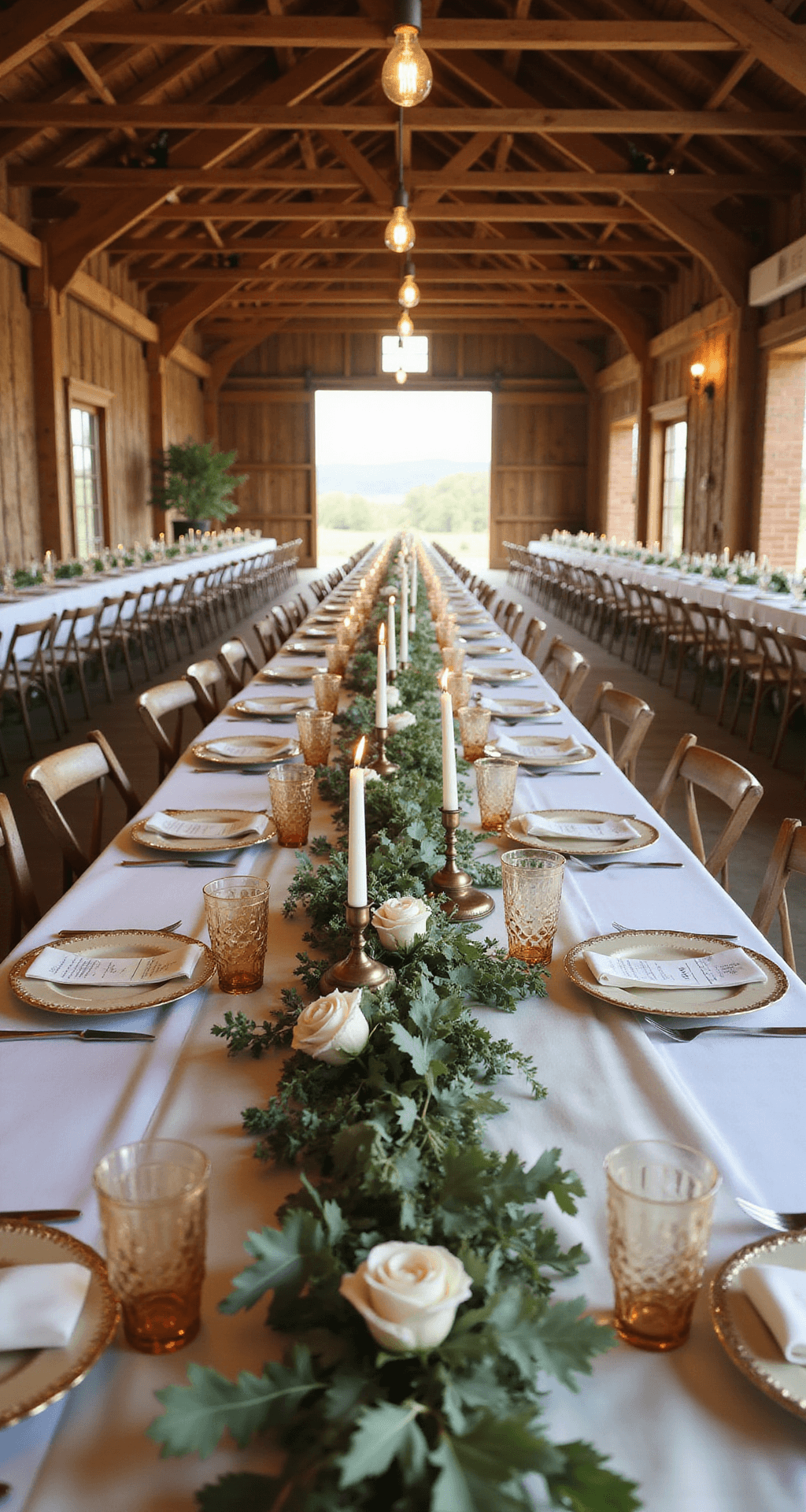
Tablescapes and Linens: Where Texture Becomes Your Friend
Tables take up a massive portion of your visual real estate.
Guests sit around them for hours, stare at them, Instagram them.
So this matters.
Upgrade your linens first.
High-quality fabrics like satin, silk, or textured linens instantly elevate the entire table.
It’s one of those moves that costs maybe 20% more than basic linens but makes everything look exponentially more expensive.
Layer runners on top of your tablecloths—chiffon, gauze, or velvet runners add depth and softness that a plain cloth can’t achieve alone.
Your place settings don’t need to be complicated.
Keep them simple but upgraded:
- A charger plate under your dinner plate
- A nicely folded napkin (not just tossed on the plate)
- A printed menu or name card at each seat
Even this minimal setup reads as “intentional and elegant” versus “default catering setup.”
Mixed metals, colored glassware, or etched glass make place settings feel luxe without requiring expensive floral arrangements at every single table.
Think about your table layout strategically too.
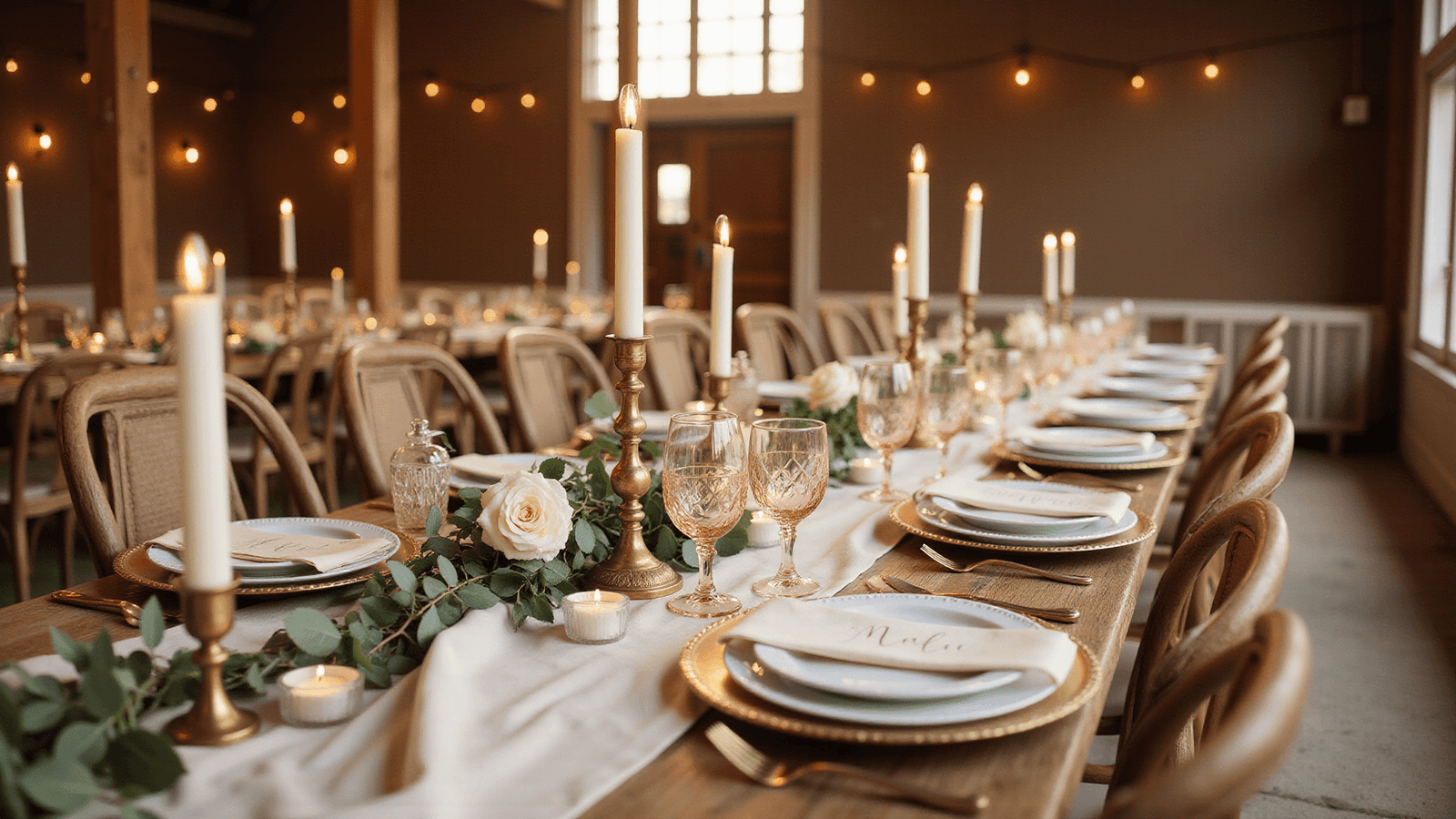
Long banquet tables feel modern and dramatic—perfect for running greenery down the middle with lots of candles.
Low, layered arrangements keep the room conversational and romantic—people can actually see each other across the table.
Consider fine dining placemats or upgraded napkins to complete the elevated look.
<img src="https://purelycele
Want to keep this one?
We'll email you the link so you can find it again later.