
How to Create a Traditional South Indian Wedding Decor That Feels Authentic, Sacred, and Instagram-Ready
I. The Practical Reality: What You Actually Need to Know Before You Start
A. The Numbers That Matter (Honestly)
How much time do you actually need to pull this off?
For photography and full decor coverage (think mandap, entrance, aisle, tables, photo corners, plus those pretty detail shots of lamps and flowers), plan for 2–3 hours of pre-ceremony styling plus ongoing coverage during the actual ceremonies.
This isn’t negotiable if you want the decor to look fresh and intentional in your photos.
For the actual styling work on-site:
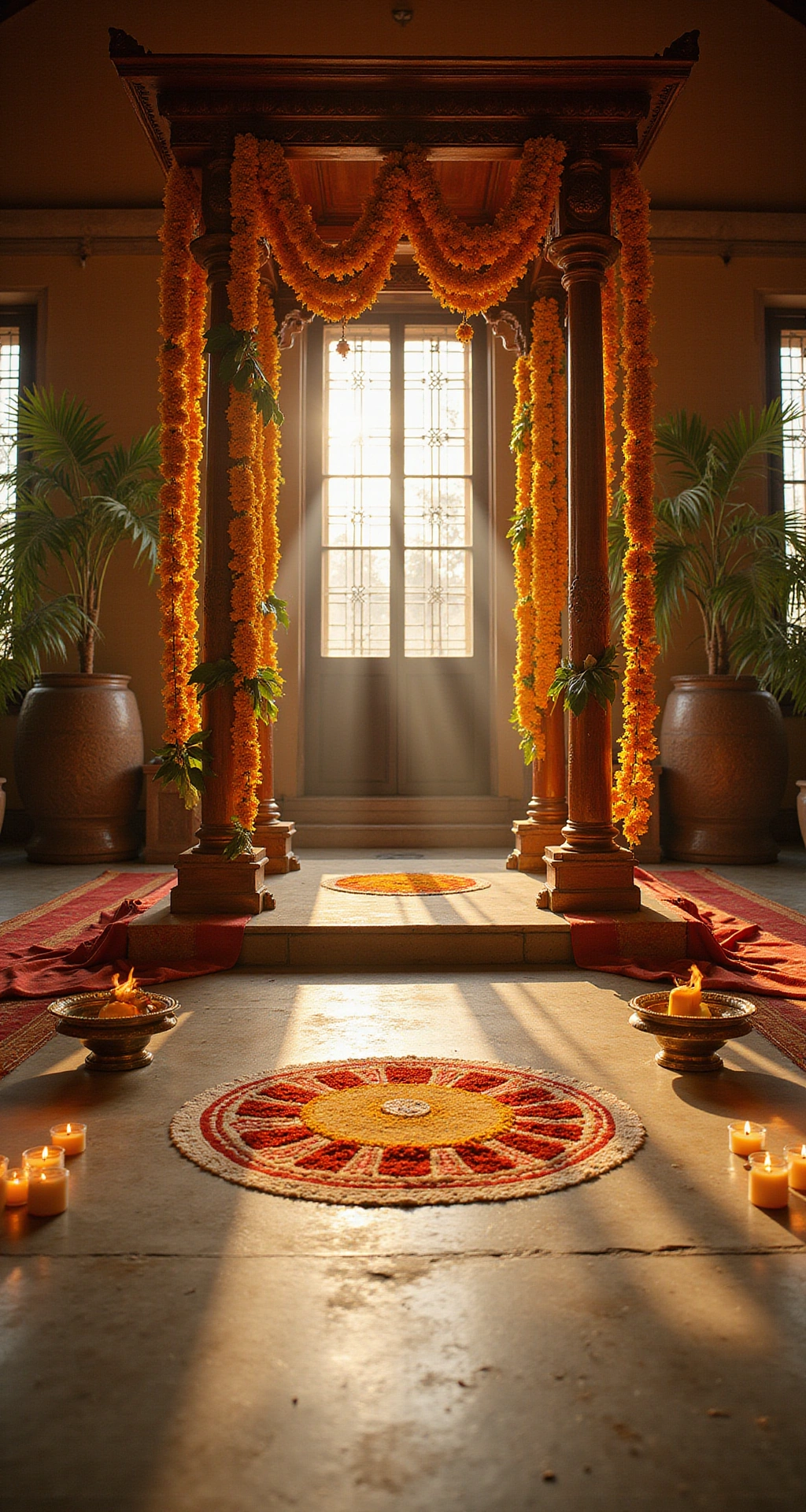
Traditional fresh-flower and banana-stem setups typically need 4–8 hours for mandap setup, entrances, kolam, lamps, and photo corners, especially if you’re installing marigold and jasmine garlands densely and fresh.
For content creation (from planning to the final Instagram post):
- Pre-planning and moodboard work: 3–5 hours
- On-site styling and shooting: full wedding day coverage
- Culling, editing, and preparing for web and social media: 8–15 hours
If you’re serious about creating Pinterest-worthy content, you can’t rush this part.
Venue space considerations:
This decor style works beautifully in multiple settings.
For intimate temple or hall weddings, you’re looking at a compact mandap with simple floral torans—totally doable.
For large community halls or outdoor lawns, you can go big with grand banana-stem gateways, long aisles lined with diyas, and elaborate floral mandap structures.
The size of your space doesn’t determine whether this works; it just changes the scale.
DIY reality check:
- Easy to moderate: Kolam/rangoli, simple mango leaf torans, banana leaf runners, small brass uruli bowls with floating flowers
- Advanced and time-consuming: Temple-style mandap with carved pillars, heavy floral ceilings, large banana-stem gateways, full-stage backdrops
Know your skill level and budget your time accordingly.
Budget talk (let’s be real):
In India, a simple traditional mandap with mango leaf torans and brass lamps often runs around ₹4–7 lakhs with professional decor.
Full traditional ceremony decor (mandap, entrance, stage backdrop, table arrangements) commonly ranges ₹8–14 lakhs.
For international weddings, decor budgets often start around $10,000–$20,000 for modest setups and can easily exceed $50,000–$100,000 for luxury custom mandaps and installations.
This is a significant investment, so plan accordingly.
B. Understanding the Aesthetic (This Matters More Than You Think)
What you’re actually creating:
This isn’t just pretty decoration.
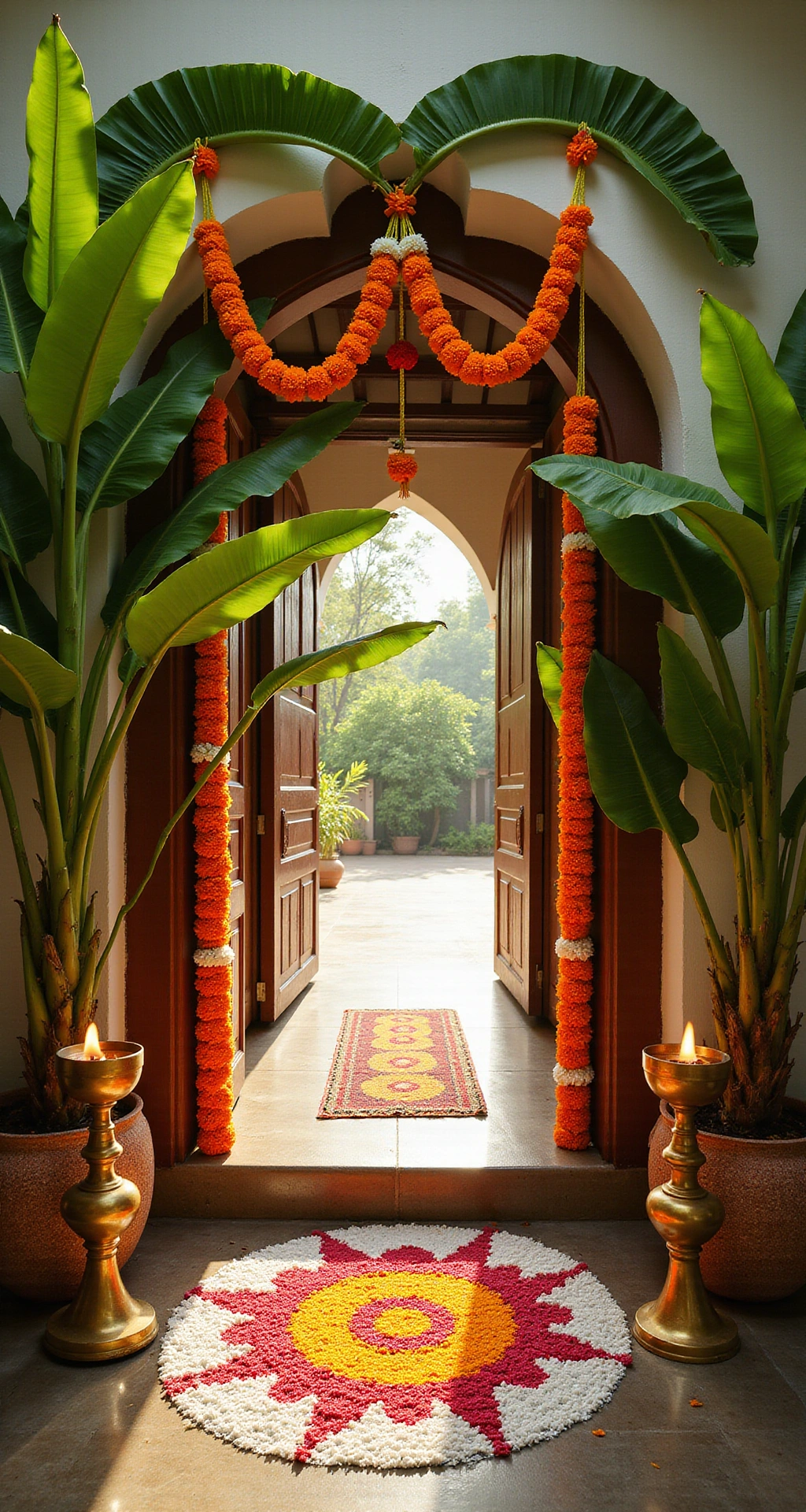
Traditional South Indian wedding decor is earthy, temple-inspired, eco-friendly, and rooted in actual ritual—using banana stems, mango leaves, marigold, jasmine, brass lamps, and kolam.
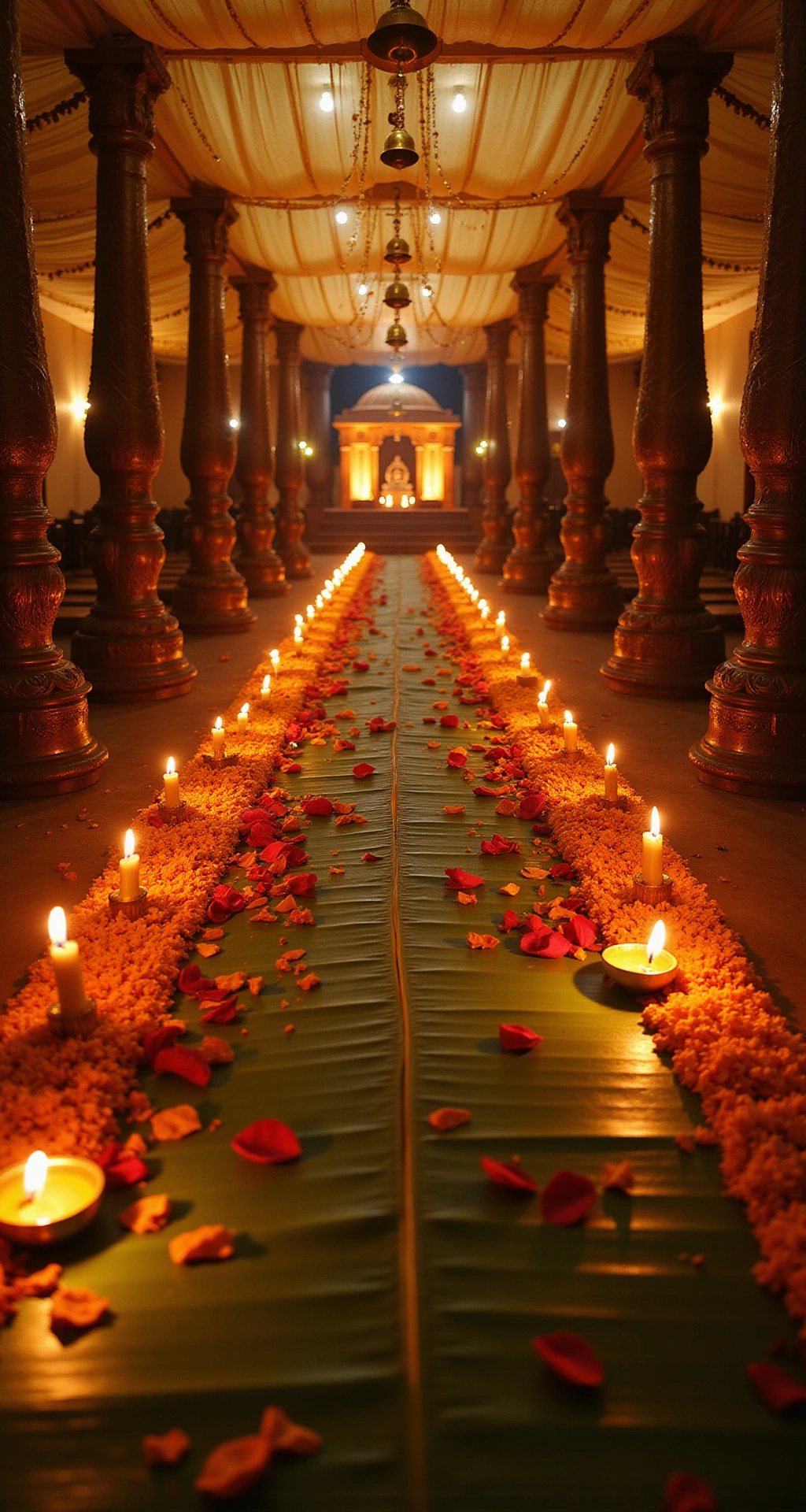
Mandaps often draw directly from South Indian temple architecture with carved wooden pillars and sloping roofs.
Every element has a purpose.
The color language:
Classic combinations work because they mean something:
- Red & gold = auspiciousness and wealth
- Yellow & green = turmeric, fertility, and prosperity
- White = purity and peace
Accent colors include orange (kanakambaram), deep pink, and temple brass tones.
When you stick to this palette, the decor automatically feels cohesive and intentional.
Save this article
Enter your email and we'll send it straight to your inbox.
Who this works for:
This style is ideal for couples and families seeking authentic, culturally grounded decor—particularly for Hindu ceremonies across Tamil, Telugu, Kannada, Malayalam, and Kodava traditions.
Seasonal reality:
The good news is that this works year-round.
Marigold, jasmine, banana stems, and mango leaves are used in all seasons—though monsoon or wet seasons may shift more decor indoors while keeping the same core elements.
II. The Essential Elements You Actually Need
A. The Non-Negotiables
Florals (this is where the magic happens):
Marigold garlands and dense strands are the backbone of the look—they go on the mandap, entrances, ceilings, and pathways.
You can’t skip this.
Jasmine strings are essential for the mandap, hair adornment, and subtle drapes.
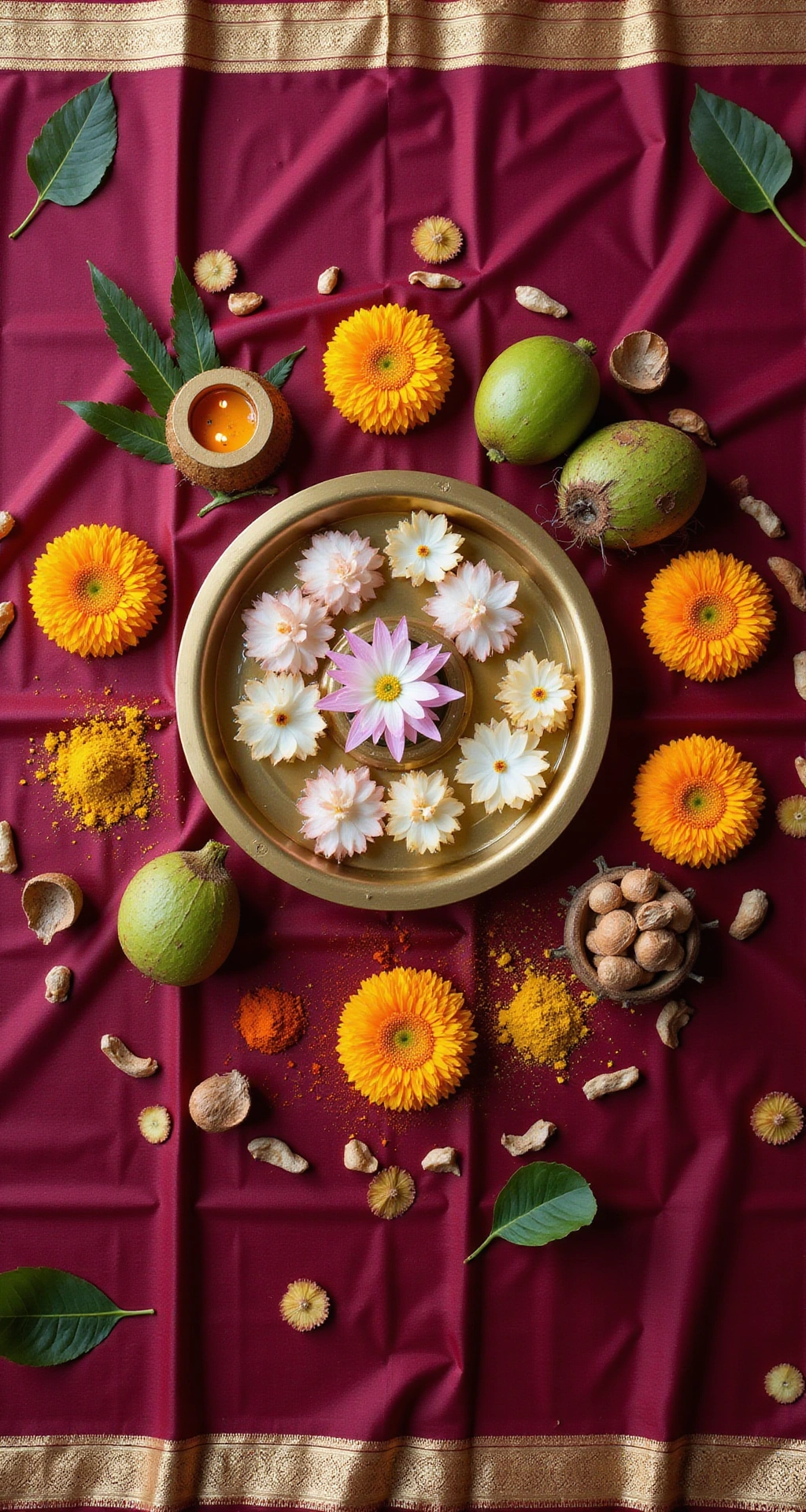
Accents include roses, lotus, chrysanthemum, and kanakambaram for color variation.
Botanical and ritual elements (these tell the story):
Banana stems and leaves are used for entrances, mandap pillars, backdrops, and table runners.
These must be fresh and properly secured.
Mango leaf torans (thoranam) go over doorways, mandap frames, and arches—and they absolutely must be fresh.
You’ll also need coconuts, turmeric, and kumkum for structural accents and puja corners.
Metal work and lighting (this creates atmosphere):
Brass oil lamps (kuthuvilakku, nilavilakku) go at entrances, beside the mandap, and along aisles.
These are non-negotiable for the authentic temple feel.
Brass uruli bowls with water, floating flowers, and candles add a beautiful focal point.
Temple bells hung around the mandap and stage complete the sacred atmosphere.
Floor art (the foundation):
Kolam, rangoli, or muggu patterns in rice flour or flower petals at the entrance, near the mandap, and along walkways.
This is what grounds the entire aesthetic.
Fabrics and structure:
Silk drapes (especially Kanjeevaram-style patterns) serve as backdrops or chair decor.
Wooden or carved stone mandap pillars reflecting temple architecture are the skeleton of your design.
B. The Optional But Really Nice To Have Elements
Additional lighting:
Warm ambient lighting with hanging diyas, lanterns, or soft spotlights complements the oil lamps
Want to keep this one?
We'll email you the link so you can find it again later.