
Balloon Twisting for Beginners: Everything I Learned Making My First Balloon Dog (And Why It Popped)
Balloon Twisting for Beginners: Everything I Learned Making My First Balloon Dog (And Why It Popped)
Contents
Balloon twisting saved my nephew’s birthday party last year when the entertainer cancelled two hours before guests arrived.
I had no idea what I was doing.
But after watching three YouTube videos and destroying about fifteen balloons, I managed to make something that vaguely resembled a dog.
The kids loved it anyway.
Now I twist balloons regularly, and I’m going to show you exactly how to start without wasting money on stuff you don’t need.

Why Your Hands Will Hurt (And That’s Normal)
Let me be honest with you right away.
Your fingers will ache after your first session.
The balloons will squeak like tortured mice.
Some will pop in your face.
This is completely normal, and it doesn’t mean you’re terrible at this.
I thought I was doing everything wrong until I joined a balloon twisting forum and discovered that everyone experiences the same frustrations at first.
Push through those first few attempts, and something magical happens.
Your hands adapt, the techniques start making sense, and suddenly you’re creating recognizable shapes instead of weird latex sausages.
What You Actually Need to Get Started
I wasted forty dollars on fancy supplies I never used.
Don’t make my mistake.
Here’s what you actually need for balloon twisting:
The Essential Kit
Balloon pump – Around $10 for a double-action model
You cannot blow these balloons up with your mouth.
Well, you can try, but you’ll get dizzy and give up after balloon number three.
I learned this the hard way at that birthday party.
A double-action pump pushes air on both the up and down strokes, which cuts your pumping time in half.
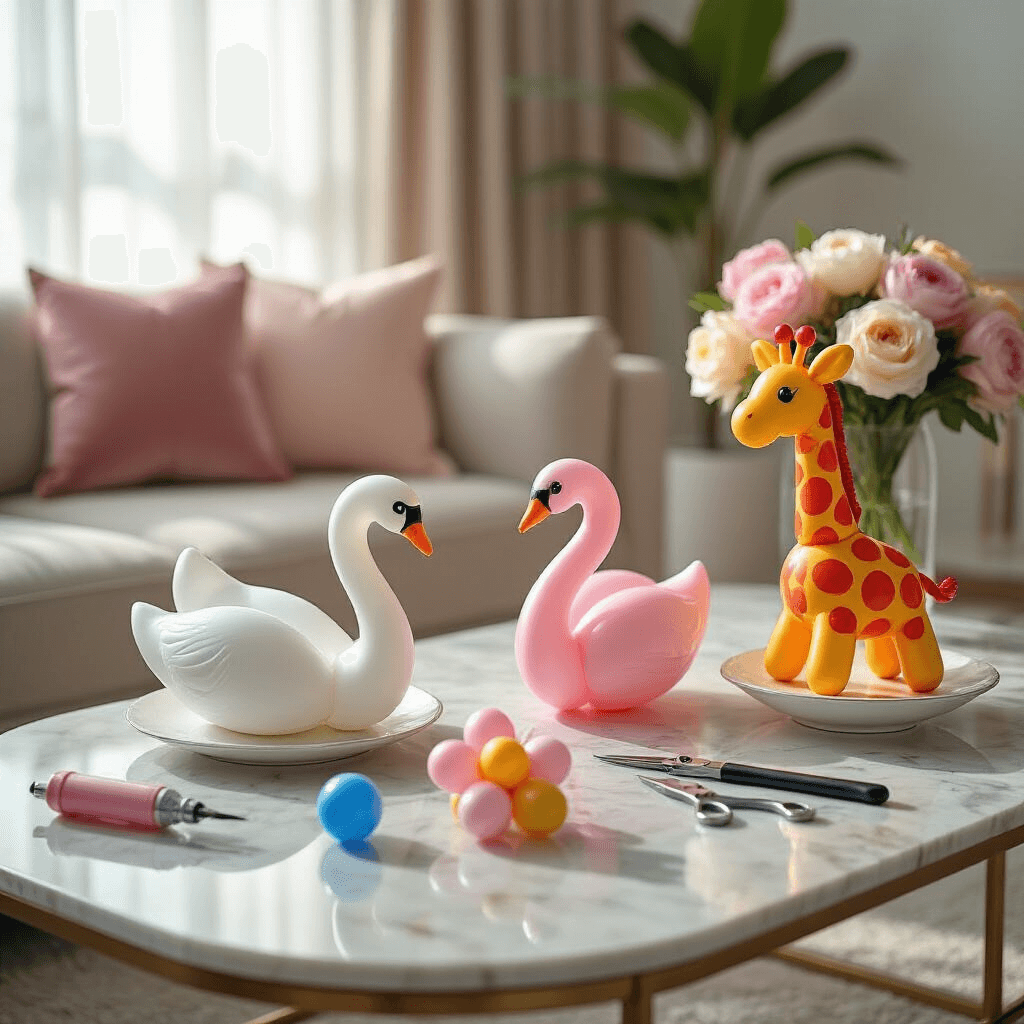
260 twisting balloons – Around $12 for a starter pack
The “260” means they’re 2 inches wide and 60 inches long when fully inflated.
Qualatex and Sempertex are the brands professionals recommend, and after trying cheaper alternatives, I understand why.
The cheap ones pop constantly and feel like they’re made from recycled tire rubber.
Chisel tip markers – Around $12
These let you add eyes, noses, and details to your creations.
Regular markers work too, but chisel tips give you more control over line thickness.
Scissors – Around $10
Any decent pair works for trimming excess balloon material.
You probably already have these.
Balloon twisting tool belt – Around $24
This one’s optional at first, but incredibly useful once you start making balloons for groups of people.
Trust me, trying to carry supplies while twisting balloons is like juggling while riding a unicycle.
Total cost: $68-89
That’s less than hiring an entertainer for a single party.

The Four Rules That Will Save Your Sanity
When I started balloon twisting, I kept making the same mistakes over and over.
My bubbles would unravel.
The balloons would pop without warning.
Nothing looked like the tutorial videos.
Then I discovered these four fundamental rules, and everything changed.
Rule 1: Always Start at the Nozzle
This seems random until you understand the physics.
When you twist a balloon, air gets pushed toward the end.
If you start twisting at the tail end, you’re fighting against the air pressure, which makes everything harder and increases popping risk.
Start at the nozzle side every single time.
The tail should be the last section you work with.
Rule 2: Create Joints to Lock Your Twists
My first balloon dog fell apart the moment I handed it to a kid.
The twists simply unraveled because I didn’t know about joints.
A joint connects two twist points together, which locks everything in place.
Without joints, you’re just holding twisted air that desperately wants to untwist itself.
This is the difference between a sculpture that lasts five seconds and one that survives enthusiastic children.

Rule 3: Twist in One Direction Only
I spent an entire evening making balloons that kept collapsing.
Turns out I was twisting clockwise for some bubbles and counterclockwise for others.
When you change direction, the twists work against each other and undo themselves.
Pick a direction (I always go clockwise) and stick with it throughout the entire balloon.
Every twist should be in the same direction, and you’re only twisting the back part of the balloon near the tail.
Rule 4: Master the Pinch Twist
The pinch twist creates 90-degree angles and adds stability to your designs.
But more importantly, it prevents the balloon from rubbing against itself.
When balloons rub together under tension, they either pop or make that horrible screeching sound that makes everyone in the room cringe.
I didn’t know about pinch twists for my first month, and my pop rate was probably 40%.
After learning this technique, it dropped to maybe 10%.
Your First Balloon: The Basic Dog
Let me walk you through making a basic dog, which is the foundation for dozens of other animals.
Inflate a 260 balloon leaving about 6 inches uninflated at the tail.
This uninflated section is your safety buffer that prevents popping.
Step 1: Make the nose
Twist a 3-inch bubble at the nozzle end.
Hold it firmly so it doesn’t untwist.
Step 2: Make the ears
Create two 2-inch bubbles right after the nose.
Fold them together and twist at the base to lock them.
This is your first joint.
Step 3: Make the neck
Twist a