Night Wedding Decor Ideas: Transform Your Evening Celebration Into Pure Magic
The Foundation: Why Night Wedding Decor Matters More Than You Think
Contents
- The Foundation: Why Night Wedding Decor Matters More Than You Think
- String Lights: The Workhorse of Evening Wedding Magic
- Lanterns: The Elegant Solution to Functional Lighting
- Candlelight: The Non-Negotiable Element
- Pathway Lighting: The Element Everyone Forgets Until Dark
- Specialty Lighting: Taking Night Wedding Decor From Good to Unforgettable
Here’s something most couples get wrong about evening celebrations. They think darkness is a challenge. Actually, darkness is your biggest asset. When the sun sets, your venue becomes a blank canvas waiting for your vision. You’re not fighting natural light anymore. You’re creating it from scratch. And that means every single light you add becomes a design element instead of just functional necessity.
I once worked with a couple who had booked a beautiful garden venue, but they were genuinely concerned about the darkness. Within two hours of sunset, using strategically placed lighting, that same garden looked like something from a fantasy film. The guests couldn’t stop talking about it. That’s the power of understanding night wedding decor.
String Lights: The Workhorse of Evening Wedding Magic
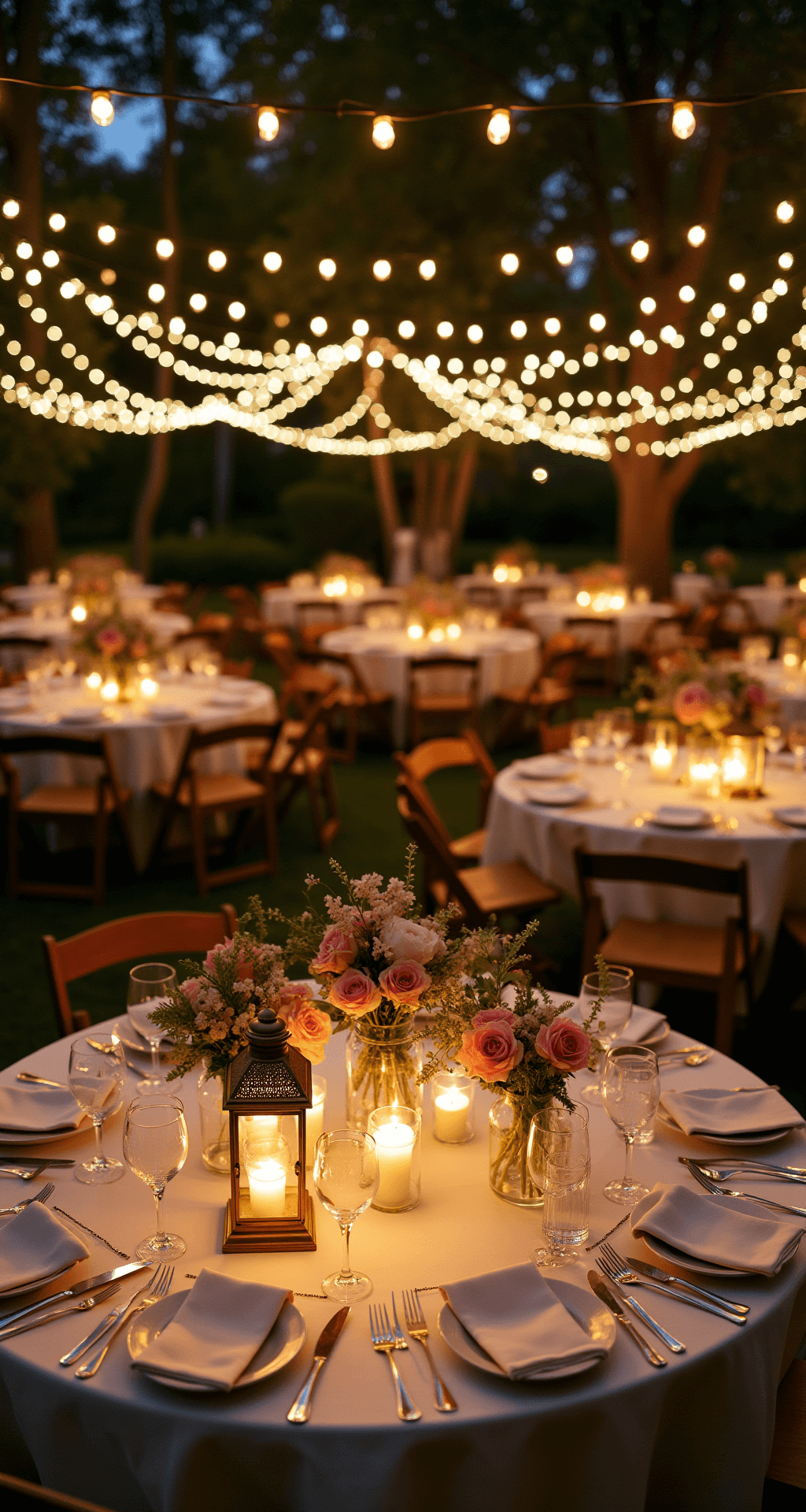
If there’s one element that transforms a nighttime space faster than anything else, it’s string lights. They’re not fancy. They’re not complicated. But they work like nothing else I’ve seen.
String lights accomplish several things simultaneously:
- They provide actual illumination so guests can see
- They create layers of ambient light that feels intentional and designed
- They define spaces without needing walls or structures
- They photograph beautifully, which matters more than you might think
- They work with virtually any wedding style imaginable
Where to hang them for maximum impact:
Drape them in a canopy pattern overhead if you have an outdoor tent or open garden space. Run them in zig-zag formations across courtyards or patios—this creates visual rhythm and makes spaces feel larger than they are. Wrap them around tree trunks and let them cascade upward through the branches, creating a starlit forest effect. Frame your ceremony arch with overlapping strands to draw focus exactly where you want it. Line pathways from parking areas to your reception space so guests feel guided and welcomed. Create a tunnel effect by suspending lights from opposite sides of a walkway, letting them meet in the middle.
I recommend investing in warm white string lights with Edison-style bulbs rather than cool white. The warm tones feel more romantic and forgiving on skin tones in photographs.
Lanterns: The Elegant Solution to Functional Lighting
Lanterns solve a problem that many couples overlook until it’s too late. You need light, but you don’t want it to feel industrial or harsh. Lanterns bridge that gap beautifully. They’re functional light sources that look intentionally designed rather than thrown together.
Strategic lantern placement:
- Line your ceremony aisle with them—use decorative metal lanterns on alternating sides for a classic approach.
- Cluster them in odd numbers (three, five, seven) at key transition points—entrances, the base of your arch, corners of the reception area.
- Elevate them on tall stands to create visual interest at different heights, preventing the flat, one-dimensional look that many nighttime events suffer from.
- Create a lantern-lined pathway from your cocktail area to the reception tent—guests will naturally follow the light, and you’ll have controlled the flow of your event without saying a word.
- Frame your sweetheart table with lanterns at varying heights behind it—this creates depth in photographs and draws focus to where it belongs.
The beauty of lanterns is that you can choose between traditional candle-filled versions for ultimate romance, or go with flameless LED candles inside lanterns if you’re concerned about wind, fire codes, or guest safety. Honestly, LED versions have improved so much that most guests can’t tell the difference, and you eliminate the stress of managing open flames.
Candlelight: The Non-Negotiable Element
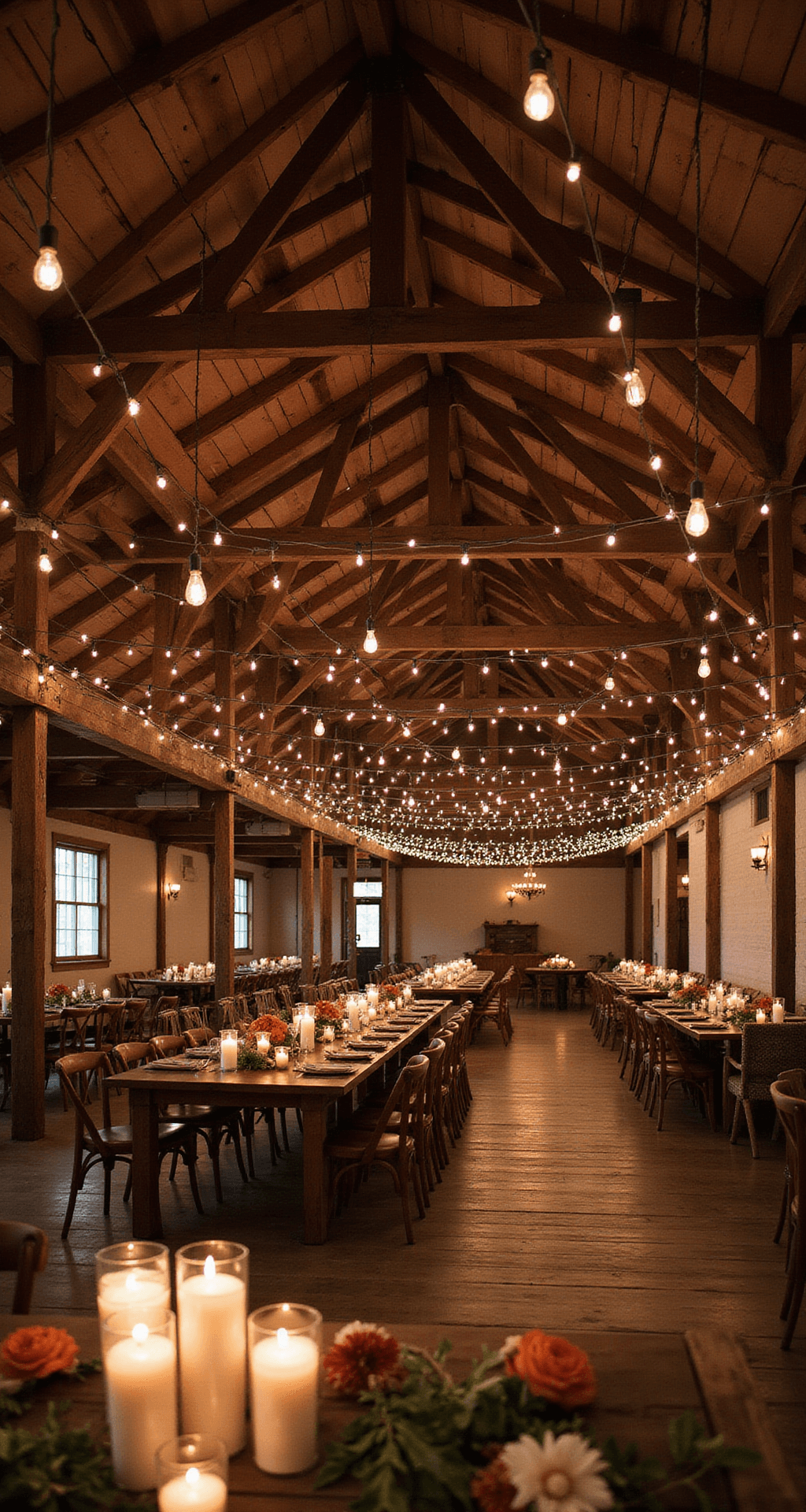
If string lights are the workhorse, candlelight is the soul of nighttime wedding design. There’s something primal about flickering flames that resonates with humans on a deep level. No amount of fancy LED technology can replicate what actual candlelight does to a space and to people’s emotions.
Layering candlelight for maximum effect:
- Create centerpieces using clusters of pillar candles in varying heights—think three to five different heights grouped together rather than a single candle in the middle.
- Float tea lights in glass bowls filled with water and flowers—this creates an ethereal effect that photographs beautifully.
- Use hurricane vases (glass cylinders with a wide base) filled with candles surrounded by flowers, greenery, or decorative elements.
- Line walkways with luminarias—paper bags with sand and a single candle inside—for a classic, romantic pathway effect.
- Arrange candles around your ceremony space at different levels to create intimacy even in a large outdoor venue.
The key mistake most couples make is clustering all their candles at eye level on tables. Instead, vary the heights—some at table level, some elevated on tall stands, some low on the ground. This creates visual depth and makes the space feel magical rather than just decorated.
Pathway Lighting: The Element Everyone Forgets Until Dark
Here’s something that separates experienced event designers from well-meaning amateurs. Pathway lighting isn’t optional for evening weddings. It’s essential, both for safety and for creating a cohesive design experience. Guests arriving at your venue in darkness need clear, gentle guidance. More importantly, poorly lit pathways create anxiety rather than romance.
Effective pathway lighting strategies:
- Use solar-powered LED pathway lights spaced two to three feet apart along main walkways—they charge during the day and glow softly at night without requiring electrical infrastructure.
- Create luminaria lines using paper bags with candles—this is labor-intensive but creates an incredibly charming, intentional look.
- Weave fairy lights along pathway edges by threading them through plantings or hanging them from overhead structures.
- Use uplighting at ground level to illuminate trees, plants, or architectural features along the path, creating visual interest while providing navigation light.
- Mark changes in elevation (steps, ramps) with extra lighting to prevent trips and falls—this is non-negotiable for guest safety.
I worked with a couple once who skipped pathway lighting to save money. Within thirty minutes of sunset, guests were cautiously shuffling through the darkness, anxious about where to step. The entire mood of the event suffered. It cost them maybe $200 to add solar lights they should have included from the start. Don’t make that mistake.
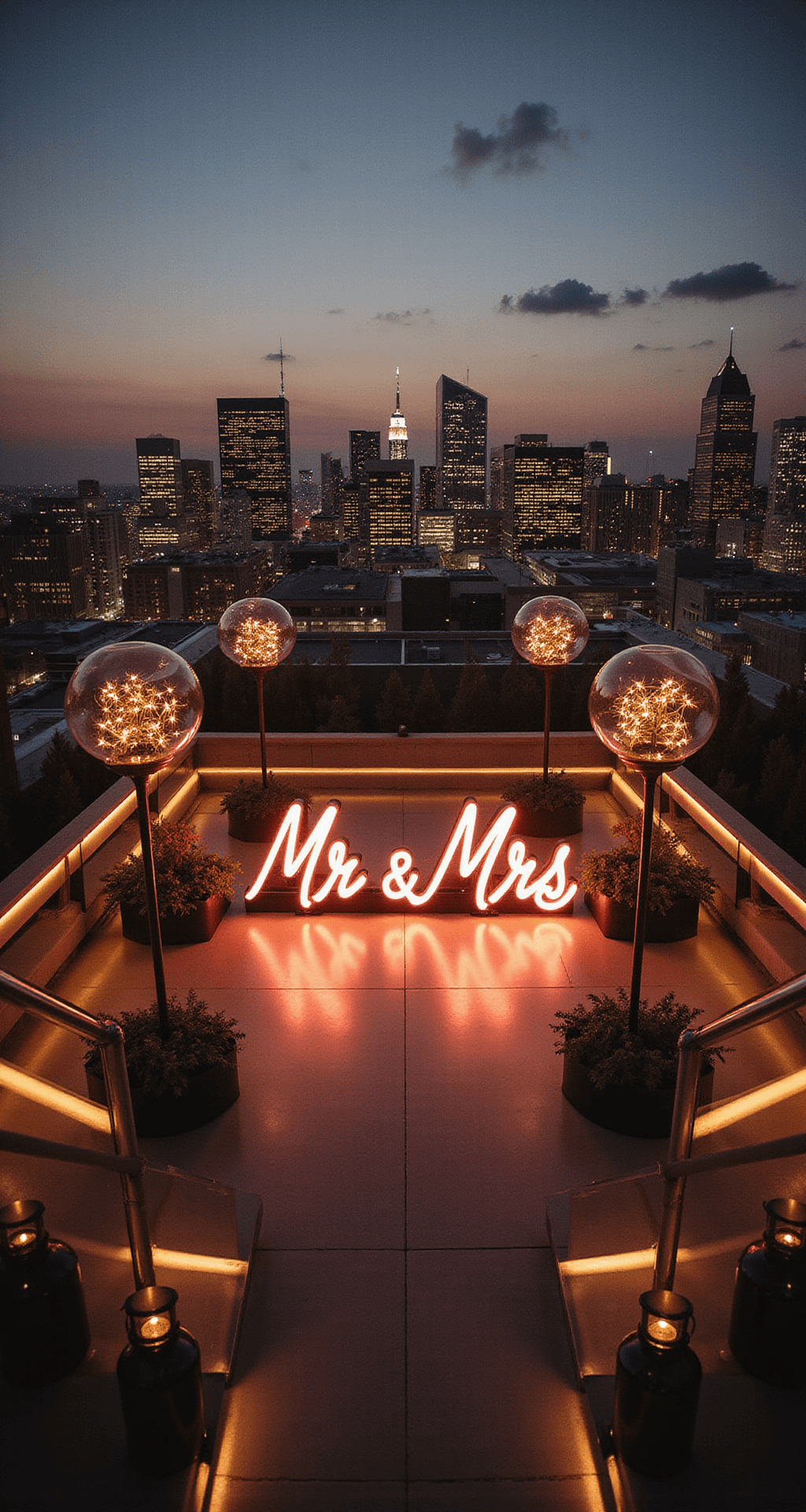
Specialty Lighting: Taking Night Wedding Decor From Good to Unforgettable
Once you’ve got the fundamentals covered—string lights, lanterns, candles, and pathways—you can elevate everything with specialty lighting elements. These aren’t necessary for a beautiful event, but they’re what transform a beautiful event into something your guests won’t stop talking about for years.
Specialty lighting ideas:
- Hanging glass or