
Hot Air Balloon Art: Every Creative Technique You Need to Make Something Beautiful
Hot Air Balloon Art: Every Creative Technique You Need to Make Something Beautiful
Contents
- Hot Air Balloon Art: Every Creative Technique You Need to Make Something Beautiful
- Why Hot Air Balloon Art Works for Everyone
- Watercolor: Where Most of Us Should Start
- The Basic Watercolor Technique That Actually Works
- The Gradient Game-Changer
- Acrylic Painting: For When You Want Bold Results
- My Fast-Track Acrylic Method
- Mixed-Media Magic: When One Medium Isn’t Enough
- The Starry Night Hot Air Balloon Project
- Why Mixed-Media Works So Well
Hot air balloon art has taken over my craft room, and I’m not even sorry about it. There’s something magical about those floating orbs of color that makes you want to recreate them in every medium possible.
I’ve tried watercolors that bled into dreamy skies, acrylics that popped off the canvas, and even papier-mâché disasters that eventually turned into triumphs.
Here’s the truth: You don’t need fancy art school training to create stunning hot air balloon pieces that’ll make your friends ask where you bought them.
Why Hot Air Balloon Art Works for Everyone
I stumbled into this obsession completely by accident. My niece needed a birthday decoration, and I thought, “How hard can a balloon be?
Turns out, the simple shape is forgiving for beginners but offers enough complexity to keep experienced artists engaged.
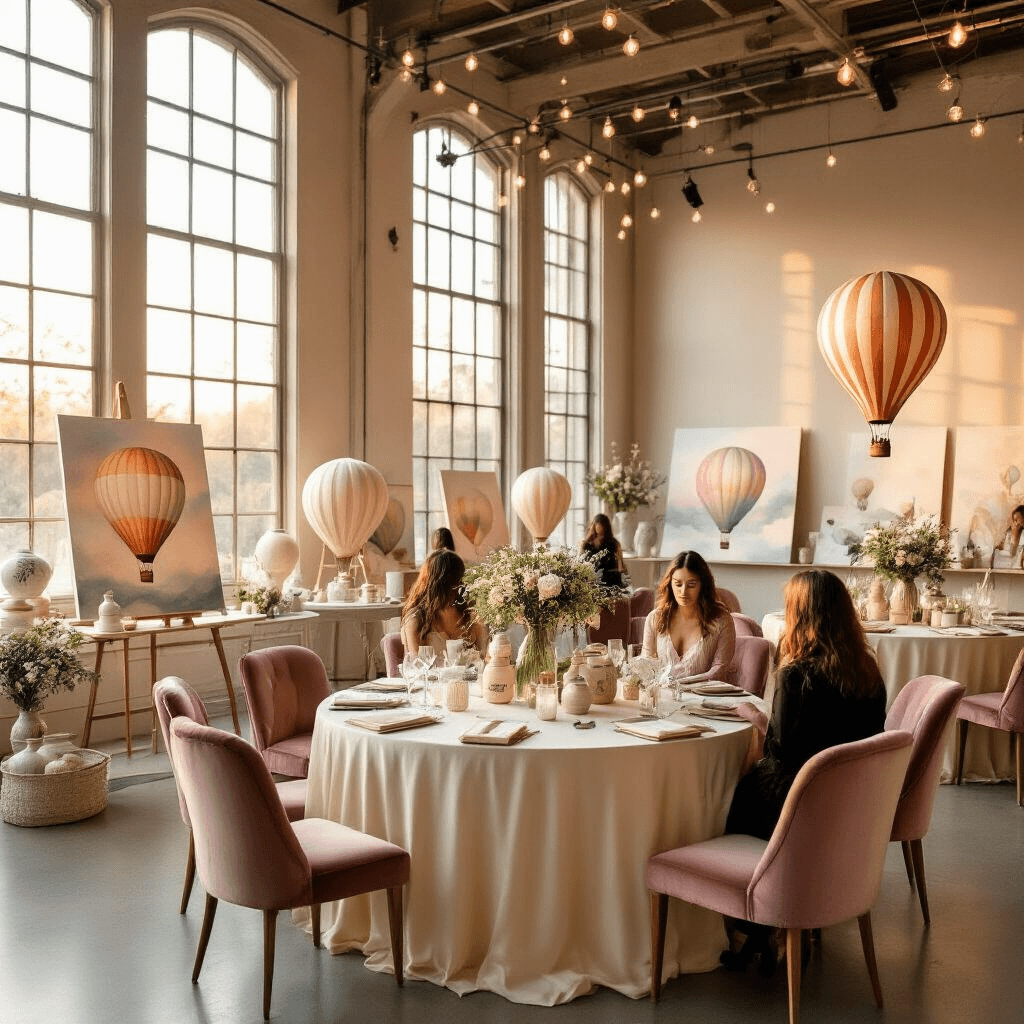
The real beauty? Hot air balloon art works across every skill level, age group, and medium you can imagine.
Whether you’re armed with a basic watercolor set or planning something more elaborate, you’re about to create something that actually looks good.
Watercolor: Where Most of Us Should Start
Watercolor painting remains my go-to recommendation for anyone just starting out.
The medium is forgiving, affordable, and produces those Instagram-worthy results faster than you’d think.
The Basic Watercolor Technique That Actually Works
I learned this method after ruining approximately seven pieces of watercolor paper.
Here’s what finally clicked:
Step 1: The Sketch
- Draw a simple circle for your balloon envelope
- Add vertical lines down the balloon to suggest panels
- Sketch a flat circle or rectangular base for the basket
- Keep your pencil lines light
Step 2: The Sky Foundation
- Wet your entire background with clean water
- Drop in blues and purples while the paper is still wet
- Let colors bleed and blend naturally
- Don’t overthink this part (I mean it)
Step 3: Building the Balloon
- Wait until your sky is completely dry
- Choose 2-4 colors for your balloon sections
- Paint each panel with light washes first
- Layer additional washes after each layer dries
Step 4: Adding Definition
- Use fine-tip markers to outline basket details
- Draw the ropes connecting basket to balloon
- Add tiny details like basket weaving patterns
- Sign your masterpiece
The secret sauce here is patience between layers.
I know you want to rush it (I always do), but wet-on-wet disasters taught me that good things come to those who wait for paint to dry.
The Gradient Game-Changer
Soft gradients separate amateur hot air balloon art from pieces that look professionally done.
Here’s my technique:
Start with your lightest color at the top of each balloon panel, then gradually introduce darker tones as you move down.
While the paint is still slightly damp, let the colors kiss each other at their edges.
This creates those dreamy transitions that make people lean in closer.
Acrylic Painting: For When You Want Bold Results
Acrylic painting offers an entirely different vibe.
Where watercolors whisper, acrylics shout.
I switched to acrylics when I wanted hot air balloon art pieces for my living room that could hold their own against bright afternoon light.
My Fast-Track Acrylic Method
Grab a set of acrylic paints and let’s do this:
Block in shapes first:
- Use a dry brush technique for quick coverage
- Don’t worry about perfection in this base layer
- Think of it as a coloring book you’re filling in
Build depth through layering:
- Add darker tones in shadow areas
- Highlight where light would naturally hit the balloon
- Use a slightly damp brush to blend edges while paint is wet
Reference photos are your friend:
- I keep a folder of hot air balloon images on my phone
- Study how light interacts with the curved surfaces
- Notice how colors shift across the balloon’s roundness
The beauty of acrylics? You can paint over mistakes immediately once they dry.
That forgiving nature saved my sanity more times than I can count.
Mixed-Media Magic: When One Medium Isn’t Enough
Mixed-media approaches let you combine techniques for seriously impressive results.
I discovered this when my daughter’s art teacher assigned a Van Gogh-inspired project that changed how I thought about hot air balloon art entirely.
The Starry Night Hot Air Balloon Project
This remains one of my favorite pieces hanging in our hallway:
What you’ll need:
- Oil pastels or crayons
- Watercolor paints
- Markers
- Cardstock or heavy paper
- Glue stick
The resist technique:
- Draw your sky background using oil pastels
- Create swirls, stars, and dreamy patterns
- Press hard with your pastels
- Paint over everything with watercolor washes
- Watch the magic as paint resists the oil pastels
The 3D element:
- Cut out a hot air balloon shape from separate cardstock
- Color it with whatever medium you prefer
- Attach it to your painted sky with foam dots for dimension
This technique teaches blending, layering, and the pure joy of watching resistant art reveal itself.
Plus, it looks way more complicated than it actually is.
Why Mixed-Media Works So Well
The textural variety keeps your eye moving across the piece.
Flat watercolor skies gain interest from raised balloon elements.
Oil pastel swirls add tactile quality that begs to be touched (but please don’t touch the art).
I’ve used this approach for everything from greeting cards to large canvas pieces.