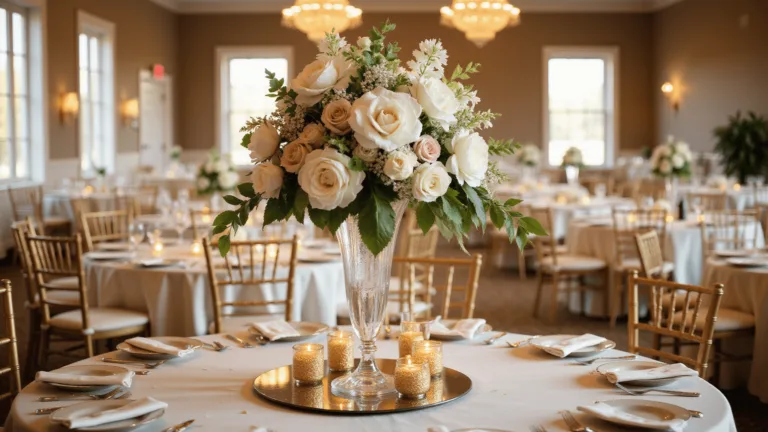

How to Use Wedding Garlands to Create Stunning Ceremony and Reception Décor
How to Use Wedding Garlands to Create Stunning Ceremony and Reception Décor
Contents
Wedding garlands transform bland spaces into enchanting venues, but are you wondering where to even start with this decorative element?
Maybe you’re asking yourself: Can I actually make one myself without it looking homemade and cheap?
Or perhaps: Will garlands fit my wedding theme, or are they only for garden-style celebrations?
I get it.
Wedding planning can feel overwhelming, and adding layers of decoration starts to feel like you’re building an actual garden rather than planning a party.
The truth is, wedding garlands are one of the most flexible, forgiving, and visually stunning ways to dress up any venue—and I’m about to show you exactly how to do it right.
What Exactly Is a Wedding Garland (And Why You Actually Want One)
A wedding garland is essentially a long, flowing strand of flowers, greenery, ribbons, and decorative materials that drapes, hangs, or wraps around your ceremony and reception spaces.
Think of it as the bridge between boring empty space and “wow, this venue is absolutely magical.”
I’ve seen garlands transform concrete ballrooms into enchanted forests and turn simple outdoor settings into Instagram-worthy backdrops.
The beauty of garlands is that they’re not complicated—they’re just a smart way to add dimension and movement to your décor without filling every surface with individual arrangements.
The Three Main Types of Wedding Garlands (And What You Need to Know About Each)
Not all garlands are created equal, and understanding the differences will help you make the right choice for your budget and vision.
Greenery-Only Garlands: The Budget-Friendly MVP
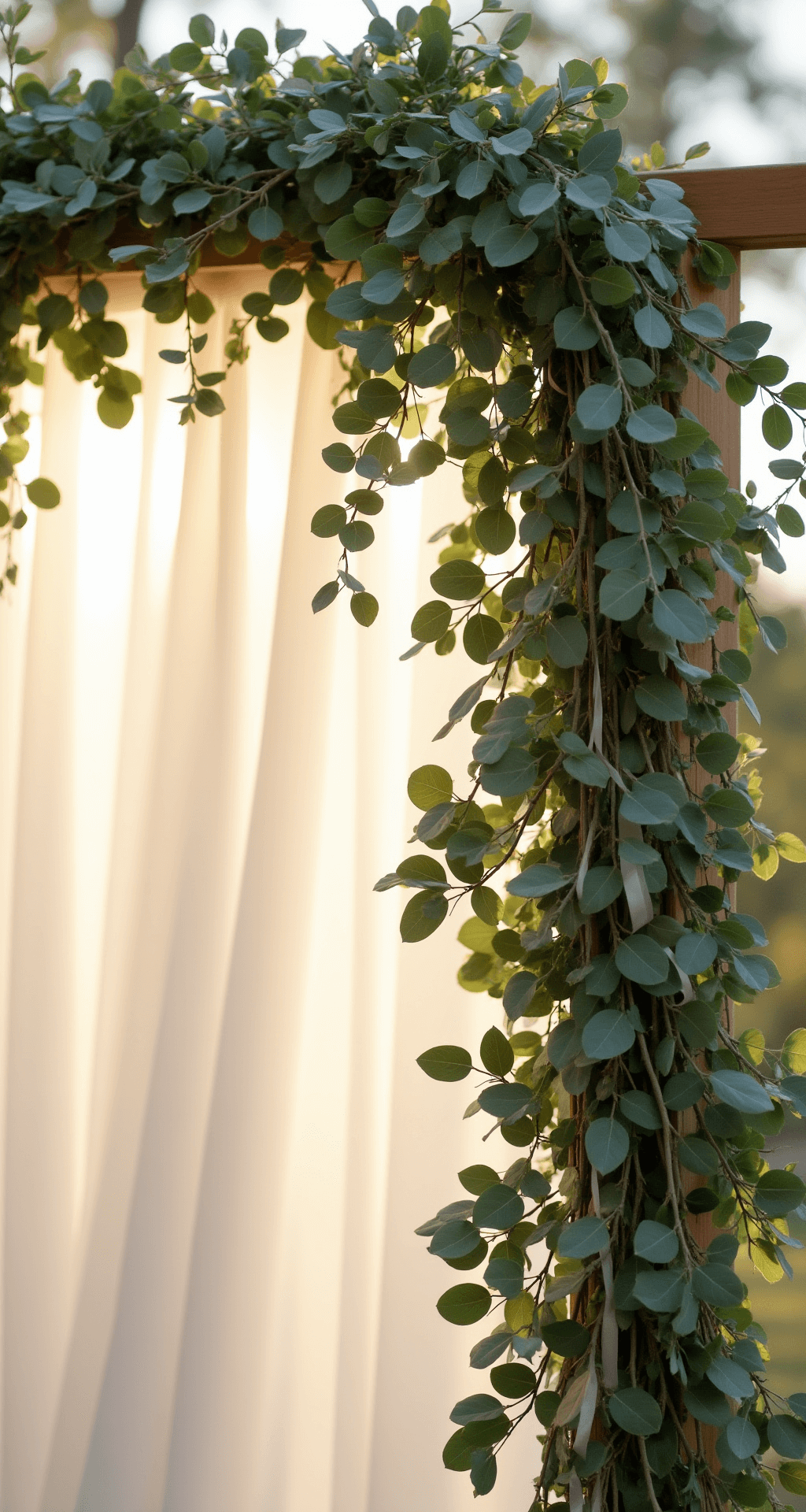
Greenery garlands are your most affordable option, and honestly, they’re stunning.
These use only foliage—eucalyptus, ruscus, salal, ivy, and other leafy varieties—without any flowers mixed in.
Here’s why they work so well:
- Cost between $3 to $8 per linear foot (versus $15 to $40 for full floral)
- Create a sophisticated, modern aesthetic
- Work beautifully in minimalist and Scandinavian-inspired weddings
- Photograph like a dream in natural light
- Last longer than floral garlands (greenery holds up better throughout the day)
I used greenery garlands at a wedding I attended recently, and the couple draped them around a simple wooden arch with white ribbon woven through.
The effect was so elegant that guests assumed it cost thousands—it didn’t.
Mixed Greenery and Floral Garlands: The Goldilocks Option
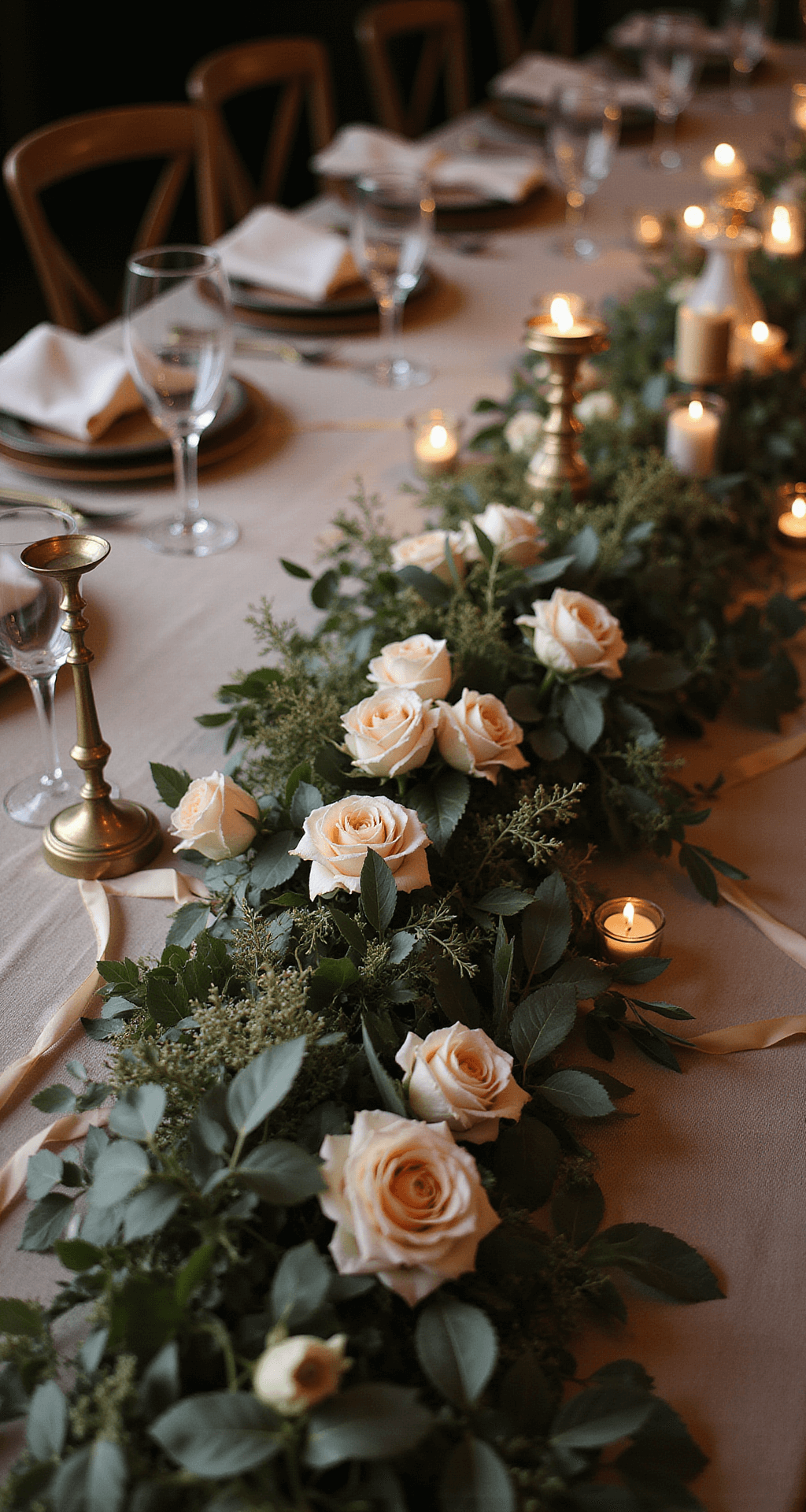
This is where you get the best of both worlds: the structure of greenery with selective flower accents.
Florists build these by creating a greenery base, then hand-wiring individual flowers throughout.
The advantages:
- Mid-range pricing ($8 to $20 per linear foot)
- Highly customizable—add as many or as few flowers as your budget allows
- Flexible scaling—run short on funds halfway through? Reduce flowers, keep the greenery
- Creates visual interest without overwhelming the space
- Works for literally any wedding style
Many couples I’ve worked with choose this route because they can prioritize flowers in key areas (like the sweetheart table or ceremony arch) and use greenery-heavy garlands in secondary spots.

Full Floral Garlands: The Statement Maker
These are basically moving gardens—every inch packed with blooms.
They’re labor-intensive, expensive, and absolutely show-stopping.
Full floral garlands run $20 to $40 per linear foot, sometimes more if you’re using premium flowers like garden roses or peonies.
When they’re worth the investment:
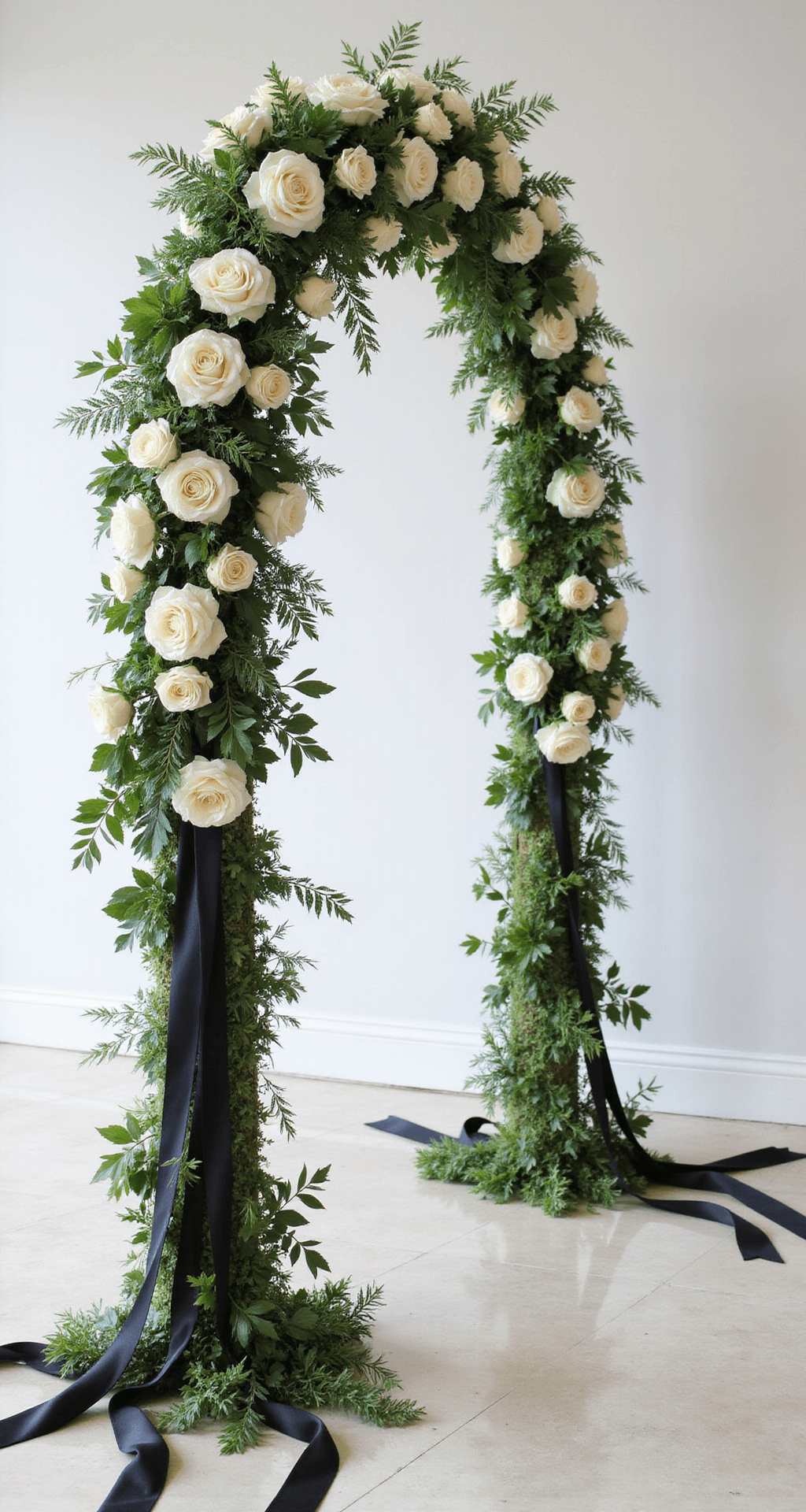
- Your ceremony arch as the main focal point
- Draping the sweetheart table (guests sit closest here—maximum impact)
- Overhead installations where the flowers hang dramatically
- Your wedding’s visual centerpiece and main design feature
Think of full floral garlands as your “hero” piece—the element that makes people gasp when they walk in.
You don’t need them everywhere; you just need them in places where they’ll make the biggest impression.
Where to Actually Use Garlands (Beyond the Obvious Arch)
Here’s where most people miss opportunities.
They hang a garland on the ceremony arch and call it a day.
But garlands work magic in so many places:
Ceremony Spaces
Your main focal point:
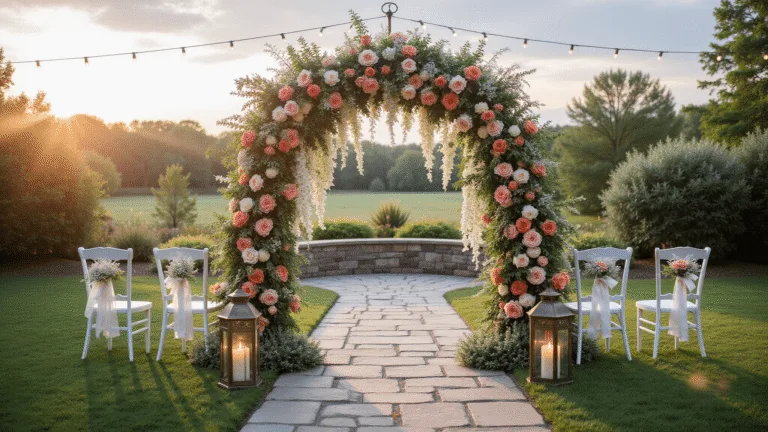
- Drape across the arch or frame the altar
- Weave along ceremony aisle railings or posts
- Wrap around pillars or columns flanking your ceremony space
- Create a “flower wall” effect by layering garlands on a backdrop
Reception Areas
The sweetheart table:
Eucalyptus garland greenery draped across the table front creates an intimate, romantic feel.
Guests can see the detail up close, and it photographs beautifully.
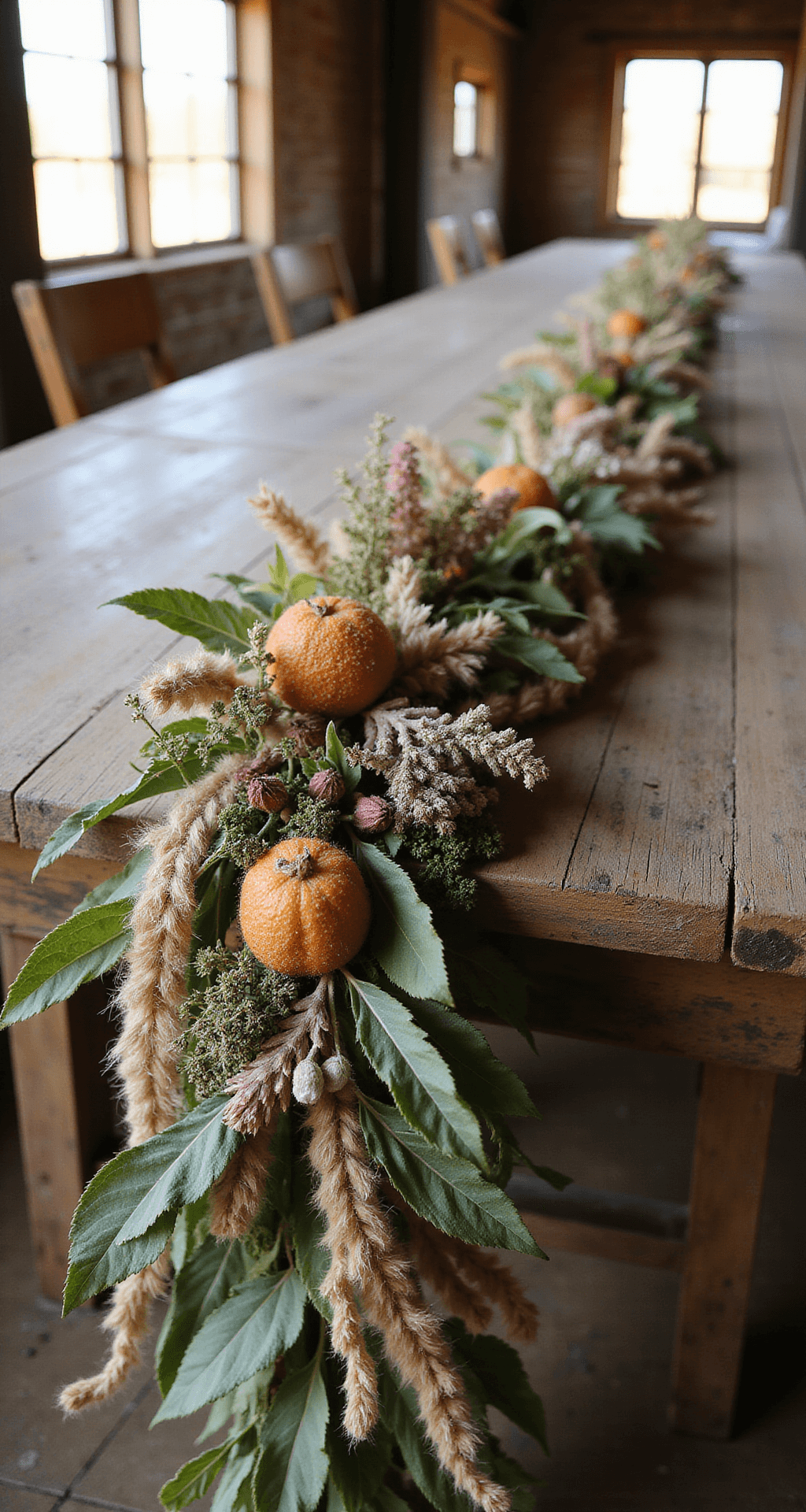
Long reception tables:
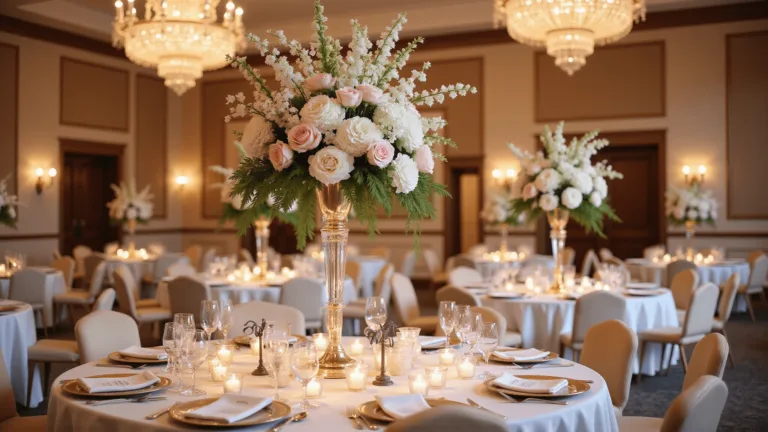
Run garlands down the center of long tables instead of using individual centerpieces.
Layer with candles, place cards, and glassware for a cohesive look.
Cake and dessert tables:
Garlands frame your cake and treats without obscuring them.
They also guide the eye directly to your dessert display.
Overhead Installations
Hanging garlands from exposed beams, chandeliers, or tent poles creates dimension and draws the eye upward.
This works especially well in venues with high ceilings or open-air spaces.
I’ve seen venues use thin fishing line to suspend garlands at varying heights—it creates an absolutely magical canopy effect.
Unexpected Places (That Make You Look Like a Design Genius)
- Wrapped around chair backs at the sweetheart table or VIP seating
- Draped across doorways as guests enter the reception
- Framing signage around your seating chart, menu board, or welcome table
- Along staircases if your venue has them</