
Home Wedding Decor: Transform Your Space Into a Stunning Celebration Venue Without Breaking the Bank
Home Wedding Decor: Transform Your Space Into a Stunning Celebration Venue Without Breaking the Bank
Contents
- Home Wedding Decor: Transform Your Space Into a Stunning Celebration Venue Without Breaking the Bank
- Defining Your Ceremony Space: Making Magic in Your Home
- Creating an Aisle That Tells Your Story
- Your Entryway: The First Impression That Sets the Tone
- Showstopping Entry Ideas
- Reception Tables: Where Smart Strategy Beats Big Spending
- The One Statement Detail Strategy
- Using Your Home’s Architecture Strategically
- Popular Home Wedding Themes: Finding Your Vibe
- Rustic Chic: Warm, Cozy, and Deeply Personal
Home wedding decor transforms your personal space into a celebration venue by defining ceremony and reception areas with strategic use of flowers, greenery, lights, and textiles that complement your existing home features.
I get it—the thought of turning your living room or backyard into a wedding venue feels overwhelming.
You’re probably wondering: where do I even start?
How much is this actually going to cost?
And am I going to wreck my beautiful home in the process?
Here’s the truth I’ve learned after helping countless couples pull off stunning home celebrations: your house already has everything it needs.
You don’t need to build decor from nothing.
You need to work with what you’ve got.
Defining Your Ceremony Space: Making Magic in Your Home
The biggest mistake I see couples make is treating their home like a blank canvas.
It’s not.
Your home has bones, character, and architectural features that a fancy venue could never replicate.
Your job is to highlight them, not hide them.
Start by identifying your natural ceremony backdrop.
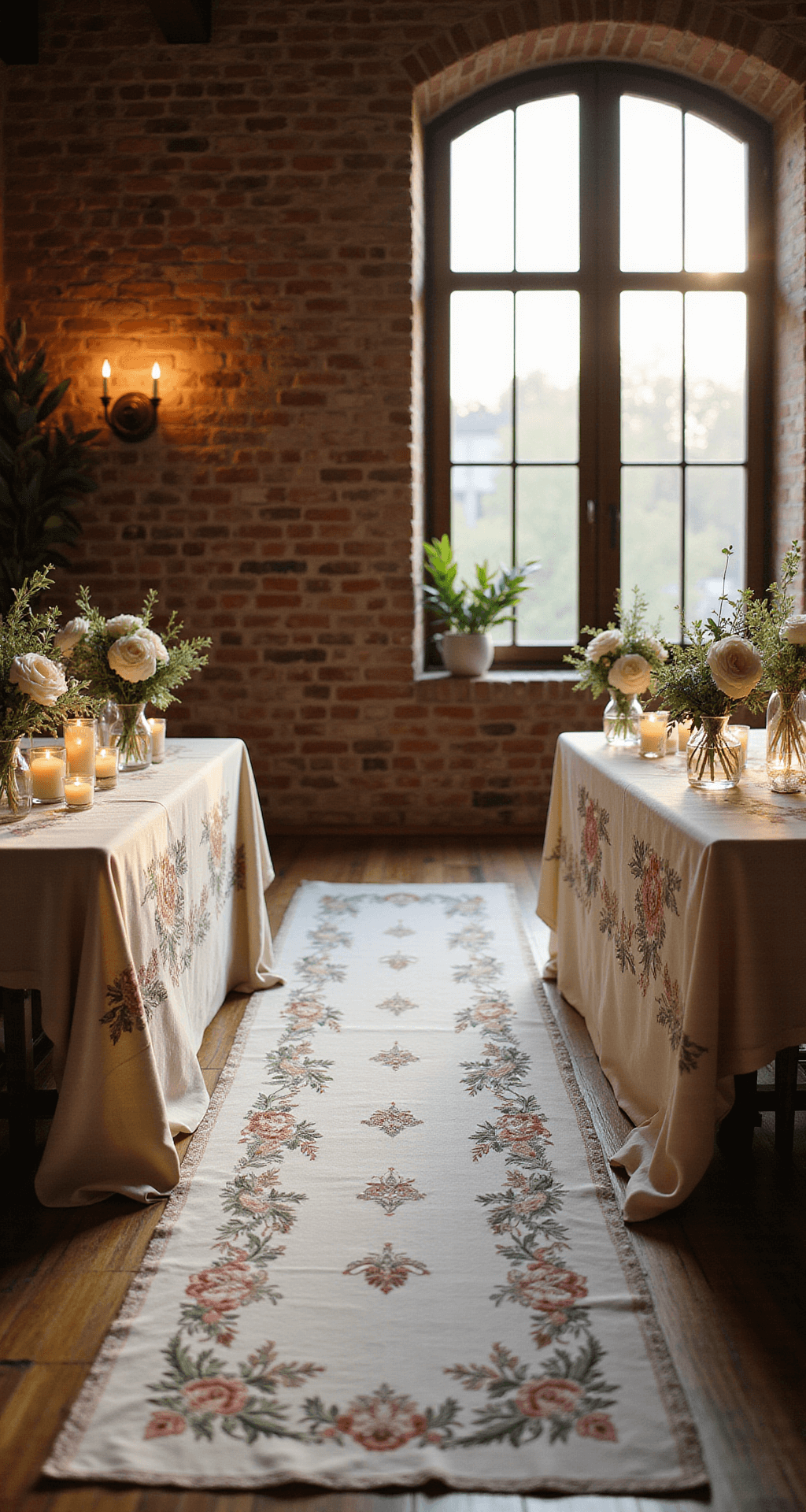
Is there an exposed brick wall that could anchor your vows?
A fireplace mantel begging for greenery and candles?
A floor-to-ceiling window framing your garden?
That’s your hero moment right there.
You don’t need to do much more than that.
Seriously.
Creating an Aisle That Tells Your Story
An aisle isn’t just a path—it’s the first thing your guests will focus on.
It’s how you’re saying: “This matters. We thought about this.”
Here’s how to define it without going overboard:
- Line both sides with delicate flowers in tall glass vases that you already own or can borrow
- Drape the walkway with vintage rugs or interesting textiles that have meaning to you
- Use cascading ribbons tied to chairs or posts to create vertical interest
- Layer greenery accents—eucalyptus, olive branches, even branches from your own yard work beautifully
- Light the path with battery-operated candles (no fire hazard, total impact)
I attended a wedding last spring where the bride simply used her grandmother’s embroidered table runners to line the aisle.
Those runners meant everything.
Guests felt the history before she even walked toward her groom.
That’s the kind of detail that costs nothing but means everything.
Your Entryway: The First Impression That Sets the Tone
Your guests arrive at your home expecting their own living room.
Instead, they should feel like they’ve stepped into your celebration.
Your entryway is where you make that magic happen.
This is where you can afford to be bold.
Showstopping Entry Ideas
Make a statement without a massive budget:
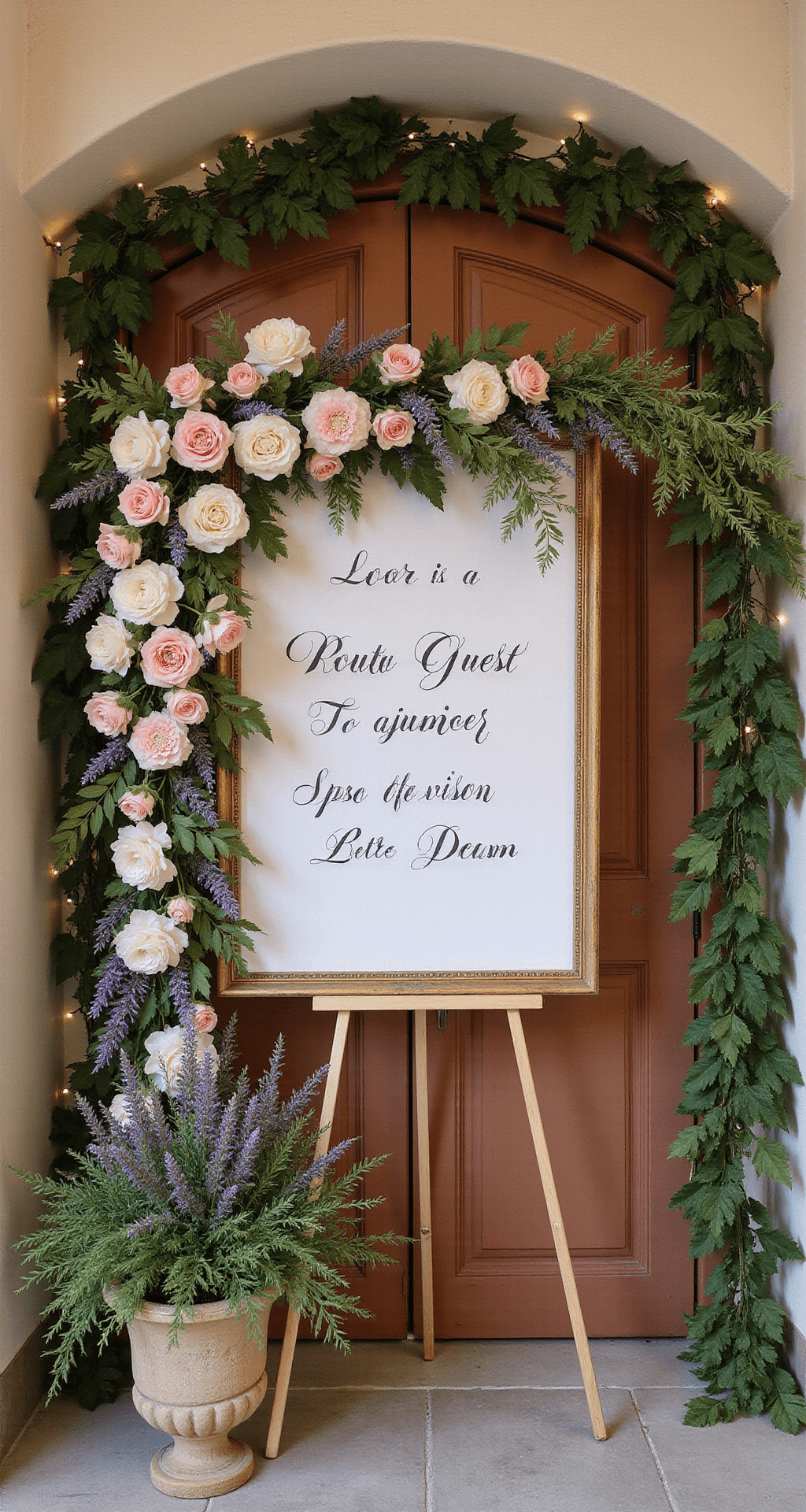
- Create a DIY floral installation using floral foam and fresh or artificial flowers arranged in unexpected ways
- Design custom signage that reflects your personality (chalkboard, wooden signs, even a simple frame with your names)
- Place freestanding flower arrangements—even just three tall arrangements in matching vessels—on either side of your front door
- Hang a garland wrapped around your doorframe with twinkling lights woven through
- Set up a small welcome table with a guest book or favors
The entryway should whisper: “You’re about to experience something special.”
It’s your chance to give guests a peek at your wedding theme before they step inside.
Reception Tables: Where Smart Strategy Beats Big Spending
Here’s where most people overspend and overthink.
I’m about to save you thousands of dollars and countless hours of stress.
The secret to reception table decor is the “one statement detail” strategy.
This is non-negotiable if you want your home to feel intentional rather than chaotic.
The One Statement Detail Strategy
You pick one thing that’s absolutely stunning.
Everything else gets dialed back to simple and clean.
Option 1: Patterned Tablecloths as Your Hero
If you’re going with bold patterned tablecloths, keep your centerpieces minimal.
Maybe just candles and greenery.
That’s it.
Your table already has a conversation starter.
Option 2: Colorful Centerpieces as Your Star
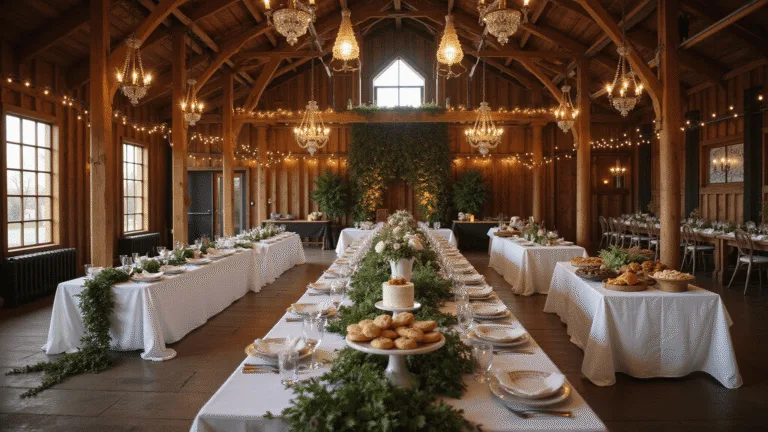
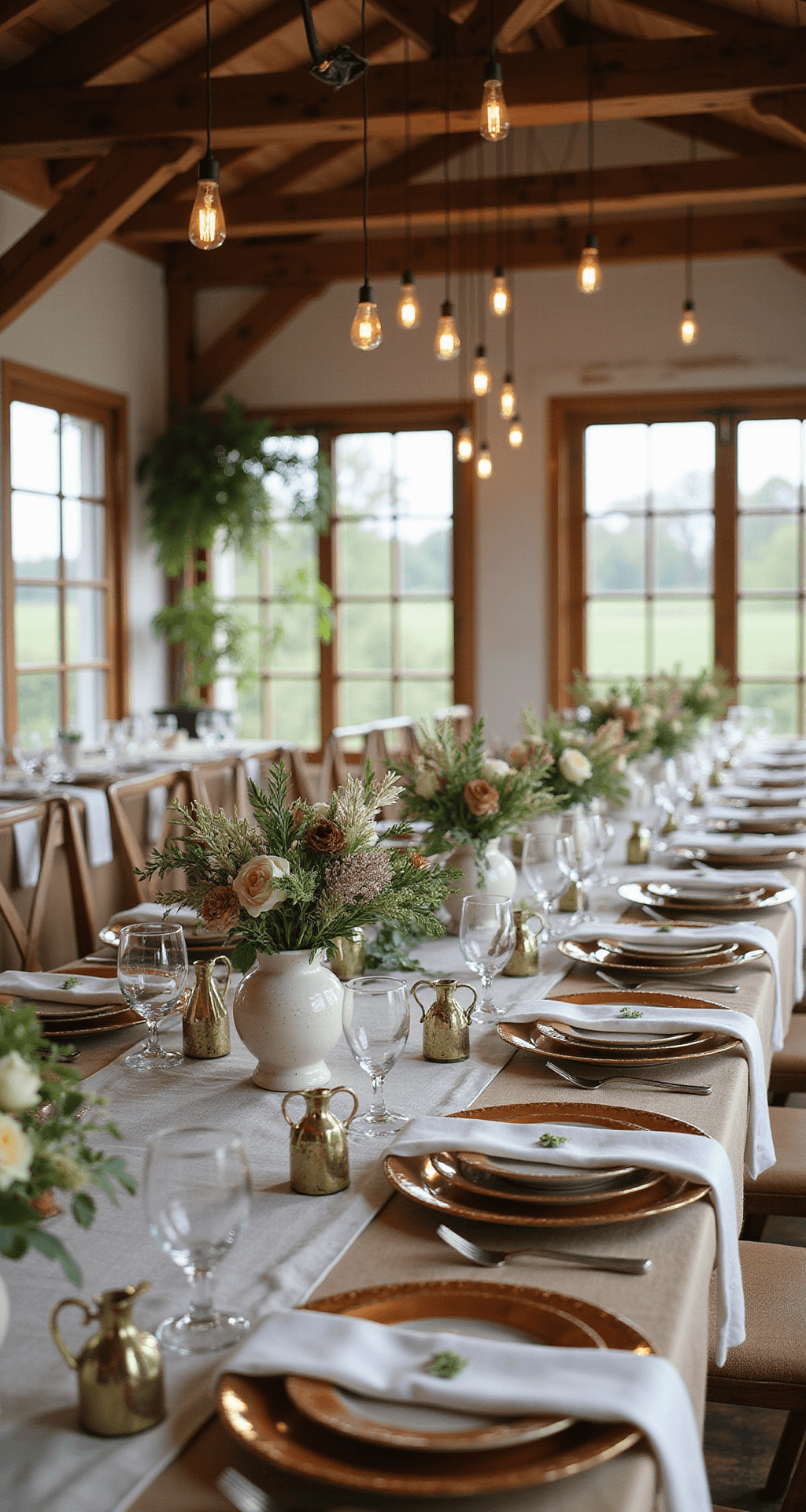
Use long banquet tables to ground large spaces visually while minimizing how much total decor you actually need.
Fill ceramic or glass vessels with wildflowers, dried flowers, or farm produce in your wedding colors.
Keep tablecloths neutral.
Keep place settings simple.
Option 3: Vintage China as Your Flex
Borrow heirloom dishes from family members.
Mix and match patterns if that’s your vibe.
Set a clean, modern table with these unexpected treasures as the focal point.
White tablecloths, white napkins, let the plates speak for themselves.
Using Your Home’s Architecture Strategically
Long banquet tables aren’t just practical—they’re visually powerful.
They ground a space.
They make any room feel intentional.
They also mean you need fewer individual centerpieces than you would with round tables.
Do the math: fewer centerpieces equals lower cost and less setup stress.
I know a couple who used their dining room table as the centerpiece of their reception area, then arranged round cocktail tables around it.
That one long table became the anchor for the entire room’s design.
Everything else flowed from that decision.
Popular Home Wedding Themes: Finding Your Vibe
Not every theme works in a home setting.
Some themes actually thrive there.
Let me break down which aesthetics translate beautifully into residential spaces.
Rustic Chic: Warm, Cozy, and Deeply Personal
This theme feels like home because it literally is home.
Warm colors—terracotta, cream, soft gold, sage green.
Natural fibers—burlap, linen, cotton, wool.
Rounded lines instead of sharp angles.
Cozy spaces instead