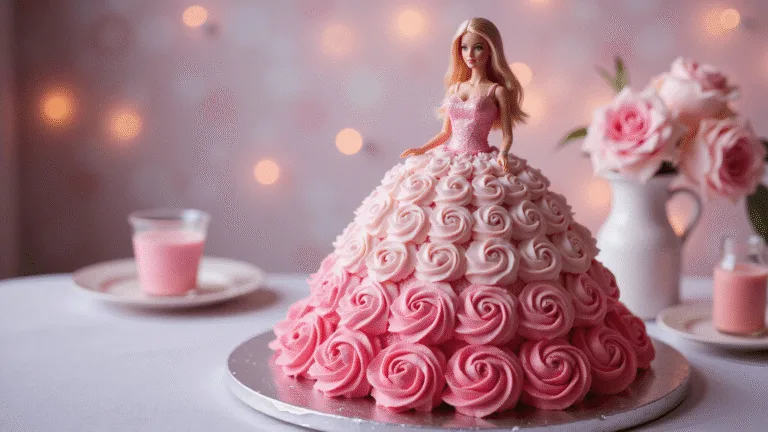

Vanilla Rose Cake: The Floral Dessert That Actually Tastes Good
Vanilla Rose Cake: The Floral Dessert That Actually Tastes Good
Contents
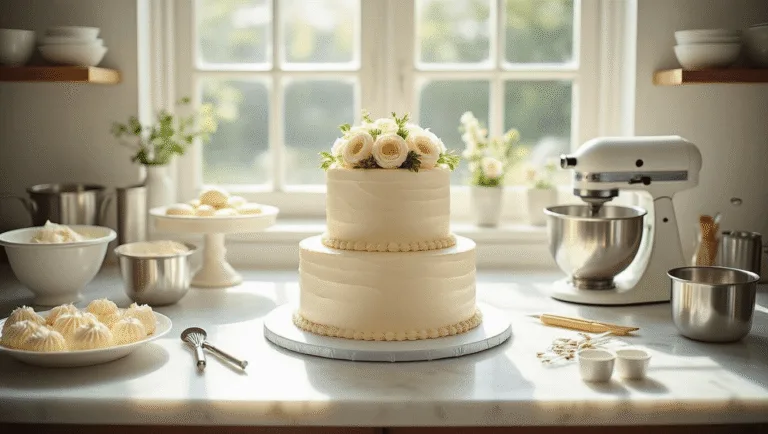
Vanilla rose cake sounds fancy, but I promise you can pull this off without a culinary degree or a nervous breakdown.
I’ve made this cake for birthdays, bridal showers, and that one time I just really needed to impress my mother-in-law (it worked, by the way).
The truth? Most rose cakes taste like you’re eating potpourri. This one doesn’t. It’s delicate, floral without being overwhelming, and actually tastes like cake—not like you raided your grandmother’s linen closet.
Key Info
Prep Time: 45 minutes
Cook Time: 30 minutes
Total Time: 1 hour 20 minutes (plus cooling)
Servings: 12-16 slices
Difficulty Level: Intermediate
Dietary Tags: Vegetarian
Equipment Needed
You don’t need a professional kitchen for this.
Here’s what you actually need:
- Stand mixer with paddle and whisk attachments (or a hand mixer and serious arm muscles)
- Three 8-inch round cake pans or two 9-inch pans
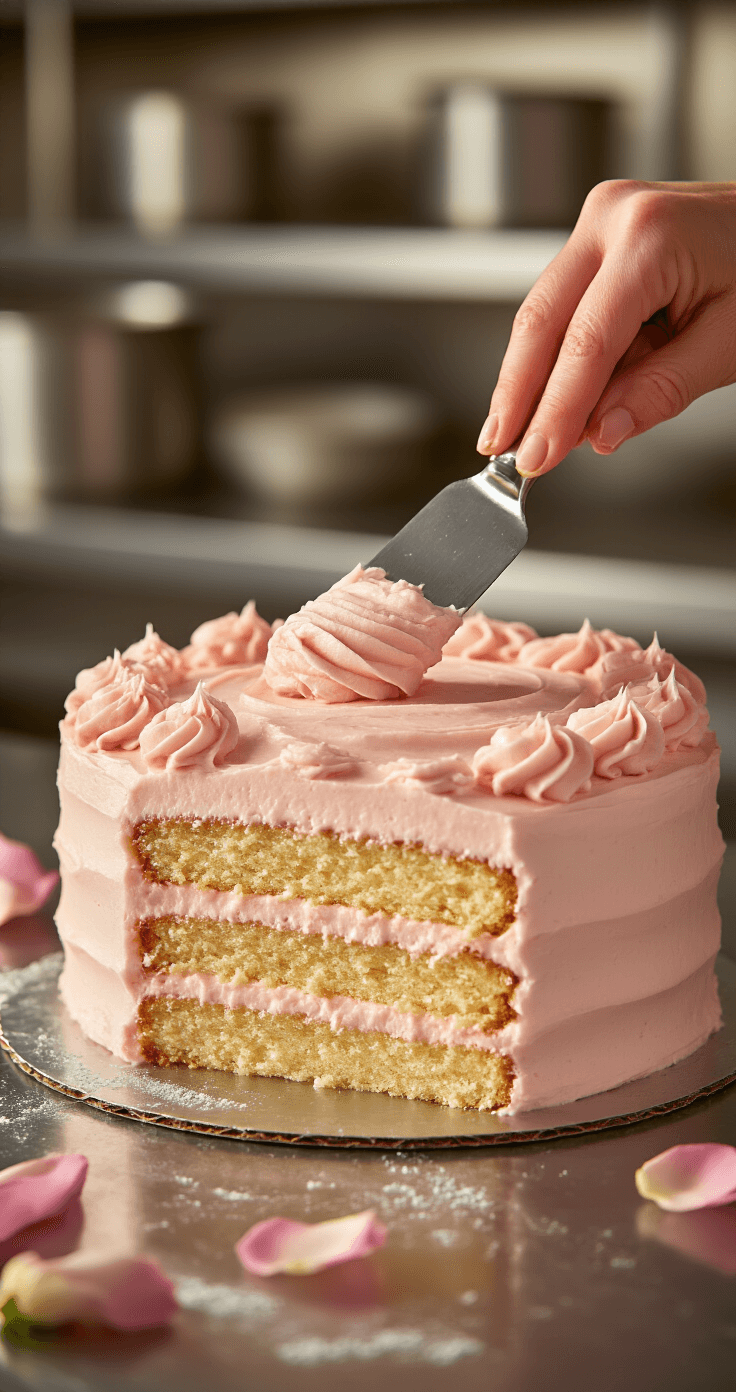
- Offset spatula (this is the secret weapon for smooth frosting)
- Mixing bowls (at least 2-3)
- Measuring cups and spoons
- Cooling racks
- Parchment paper
- Toothpick (for testing doneness)
Simple alternatives: Hand mixer works fine. Glass bowls instead of metal. Butter knife instead of offset spatula (though you’ll curse me during frosting).
Ingredients
For the Cake
Dry Ingredients:
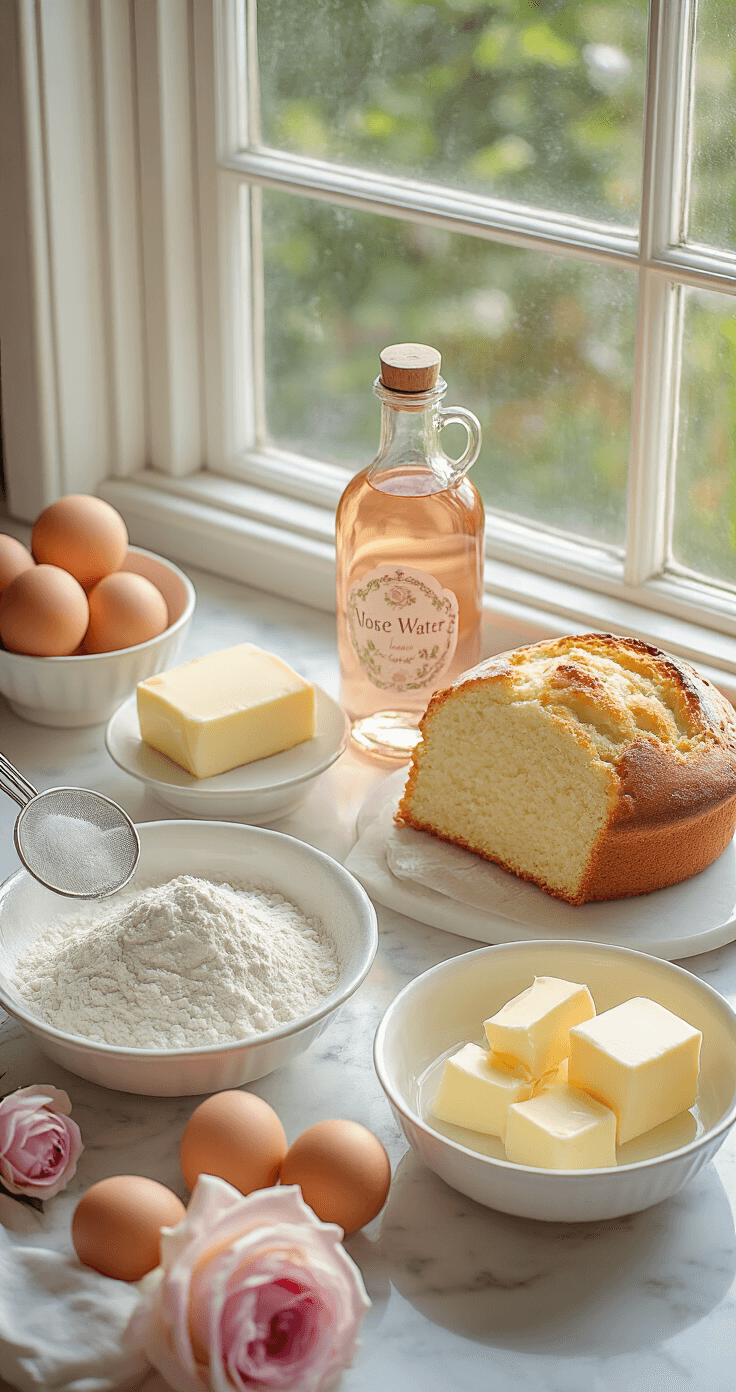
- 2½ cups all-purpose flour (325g)
- 1½ cups granulated sugar (300g)
- 2½ teaspoons baking powder
- ½ teaspoon salt
Wet Ingredients:
- ¾ cup unsalted butter, room temperature (170g)
- 4 large eggs, room temperature
- 1 cup whole milk, room temperature (240ml)
- ¼ cup sour cream, room temperature (60g) [Greek yogurt works]
- 2 teaspoons pure vanilla extract
- 1½ teaspoons rose water (don’t skip this—it’s the whole point)
- ½ teaspoon rose powder (optional, for deeper flavor and pale pink color)
For the Rose Buttercream
- 1½ cups unsalted butter, softened (3 sticks/340g)
- 6 cups powdered sugar, sifted (750g)
- 4-5 tablespoons whole milk
- 1 teaspoon vanilla extract
- 1 teaspoon rose water
- Pinch of salt
- Pink food coloring (optional, just a tiny drop)
Optional Garnish
- Fresh or dried rose petals (make sure they’re food-grade)
- Edible flowers
- Sparkling sugar
Method
Prep Work First (Don’t Skip This)
Take your butter, eggs, milk, and sour cream out of the fridge 45 minutes before you start.
Cold ingredients don’t mix properly. They’ll curdle, separate, and generally ruin your day.
Preheat your oven to 325°F (not 350°F—the lower temp gives you a more tender crumb).
Line your cake pans with parchment paper and grease the sides. Don’t be stingy with the grease.
Making the Cake
Step 1: Mix Your Dry Ingredients
Dump flour, sugar, baking powder, and salt into your stand mixer bowl with the paddle attachment.
Mix on low for about 2 minutes until everything looks like fine sand.
Step 2: Add the Butter
Cut your room-temperature butter into chunks.
Add it to the dry ingredients piece by piece.
Mix on medium-low until the mixture looks crumbly—like wet sand at the beach.
This takes about 4-5 minutes. Don’t rush it.
Step 3: Prepare Wet Mixture
In a separate bowl, whisk together milk, sour cream, vanilla, rose water, and rose powder.
The mixture should smell floral but not overpowering.
If it smells like you’re about to drink perfume, you added too much rose water. Start over.
Step 4: Add Eggs
With the mixer on medium speed, add eggs one at a time.
Wait 20 seconds between each egg.
Scrape down the bowl after each addition because there’s always that stubborn bit of flour hiding at the bottom.
Step 5: Alternate Wet and Dry
Add your wet mixture in three parts, mixing on low speed for only 10-15 seconds after each addition.
This is critical: Overmixing develops gluten, which makes your cake tough and dense instead of tender and fluffy.
Stop as soon as you can’t see flour streaks anymore.
Step 6: Divide and Bake
Split the batter evenly among your three pans.
I use a kitchen scale for this because I’m anal about even layers, but eyeballing works too.
Tap each pan on the counter a few times to get rid of air bubbles.
Bake for 25-30 minutes.
The cake is done when:
- A toothpick comes out with a few moist crumbs (not wet batter)
- The top springs back when you poke it
- The edges pull slightly away from the pan
Step 7: Cool Properly
Let the cakes cool in the pans for 5 minutes.
Then flip them onto cooling racks.
Do not frost warm cake. I don’t care how rushed you are.
Warm cake + buttercream = melted disaster that slides right off.
Wait at least 45 minutes for complete cooling.
Making the Rose Buttercream
Step 8: Beat the Butter
Put your softened butter in the mixer with the whisk attachment.
Beat on medium speed for 8 full minutes.
Set a timer. Don’t cheat.
The butter will become pale, fluffy, and nearly double in volume.
This is what makes buttercream light instead of greasy and heavy.
Step 9: Add Sugar Gradually
Turn the mixer to low.
Add half the powdered sugar slowly.
Once incorporated, add the remaining sugar.
If you dump it all at once, you’ll create a sugar tornado in your kitchen. Ask me how I know.
Step