
South Indian Wedding Decor: Creating Authentic Celebrations That Honor Tradition Without Breaking the Bank
South Indian Wedding Decor: Creating Authentic Celebrations That Honor Tradition Without Breaking the Bank
Contents
You’re staring at Pinterest at 2 AM, drowning in a sea of wedding inspiration, and suddenly you see it—a South Indian wedding that takes your breath away.
The colors are vibrant without being chaotic.
The flowers seem to cascade naturally, like they grew that way overnight.
Everything feels meaningful, not just pretty.
But here’s what keeps you up: How do you actually recreate that magic?
How do you honor your culture without hiring a team of decorators who cost more than your honeymoon?
And most importantly—what if you don’t have access to those fresh flowers or live nowhere near a temple garden?
I’ve been there.
I’ve stood in my living room with a Pinterest screenshot and absolutely no idea where to start.
So let me walk you through what I’ve learned about South Indian wedding decor—the real, practical stuff that actually works, whether you’re planning in Chennai or Chicago.
What Makes South Indian Wedding Decor Actually Different
Here’s the thing about South Indian celebrations: they’re not trying to be flashy.
They’re trying to tell a story.
The decor speaks a language that’s been spoken for centuries—one where every marigold has meaning, every brass lamp holds intention, and nothing exists just to look pretty.
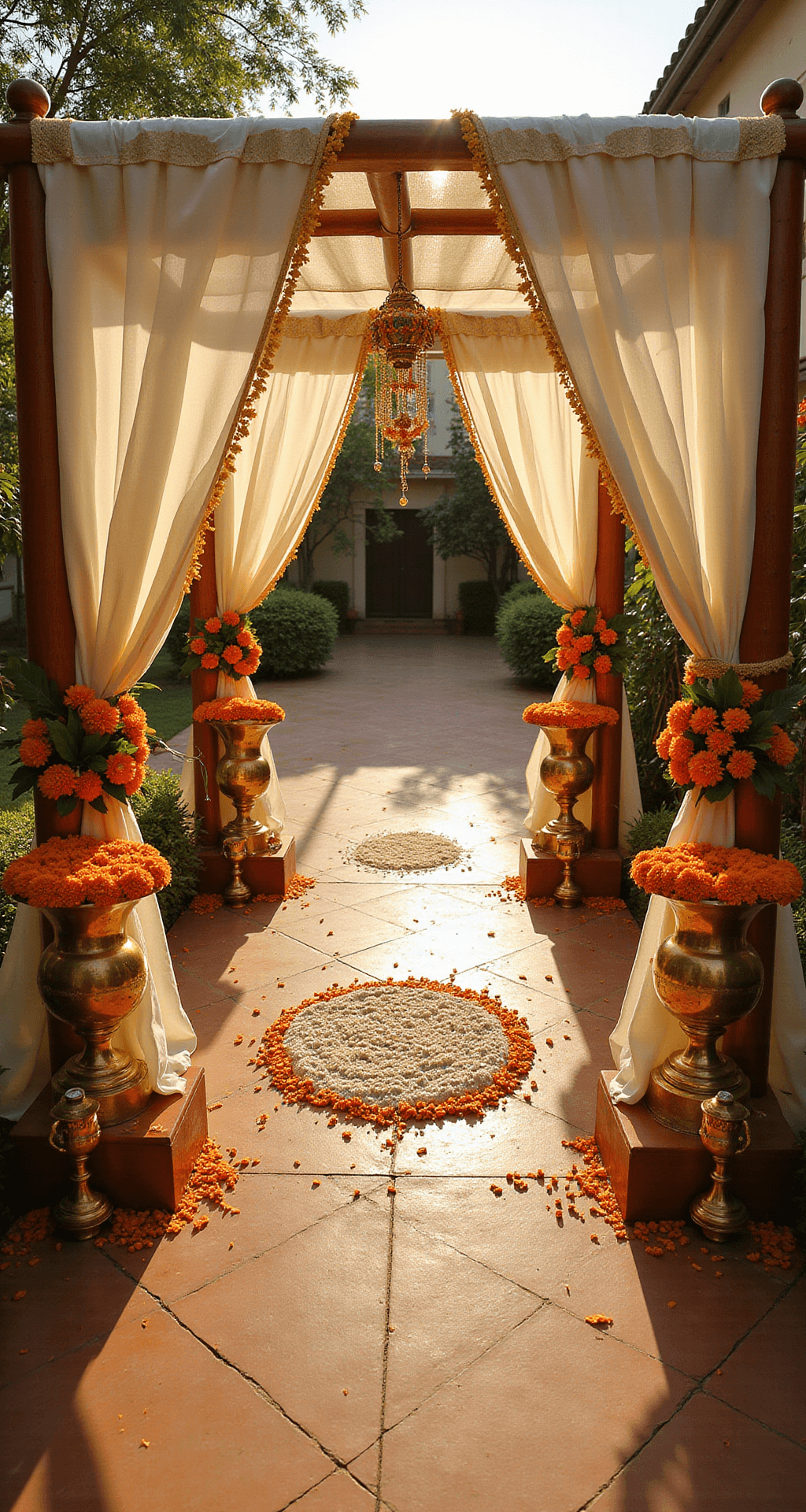
Bright, colorful aesthetics are absolutely central to the design.
Think yellows that remind you of turmeric and prosperity.
Oranges that feel like sunshine made solid.
Greens that represent new beginnings and fertility.
But it’s not chaotic Technicolor—it’s intentional, measured, and rooted in what these colors actually mean to your community.
The genius of South Indian wedding decor is that it combines rustic and natural elements with subtle, humble details in a way that somehow feels both simple and incredibly sophisticated.
A banana leaf isn’t just a leaf—it’s a canvas.
A mango leaf garland isn’t just decoration—it’s a thoran, symbolizing prosperity and divine blessing.
Rice paste patterns (kolam) at your entrance aren’t just pretty—they’re telling guests: “You’re welcome here, and this is an auspicious beginning.”
This is decor with purpose.
The Core Elements That Make It All Work
Let me break down what actually gets decorated at a South Indian wedding, because understanding this changes everything about how you approach your own celebration.
The Mandapam: Where Everything Happens
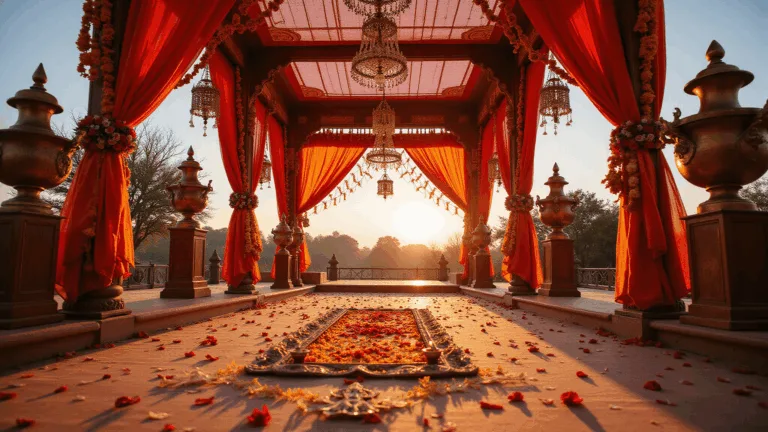
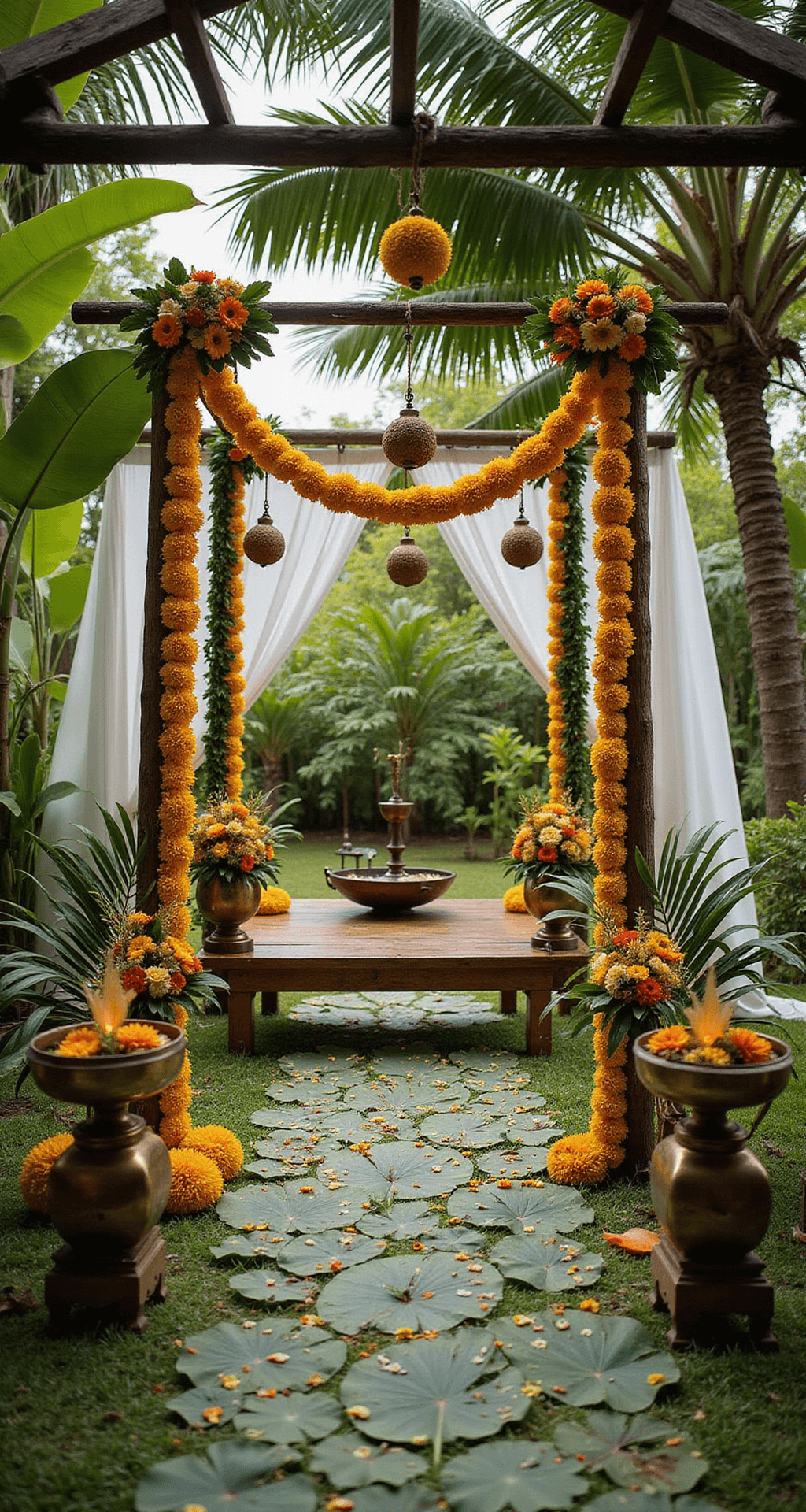
The mandapam (wedding pavilion) is the star of the show.
This is the stage where your entire wedding actually happens, so obviously it needs to be stunning.
But here’s what’s beautiful about it: you’re not trying to fill every inch of space with decoration.
You’re creating a framing device that highlights the couple—which means smarter choices, fewer materials, and actually less stress.
The traditional mandapam features:
- Silk drapes in deep reds, golds, or whites that create a backdrop without overwhelming the space
- Fresh flowers arranged strategically (not chaotically everywhere)
- Structural elements like banana stem pillars that create height and dimension
- Brass accents that catch light and add warmth
The banana stem pillar is honestly genius—it’s affordable, it’s entirely natural, and it photographs beautifully.
Plus, if you need to ship materials internationally, you’re not trying to transport heavy brass or marble.
Stage Decor That Keeps the Focus Where It Matters
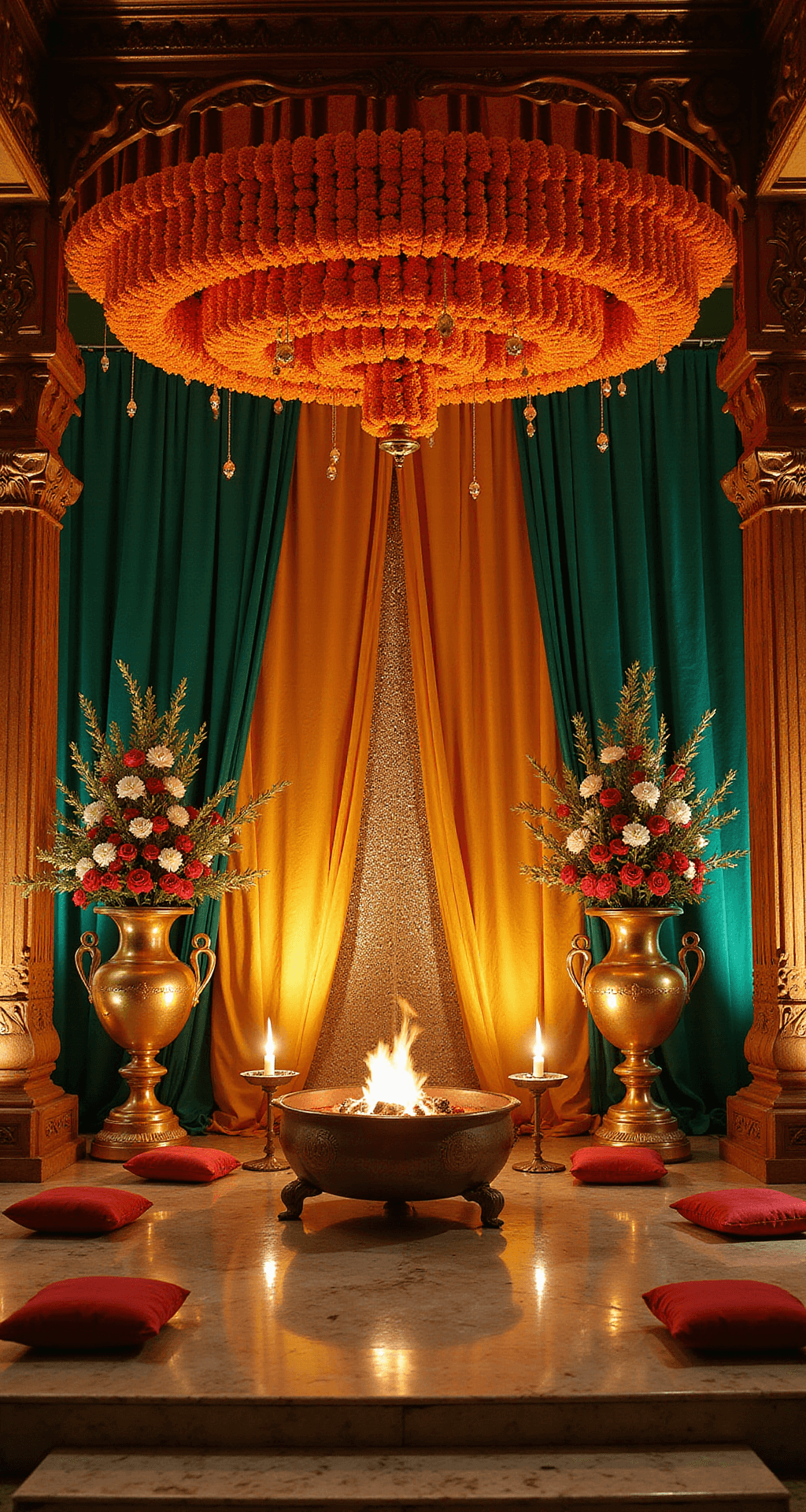
Your stage decor should make people look at the couple, not distract them with an explosion of color.
This is where restraint actually becomes a superpower.
The best South Indian stage designs I’ve seen use lush arrangements combining flowers and leaves while maintaining a clear focal point on the couple.
Think of it like this: your flowers are the frame, not the entire gallery.
Here’s what works:
- Arrange flowers in clusters rather than scattered everywhere
- Use varying heights to create visual interest (tall centerpieces on the sides, shorter arrangements in front)
- Incorporate greenery to “breathe” between the floral elements
- Let the couple’s positioning remain completely unobstructed
Floral Arrangements That Feel Like a Garden, Not a Funeral
South Indian weddings traditionally use specific flowers—and there’s actually good reason for this beyond just aesthetics.
Marigolds (genda) are the star of the show.
They’re bright, they last forever, they have cultural significance, and they don’t cost a fortune.
Jasmine (mullai) brings fragrance and delicate beauty.
These flowers are often strung as garlands—not just hung randomly, but created as traditional flower garland strings that you can actually use to create layers, swags, and organized visual structure.
Here’s the practical breakdown of flowers you actually need:
- Marigolds: 200-400 blooms (depending on venue size)
- Jasmine: 50-100 strings
- Chrysanthemums or local alternatives: 100-150 for filler
- Carnations: Optional but extend the flower life significantly
- Greenery: Mango leaves, banana leaves, eucalyptus (whatever’s available locally)
If you’re ordering flowers, do it no more than 2 days before the wedding.
Flowers are living things—they degrade quickly once cut.
Brass Accents: The Subtle Touch That Changes Everything
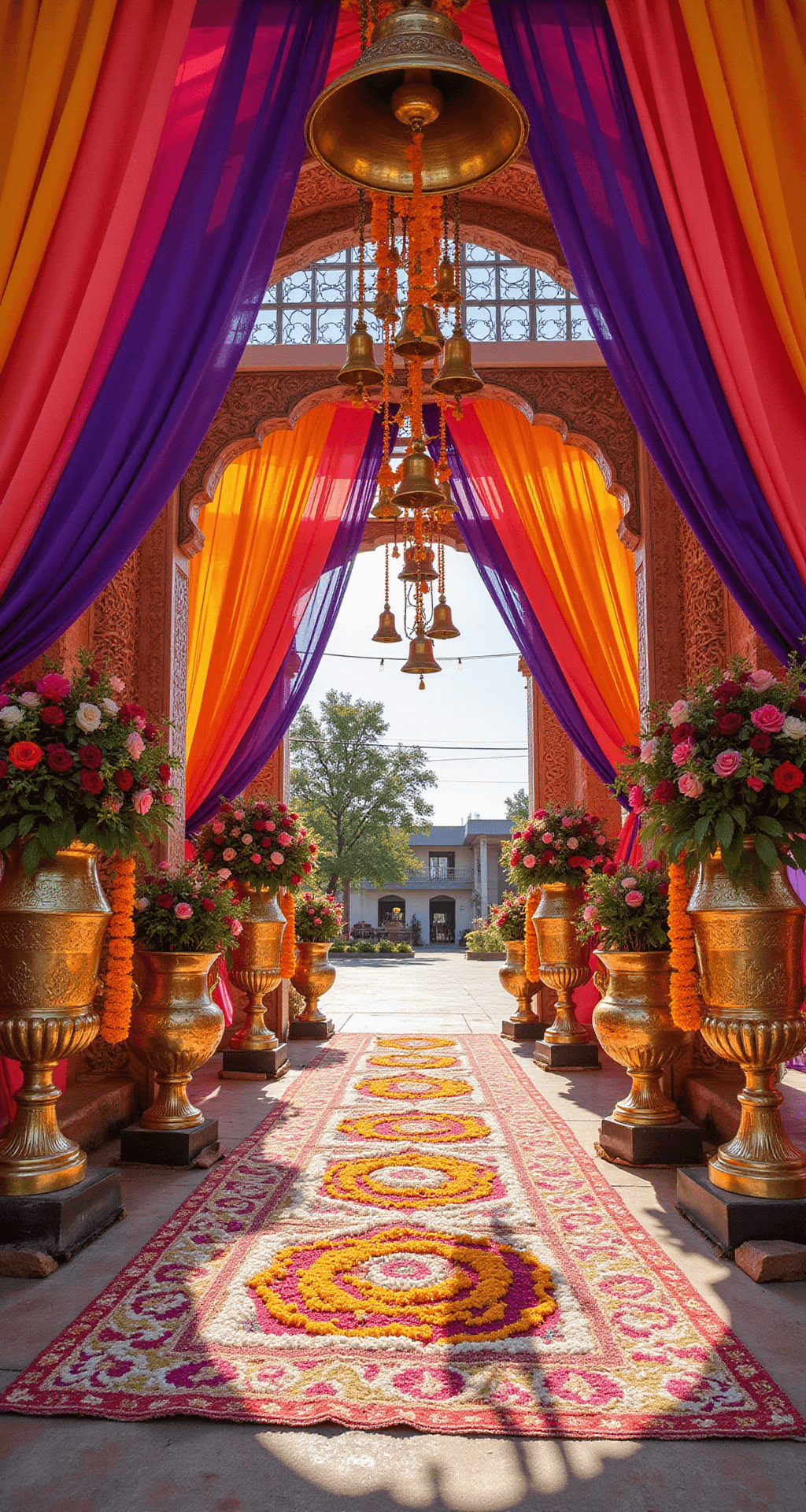
Brass lamps (dipa) and vessels are where South Indian decor gets its warmth and authenticity.
These aren’t decorative afterthoughts—they’re the foundation of the entire aesthetic.
Brass doesn’t photograph as flashy as gold spray paint, but in person, it has this warm, timeless quality that actually improves as the sun moves through the day.
You’ll want brass oil lamps and vessels for:
- Entrance arrangements: Place them in clusters alongside flowers
- Centerpieces: Use them to hold flowers or as standalone elements
Similar Posts
The Ultimate Formal Winter Wedding Guest Dresses: Stay Warm & Chic in Style
The Ultimate Guide to Formal Winter Wedding Guest Dresses: Stay Warm & Chic in StyleContentsThe Ultimate Guide to Formal Winter Wedding Guest Dresses: Stay Warm…
Indian Wedding Decor: Your Ultimate Guide to Stunning Celebrations
Indian Wedding Decor: Your Ultimate Guide to Stunning CelebrationsContentsIndian Wedding Decor: Your Ultimate Guide to Stunning CelebrationsWhy Indian Wedding Decor MattersQuick Decor InsightsDecor Styles: From…
The Perfect Fall Wedding Guest Dress
The Perfect Fall Wedding Guest Dress Guide: Looking Fabulous While Keeping It FormalContentsThe Perfect Fall Wedding Guest Dress Guide: Looking Fabulous While Keeping It FormalThe…
The Ultimate Guide to Finding Your Perfect Engagement Dress (That Actually Feels Like You!)
The Ultimate Guide to Finding Your Perfect Engagement Dress (That Actually Feels Like You!)ContentsThe Ultimate Guide to Finding Your Perfect Engagement Dress (That Actually Feels…
How to Become a Wedding Planner With No Experience (And Actually Make Money Doing It)
How to Become a Wedding Planner With No Experience (And Actually Make Money Doing It)ContentsHow to Become a Wedding Planner With No Experience (And Actually…
Orange Wedding Flowers: Your Ultimate Guide to Vibrant Nuptial Blooms
Why Orange Flowers Are a Wedding Game-ChangerContentsWhy Orange Flowers Are a Wedding Game-ChangerThe Perfect Orange Wedding Flower PaletteTop Orange Wedding Flower SuperstarsStyling Your Orange Floral…