How to Master Simple Wedding Decor Without Sacrificing Elegance
How to Master Simple Wedding Decor Without Sacrificing Elegance
Contents
You’re staring at Pinterest for the hundredth time, and you’re overwhelmed. There are thousands of wedding decor ideas bouncing around in your head, and every single one feels like it requires a second mortgage and a degree in floral design.
Here’s the truth: simple wedding decor doesn’t mean boring or cheap. It means being intentional. It means letting the most important part of your day—you two—actually be visible under all those decorations. And honestly, when you strip away the excess, you end up with something far more beautiful than any over-the-top setup ever could be.
I learned this the hard way when I planned my own wedding five years ago. I was ready to go full maximalist—every surface covered, flowers everywhere, enough sparkle to see from space. Then my budget reality check hit, and I had to pivot. That forced constraint became the best design decision I ever made. My wedding ended up being one of the most visually cohesive, calm, and genuinely beautiful events I’ve ever attended (even though I was the bride, so maybe I’m biased).
Let me walk you through exactly how to do simple wedding decor right.
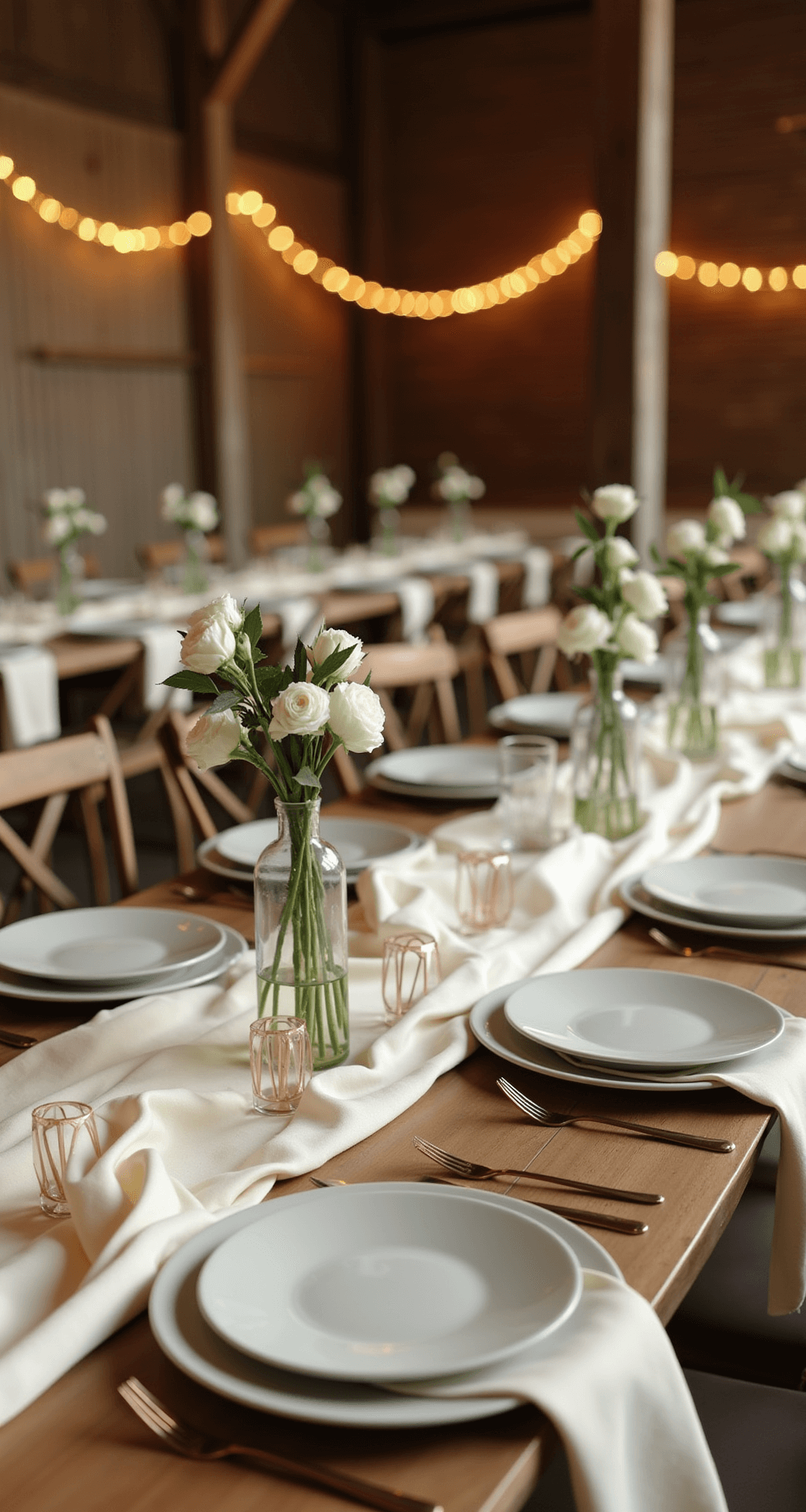
The Foundation: Understanding What Simple Wedding Decor Actually Means
Simple doesn’t mean nothing. Simple means purposeful. Simple means every single item in your space has a reason for being there. When you’re working with a minimalist aesthetic, you’re essentially saying: “I trust my venue. I trust my flowers. I trust myself to look good in photos without needing 500 candles.”
The biggest difference between simple and sparse:
- Simple: curated, intentional, every detail matters
- Sparse: empty, cold, like nobody bothered to show up
Think of it like cooking. Gordon Ramsay doesn’t throw every ingredient into a dish and hope something tastes good. He uses three perfect ingredients and lets them sing. That’s what you’re doing with simple wedding decor.
Start With Your Color Palette: The Secret Weapon
Here’s something nobody tells you about simple wedding decor: the right color palette does 80% of the work for you. You don’t need dozens of decorations if your colors are cohesive and intentional. When everything matches, when everything flows together, the space automatically feels designed even if there’s very little in it.
Your best bets for simple wedding decor colors:
- Neutrals as your base: Cream, ivory, beige, soft gray, warm white, taupe
- Add one accent color maximum: This could be a muted jewel tone like deep emerald or navy, or a soft pastel like pale blush or sage green
- Consider the natural tones of your venue: If you’re getting married in a garden, lean into the greens already there
- Test your colors in different lighting: What looks perfect in daylight might feel off under evening lighting
I used soft cream, warm white, and sage green at my wedding. That’s it. Three colors. But because every single element—from the linens to the flowers to the signage—stuck to those three colors, it looked intentional and expensive even though I’d cut my original budget in half.
Pro tip: Get fabric swatches in your chosen colors and bring them everywhere. To the florist, to the rental company, to the cake designer. This ensures everyone’s on the same page about what “cream” actually means.
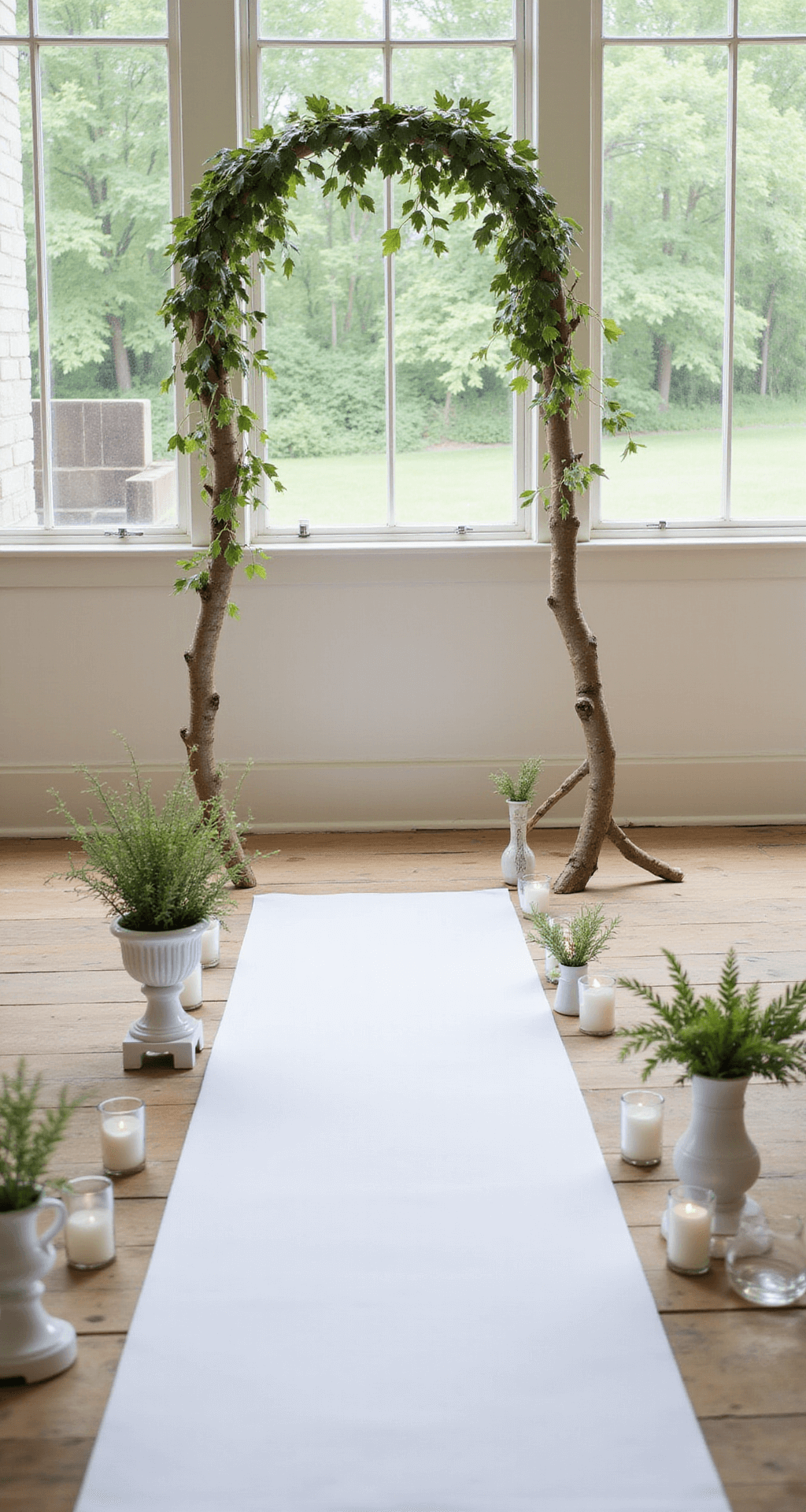
Flowers: The Art of Less Being More
This is where most people overspend and over-decorate. Flowers are beautiful, but they’re also expensive, and you don’t need as many as you think.
Here’s what I learned: One perfect rose in a tall glass vase is more impactful than a massive mixed arrangement that cost three times as much.
When you’re doing simple wedding decor with flowers, think about:
Single-type arrangements instead of mixed bouquets:
- A bunch of white roses, nothing else
- Cream-colored peonies by themselves
- White calla lilies in a statement vase
- Eucalyptus and greenery (sometimes the most beautiful arrangements have no flowers at all)
For your bridal bouquet:
- Go greenery-heavy if you want drama without the cost
- Eucalyptus, ferns, and silvery dusty miller make incredibly beautiful bouquets
- Add just three to five focal flowers (like roses or orchids) for visual interest
- This approach costs significantly less and photographs beautifully
For centerpieces:
- Use tall glass vases with a single type of flower at varying heights
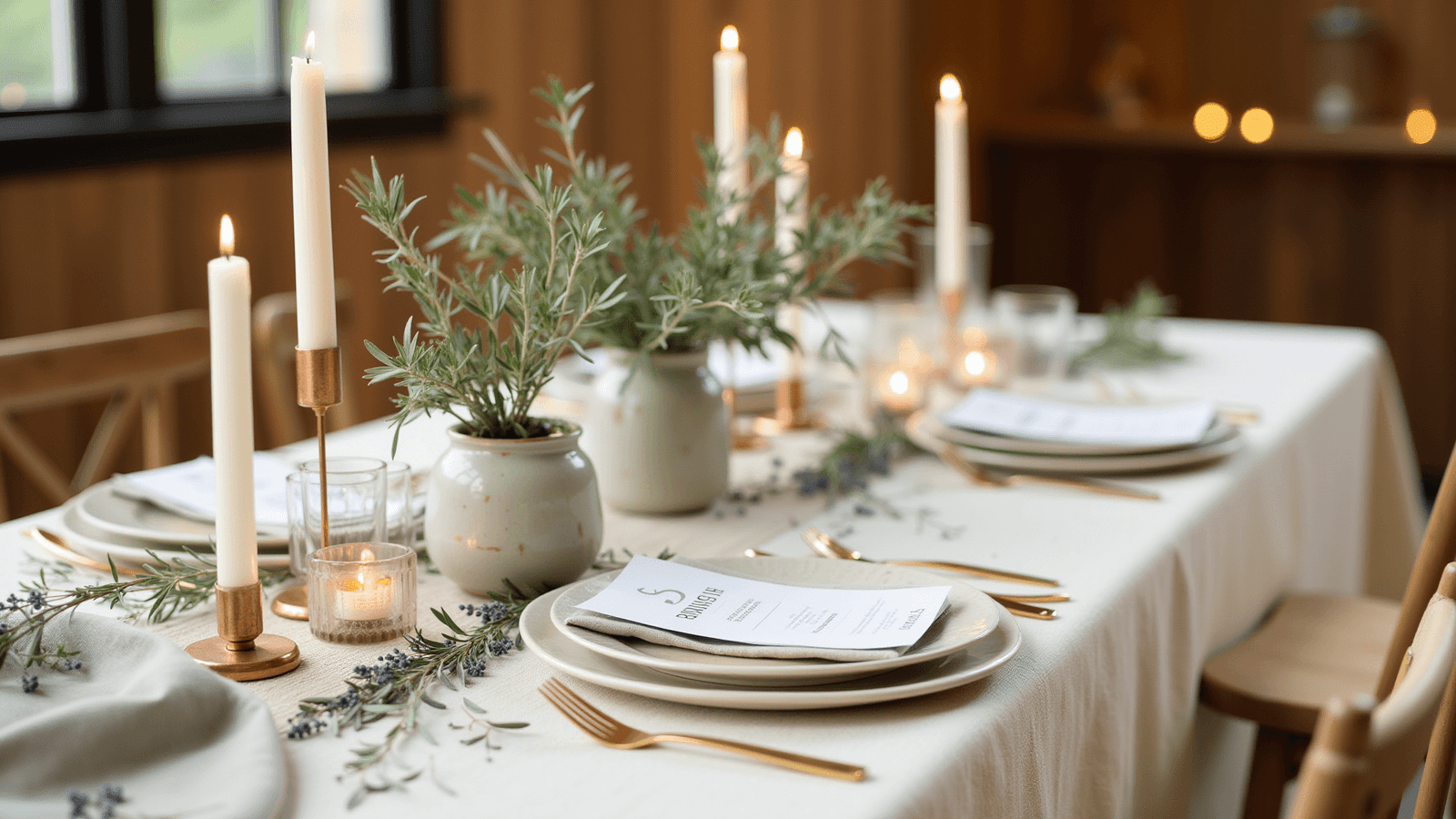
- Or skip flowers entirely and use potted plants, candles, and greenery
- Scatter seasonal wildflowers loosely down the center of tables instead of formal arrangements
For the ceremony:
- Line the aisle with potted plants or small arrangements instead of massive installations
- Hang greenery from the ceremony arch instead of filling it with flowers
- Sometimes the most beautiful ceremonies have nothing but the couple, their people, and the natural beauty of the venue
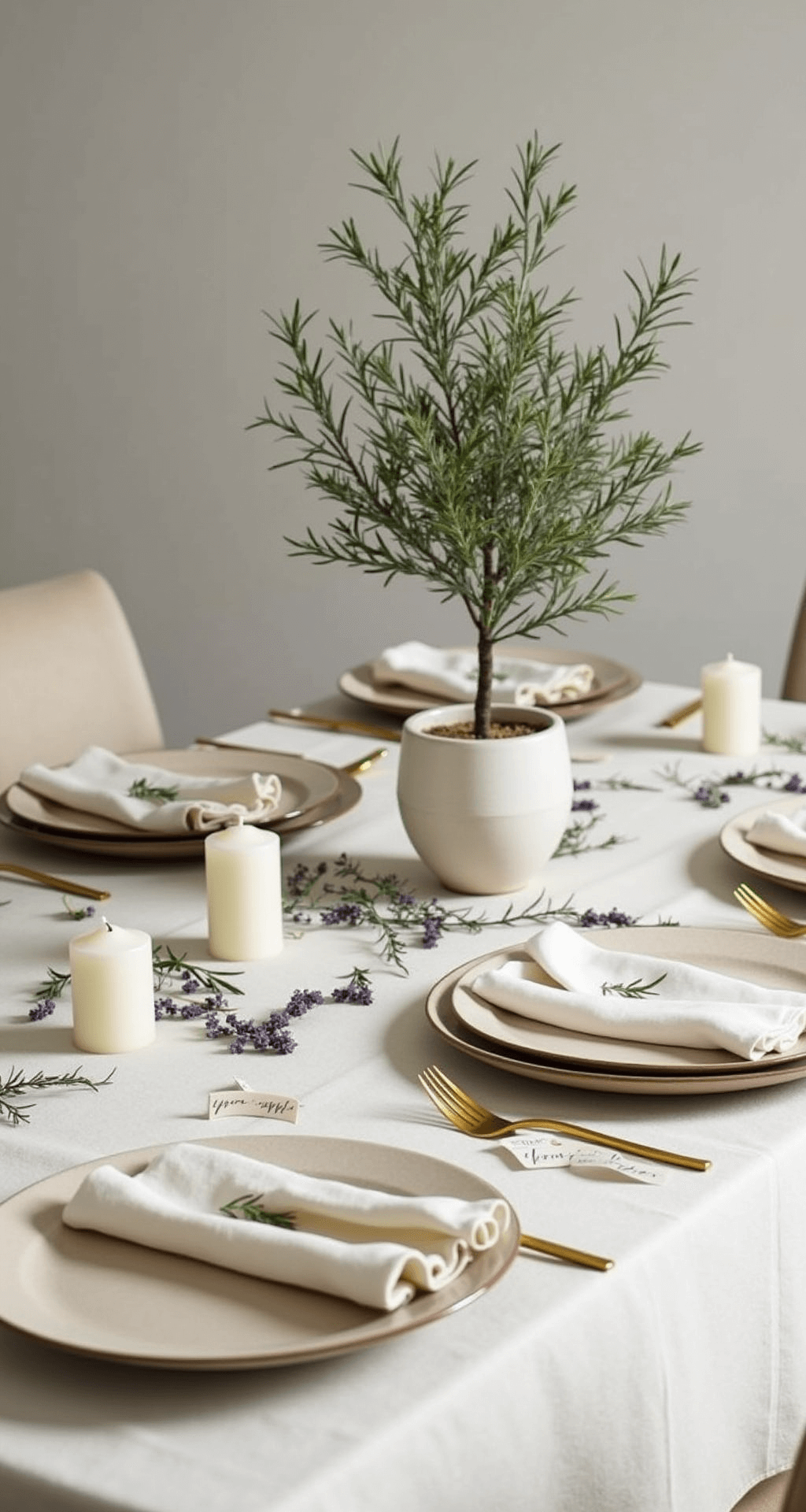
At my wedding, I used potted olive trees as centerpieces and scattered fresh herbs (rosemary and lavender) down the tables. The cost was a fraction of traditional floral arrangements, and people are still talking about how beautiful and unexpected it was.
Your Venue is Already Doing Half the Work (Let It)
This is the secret nobody tells you. If you’re getting married somewhere with any natural beauty—a garden, a barn, a beachfront, even a hotel with nice architecture—your venue is already beautiful. You don’t need to cover it up with decorations. You need to complement it.
For simple wedding decor, ask yourself:
- What’s the best feature of my venue?
- Can I point light toward it instead of away from it?
- Can I use colors that enhance what’s already there instead of fighting it?
- Do I really need decorations on that wall, or is the wall itself beautiful?
When you’re working with a minimalist approach, your venue becomes part of your decor. A rustic wooden wall doesn’t need garland covering every inch of it—maybe just a small arch or a few hanging installations that draw the eye. A beautiful arched window doesn’t need competing decorations in front of it—let people see outside.
Simple venue enhancement ideas:
- String lights that highlight the natural architecture
- A single large floral installation as a focal point instead of many small ones
- Candles that create ambiance without visual clutter
- Wooden signage that matches