
Minimalist Wedding Table Decor: Creating Elegant Simplicity That Steals the Show
Minimalist Wedding Table Decor: Creating Elegant Simplicity That Steals the Show
Contents
- Minimalist Wedding Table Decor: Creating Elegant Simplicity That Steals the Show
- What Exactly Is Minimalist Wedding Table Decor?
- Different Styles, Same Minimalist Foundation
- The Core Design Principles That Actually Matter
- Florals: The Heart of Your Tablescape
- Candles: Your Lighting and Sculptural Element
You’re staring at Pinterest at 2 AM, drowning in inspiration pins, wondering how on earth you’ll pull off a beautiful wedding without turning your tables into a cluttered mess.
Sound familiar?
Here’s the thing about minimalist wedding table decor—it’s not about having nothing on your tables.
It’s about having exactly the right things.
This approach lets every single element earn its place at your celebration, creating spaces that feel intentional, sophisticated, and honestly, a lot less stressful to plan and execute.
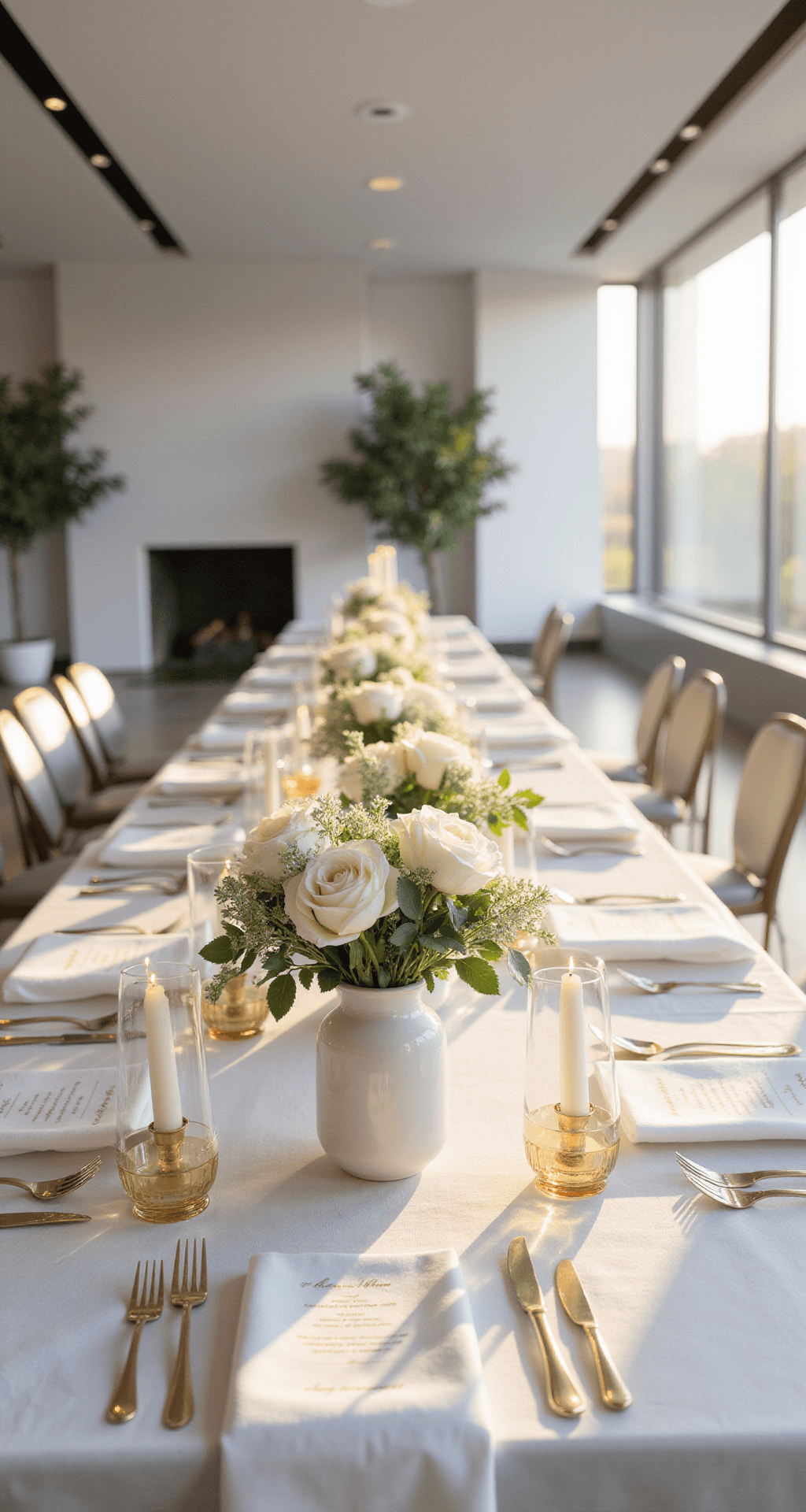
What Exactly Is Minimalist Wedding Table Decor?
Minimalist wedding table decor embraces the philosophy of “less is more,” allowing carefully chosen elements to create stunning visual impact without overwhelming the space.
This approach places emphasis on quality over quantity.
It lets individual pieces shine through thoughtful curation.
Think of it like this: instead of crowding your tables with ten different decorative items, you’re selecting three to five pieces that work in perfect harmony.
The result feels intentional, sophisticated, and—dare I say—luxurious.
Different Styles, Same Minimalist Foundation
The beautiful part about minimalist design?
It works across multiple wedding aesthetics.
Elegant minimalism relies on:
- Neutral color palettes
- Refined vessels
- Strategic height variation
- Clean lines and symmetry
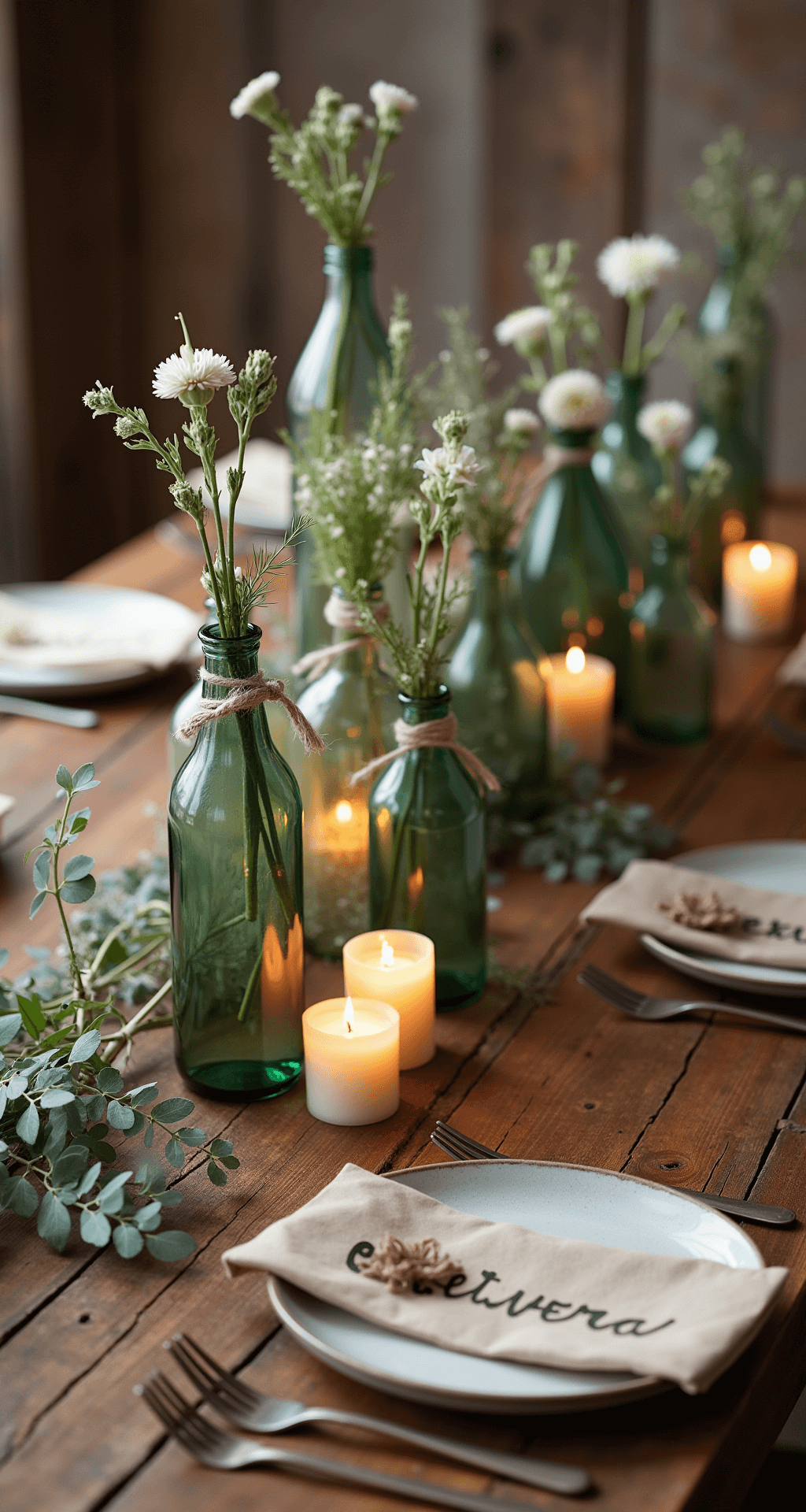
Rustic minimalism celebrates:
- Natural textures like wood and burlap
- Organic materials
- Simple glass vessels
- Raw, unfinished surfaces
Bohemian minimalism combines:
- Eclectic but intentional pieces
- Monochromatic color schemes
- Loose, organic arrangements
- Natural materials mixed deliberately
Vintage minimalism features:
- Carefully selected statement pieces
- Ikebana-inspired arrangements
- Genuine antique lanterns
- Curated heirloom items
Whatever your wedding vision, minimalist principles work beautifully within it.
The Core Design Principles That Actually Matter
Cohesive Color Palettes Keep Everything Harmonious
Rather than filling tables with varied hues, select two to three complementary colors and repeat them throughout your tablescape.
Think about this strategically:
- Color choice one: Your primary accent color (blush, sage, navy, etc.)
- Color choice two: Your secondary accent (cream, white, gold, etc.)
- Optional color three: A subtle tertiary shade for depth
Now repeat these colors through:
- Florals
- Linens
- Candles
- Glassware
- Any other decorative elements
This restraint creates harmony and sophistication instantly.
You’ll notice your tables look intentional rather than scattered.
Height Variation Creates Visual Interest Without Clutter
This is the secret weapon most people overlook.
You don’t need more stuff—you need strategic placement of the stuff you have.
Create height variation by:
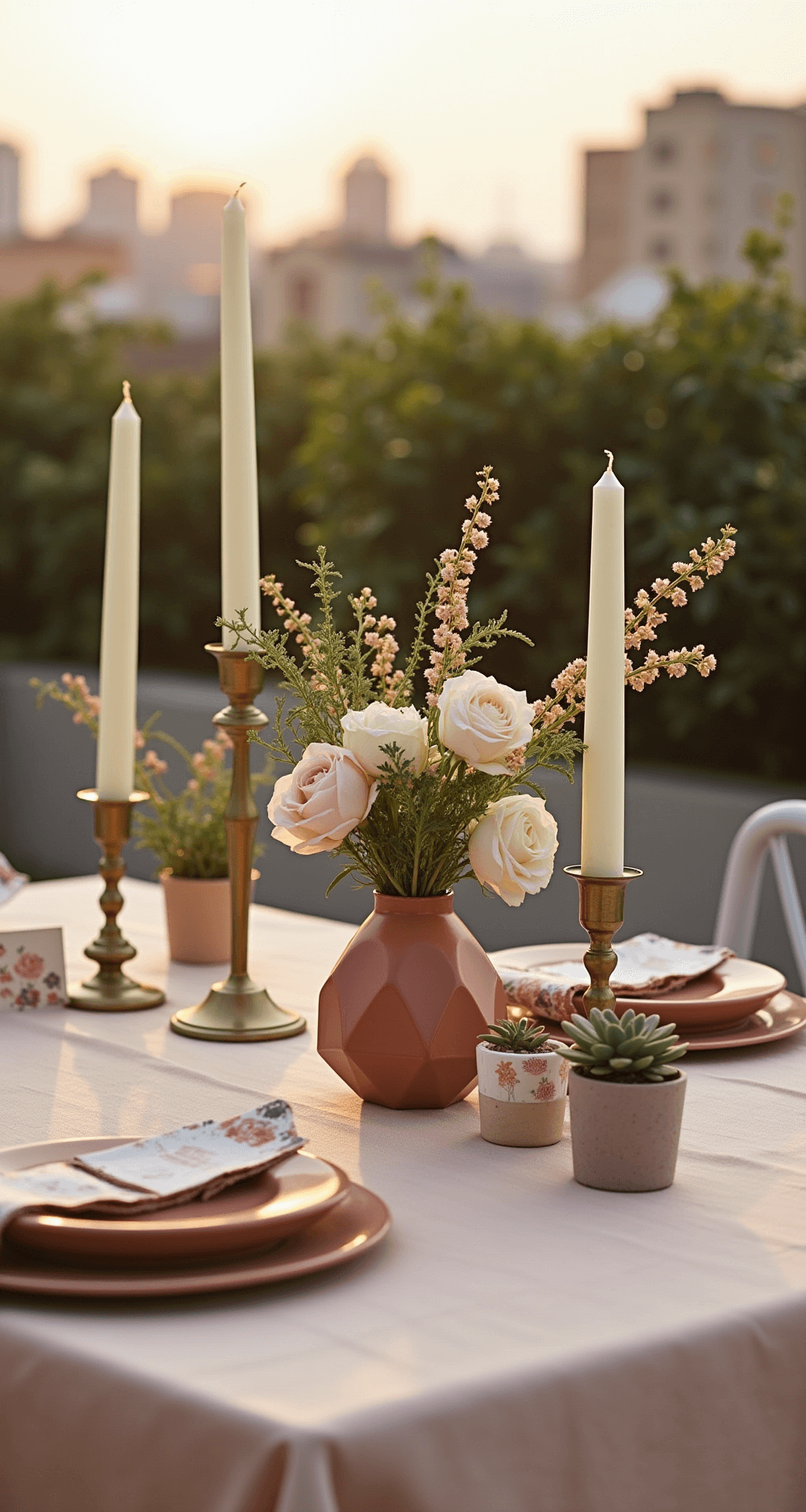
- Pairing tall taper candles with lower floral arrangements
- Using vases of varying heights (maybe 12 inches, 18 inches, and 24 inches)
- Mixing standing candelabras with seated centerpieces
- Combining tall stems with short, lush arrangements
This visual movement keeps your eyes engaged without requiring additional decorative pieces.
Your tables feel dynamic and thoughtfully arranged.
Strategic Focal Points Eliminate the Need for Excessive Decoration
One stunning element beats five mediocre ones every single time.
Identify your focal point per table:
- A single large, gorgeous floral arrangement
- A striking geometric vase
- A dramatic candle display
- A meaningful heirloom piece
Everything else supports this focal point rather than competing with it.
Florals: The Heart of Your Tablescape
Here’s where many people overthink things.
You don’t need massive, dense arrangements.
You need beautiful, intentional selections.
Single-bloom simplicity works gorgeously through:
- Hydrangeas in tall vases
- Tulips in simple vessels
- Roses arranged sparsely
- Peonies with minimal greenery
Sparse groupings create impact with:
- Three to five stems rather than twenty
- Colorful blooms balanced with greenery
- Breathing room between flowers
- Negative space that feels intentional
Organic materials add texture while staying minimal:
- Dried grasses
- Wildflowers
- Loose foliage
- Branches
- Seasonal greenery
The key here?
Let your flowers breathe.
Cramming every available inch with petals doesn’t create elegance—it creates visual fatigue.
Candles: Your Lighting and Sculptural Element
Candles serve dual purposes in minimalist design.
They provide ambient lighting.
They function as sculptural elements.
And honestly, they’re beautiful without needing anything else around them.
Consider these approaches:
- Rows of white taper candles in glass hurricanes create elegance and formality
- Scattered votive candles mixed with bud vases add intimacy
- Individual candlestick holders (especially vintage or unique designs) become statement pieces
- Pillar candles in varying heights create visual interest
- Tea lights clustered in simple holders provide soft ambient lighting
Pro tip: white taper candles in glass hurricane holders create an elegant look with minimal effort and maximum impact.