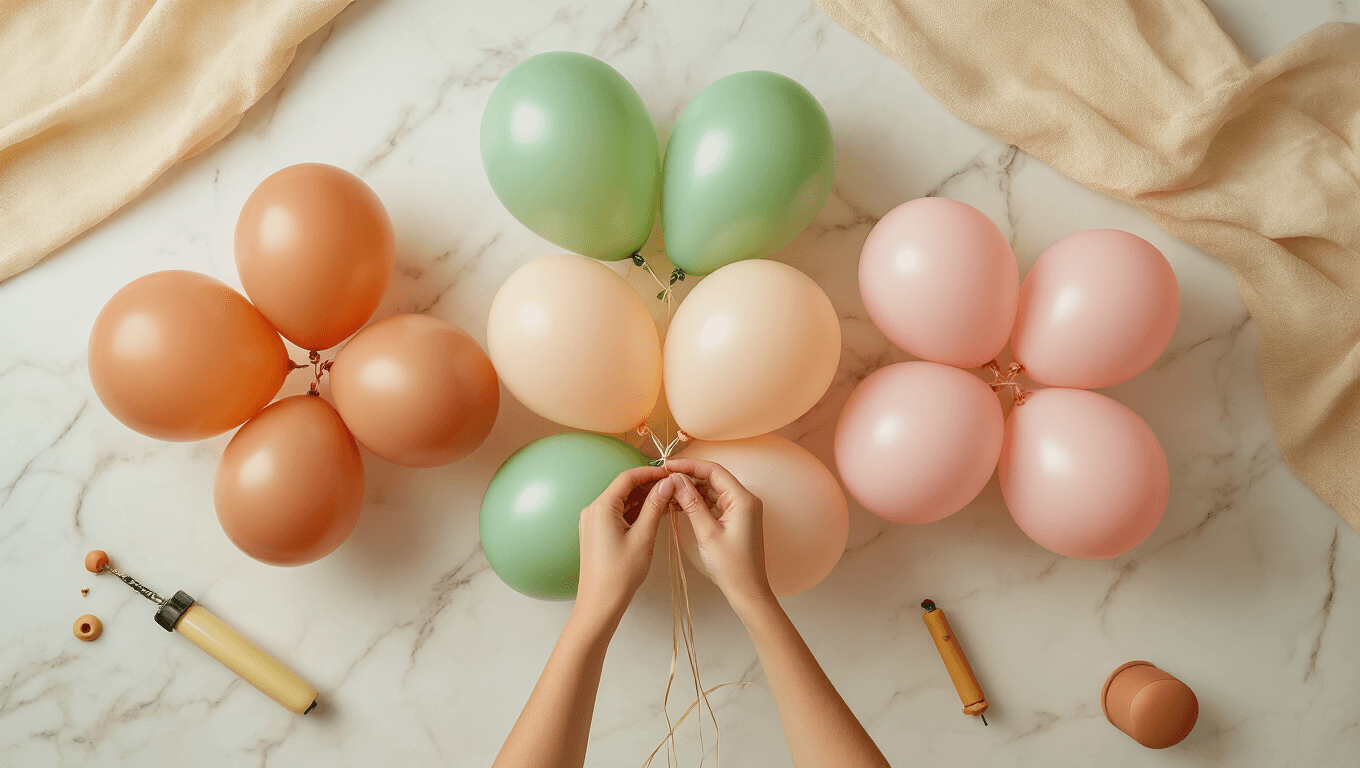
How to Tie Balloons Together: The Ultimate Guide to Creating Stunning Balloon Displays
How to Tie Balloons Together: The Ultimate Guide to Creating Stunning Balloon Displays
Contents
- How to Tie Balloons Together: The Ultimate Guide to Creating Stunning Balloon Displays
- Why Your Balloon Clusters Keep Falling Apart
- The Foundation: Tying a Single Balloon Like You Actually Know What You’re Doing
- Tying Balloon Pairs: The Building Block of Everything
- Creating Quads: Where Your Balloon Arch Actually Starts
- Building Massive Balloon Clusters That Actually Stay Together
- When Your Hands Give Up: Alternative Tying Methods
Staring at a pile of inflated balloons wondering how the heck you’re supposed to transform them into something that doesn’t look like a toddler’s first craft project?
I’ve been there.
Standing in my living room at 2 AM before my daughter’s birthday party, surrounded by what looked like a rubber explosion, desperately Googling “why won’t my balloons stay together.”
Tying balloons together isn’t rocket science, but nobody tells you the little tricks that make the difference between a gorgeous balloon arch and a sad, droopy mess that falls apart the moment someone walks by.
Let me save you the frustration I went through.
Why Your Balloon Clusters Keep Falling Apart
Here’s what nobody mentions in those Pinterest-perfect photos.
Most balloon disasters happen because:
- You’re not stretching the necks enough before tying
- The balloons aren’t inflated to matching sizes
- You’re rushing the knot and it slips loose
- You’re using the wrong technique for the number of balloons
The biggest mistake?
Thinking one tying method works for everything.
It doesn’t.
The Foundation: Tying a Single Balloon Like You Actually Know What You’re Doing
Inflate the balloon to your desired size without over-inflating.
I learned this the hard way after popping six balloons in a row because I thought “bigger is better.”
It’s not.
Leave about an inch uninflated at the top for easier tying.
Here’s the step-by-step that finally worked for me:
- Pinch the balloon’s neck firmly between your thumb and index finger to trap the air
- Stretch the neck with your other hand—really pull it to make it pliable
- Transfer the pinch to hold it between your index and middle fingers
- Loop the stretched neck around your thumb and index finger to create a small loop
- Pull the lip backward through that loop you just made
- Release your grip slowly and let the knot tighten naturally
The game-changer?
That stretching step in number two.
Most people skip it and wonder why their knots slip.
If you’re struggling with grip strength or have long nails, grab a balloon tying tool that does the heavy lifting for you.
Tying Balloon Pairs: The Building Block of Everything
Two balloons tied together form the foundation for literally every balloon decoration you’ll ever make.
For basic pairs:
Inflate two balloons to identical sizes—this matters more than you think.
Hold both nozzles firmly in one hand.
Stretch them together with your other hand.
Cross the nozzles over each other like you’re starting to tie your shoelaces.
Tie them into a single knot.
Pull tight.
Done.
The secret nobody tells you?
Wrap the nozzles around each other at least twice before pulling tight.
One wrap slips.
Two wraps hold.
I use a hand pump for balloons to ensure every balloon gets the same number of pumps so they’re actually the same size.
Creating Quads: Where Your Balloon Arch Actually Starts
A quad is four balloons connected together.
This is where balloon decorating goes from “I stuck some balloons on the wall” to “Wait, did you hire a decorator?”
Method One: The Cross-and-Push
- Create two pairs using the technique above.
- Hold one pair horizontally in front of you.
- Place the second pair vertically on top.
- Push the center balloons through each other’s gaps.
- Twist the pairs around each other at the nozzle points.
- The balloons will naturally fall into a four-cornered shape.
Method Two: The Twist-and-Lock
- Tie two 11-inch balloons into a pair.
- Tie another pair the same way.
- Hold one pair flat like a table.
- Place the second pair on top, perpendicular.
- Twist the nozzle areas around each other three to four times.
- This creates a tighter, more secure quad.
For balloon garlands, I always use 11-inch latex balloons for the base quads—they’re the perfect size ratio.
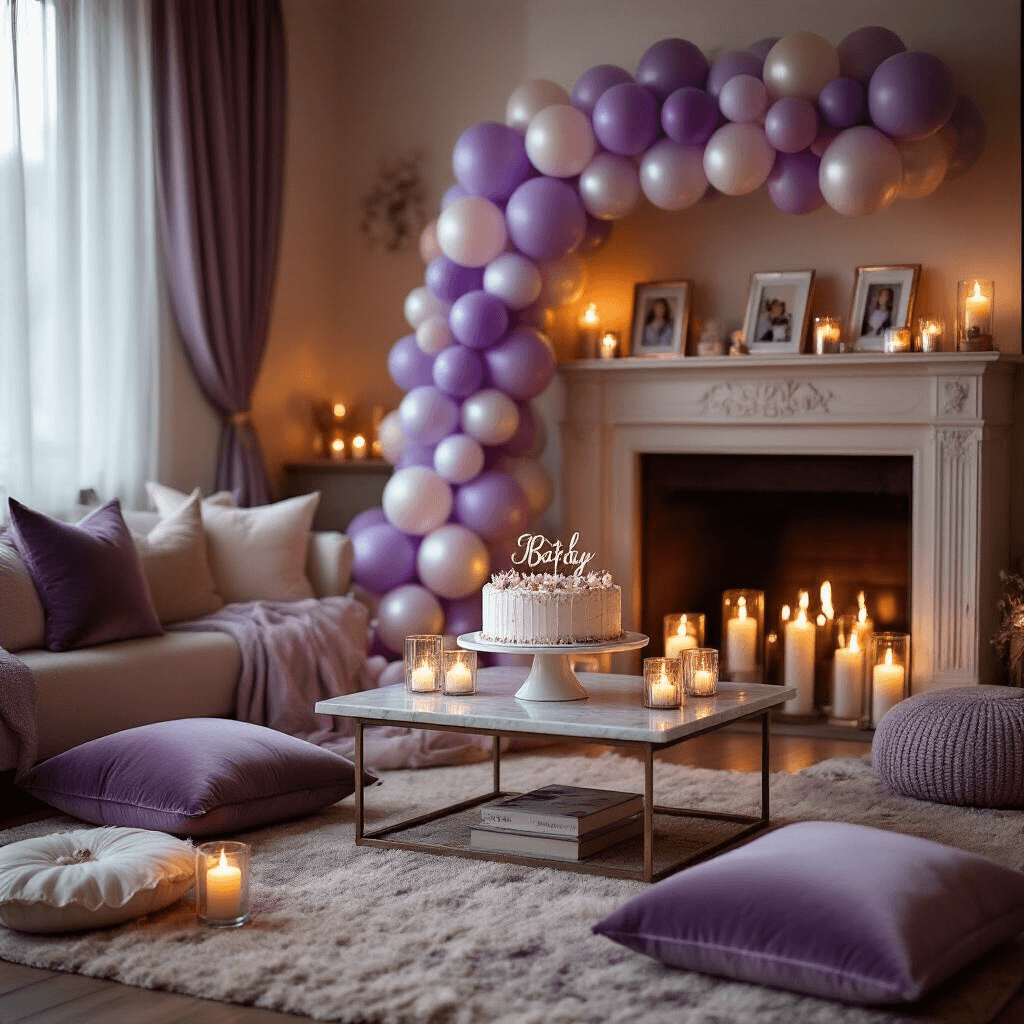
Building Massive Balloon Clusters That Actually Stay Together
Want to create those jaw-dropping balloon columns and arches you see at fancy events?
You’ll need clusters bigger than four balloons.
Start with your base quad using the methods above.
Now here’s where it gets interesting.
Adding larger accent balloons:
- Inflate 16-18 inch balloons as your statement pieces.
- Tie the neck of a large balloon around the center point where your quad nozzles meet.
- Wrap it twice.
- Pull tight.
- Twist to secure.
- The large balloon will nestle into the gaps between your smaller balloons.
Creating dimensional clusters:
- Use three sizes: 5-inch, 11-inch, and 16-inch balloons.
- Start with a quad of 11-inch balloons.
- Add two 16-inch balloons opposite each other.
- Fill gaps with 5-inch balloons tied directly onto the cluster.
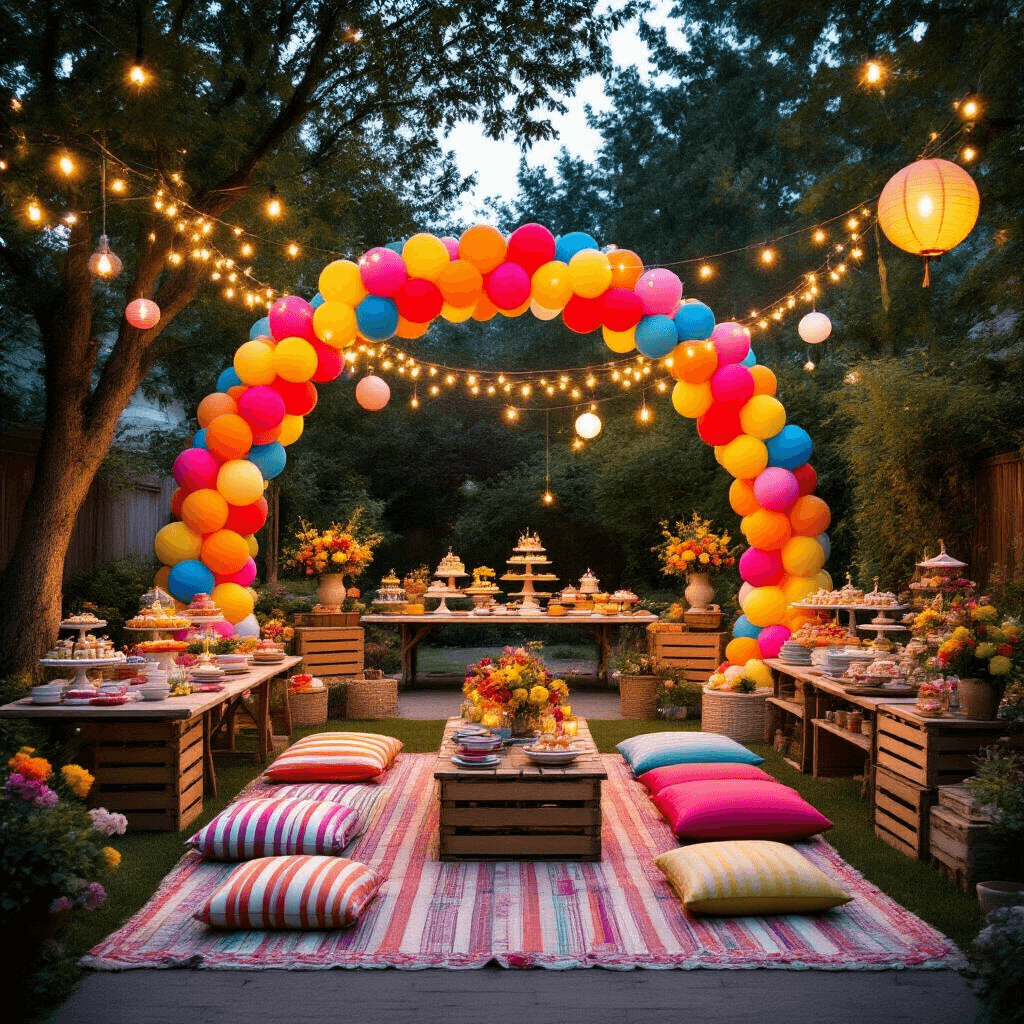
The mixed sizes create depth and visual interest instead of a flat, boring look.
I keep balloon decorating strips on hand for attaching clusters to create arches—way easier than fishing line.
When Your Hands Give Up: Alternative Tying Methods
Let’s be real.
Similar Posts
Heartfelt Anniversary Messages to Make Your Husband Feel Loved
Heartfelt Anniversary Messages to Make Your Husband Feel LovedContentsHeartfelt Anniversary Messages to Make Your Husband Feel LovedAnniversary Messages to Melt His Heart:1. Messages of Deep…
Clear Balloons: The Ultimate Guide to Magical Event Styling and Photography
Clear Balloons: The Ultimate Guide to Magical Event Styling and PhotographyContentsClear Balloons: The Ultimate Guide to Magical Event Styling and PhotographyWhy Clear Balloons Are Your…
Splash into the Ultimate Pool Party: Your Go-To Guide for Unforgettable Summer Fun
Why Your Pool Party Needs a Killer VibeContentsWhy Your Pool Party Needs a Killer VibeEssential Elements of a Show-Stopping Pool Party1. Theme Magic: More Than…
Purple Balloons: Everything You Need to Know About Choosing the Perfect Shade and Style
Why Purple Balloons Hit DifferentContentsWhy Purple Balloons Hit DifferentThe Latex vs. Foil Showdown (And Why I Keep Both in My Party Closet)Latex Balloons: The WorkhorsesFoil…
Hosting the Ultimate Halloween Dinner Party: A Hauntingly Elegant Guide
Hosting the Ultimate Halloween Dinner Party: A Hauntingly Elegant GuideContentsHosting the Ultimate Halloween Dinner Party: A Hauntingly Elegant GuideWhy a Halloween Dinner Party?Setting the Scene:…
Balloon Illustrations: Your Ultimate Guide to Creative Visual Resources
Balloon Illustrations: Your Ultimate Guide to Creative Visual ResourcesContentsBalloon Illustrations: Your Ultimate Guide to Creative Visual ResourcesWhy Balloon Illustrations MatterTop 8 Sources for Balloon Illustrations1….