
Hot Air Balloon Art: Every Creative Method You Need to Master This Whimsical Trend
Hot Air Balloon Art: Every Creative Method You Need to Master This Whimsical Trend
Contents
- Hot Air Balloon Art: Every Creative Method You Need to Master This Whimsical Trend
- Why Hot Air Balloons Make Perfect Art Subjects
- Watercolor Magic: The Wet-on-Wet Technique That Changed Everything
- Acrylic Painting: When You Want Control and Drama
- Paper Craft: The 3D Approach That Makes People Say “How Did You Do That?”
- Mixed Media: Combining Techniques for Maximum Impact
Hot air balloon art has taken over Pinterest boards and gallery walls, and I’m about to show you exactly how to create your own.
I’ve spent years experimenting with different mediums, and hot air balloons remain one of my favorite subjects because they’re forgiving for beginners yet offer endless possibilities for advanced artists.
You know that frustration when you see gorgeous balloon artwork online and think “I could never create that”? I’ve been there. But here’s the truth: hot air balloon art is more accessible than you think.
Why Hot Air Balloons Make Perfect Art Subjects
Before we dive into techniques, let me tell you why these floating beauties work so well.
The shape is simple enough that you won’t lose your mind sketching it, but complex enough to look impressive when finished. The color combinations are limitless. The symbolism (freedom, adventure, dreams) resonates with almost everyone.
Plus, they look fantastic in nurseries, living rooms, and even home offices.
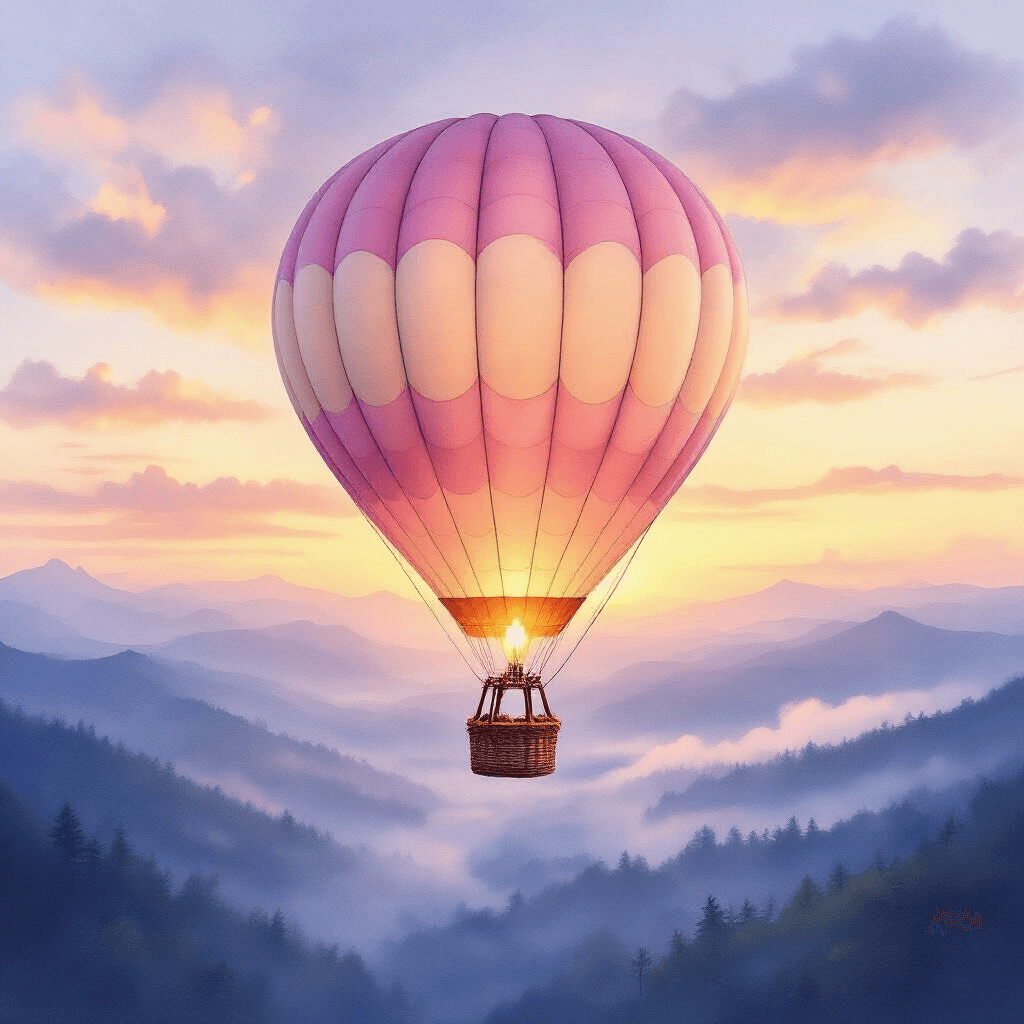
Watercolor Magic: The Wet-on-Wet Technique That Changed Everything
Watercolor painting might seem intimidating, but this method practically does the work for you.
I remember my first attempt at wet-on-wet technique. I literally soaked my paper thinking I’d ruined it, but that’s exactly what creates those dreamy, blended skies that make watercolor balloon art so captivating.
Here’s My Step-by-Step Process:
Prepare your surface:
- Tape down quality watercolor paper to prevent warping
- Mix your colors in a watercolor palette before starting
- Have clean water and paper towels ready
Create the sky foundation:
- Wet your entire paper with clean water using a large brush
- While still wet, drop in blues, purples, and pinks
- Let the colors blend naturally (don’t overwork them)
- Watch the magic happen as pigments flow into each other
Sketch and paint the balloon:
- Lightly pencil a circle for the balloon envelope
- Draw vertical lines to create the panel sections
- Apply your first wash in light colors
- Layer darker shades once the first wash dries
- Add dimension by darkening one side
Add details:
- Paint the basket using earthy browns
- Connect basket to balloon with fine black lines
- Use opaque white gouache for highlight details and fluffy clouds
The beauty of watercolor is its unpredictability. That “mistake” where colors bled together? It’s probably the best part of your painting.
Acrylic Painting: When You Want Control and Drama
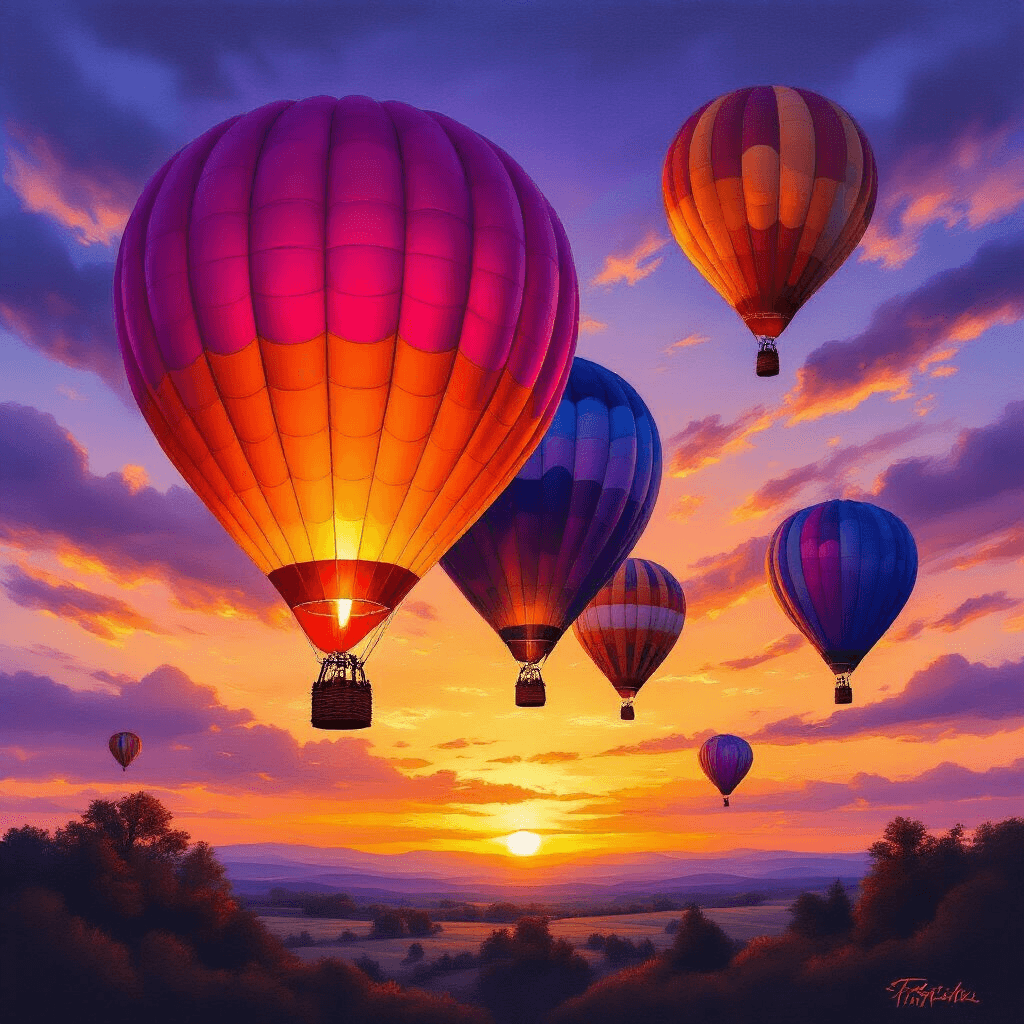
Acrylics are my go-to when I want bold, dramatic pieces with sunset vibes.
Unlike watercolor’s gentle unpredictability, acrylic paint gives you complete control. You can layer, correct mistakes, and build up texture without fear.
My Acrylic Balloon Method:
Background first:
- Start with your darkest sky colors at the top
- Blend downward into purples, magentas, and yellows
- Use horizontal strokes for a smooth gradient
- Don’t stress about perfection—atmosphere isn’t uniform in real life either
Cloud building:
- Use small tapping motions with a round brush
- Layer multiple cloud shapes in varying opacity
- White clouds pop best against purple or deep blue
Balloon construction:
- Paint white silhouettes first as your base layer
- This makes colors more vibrant
- Fill in with your chosen palette
- Shade the top portions darker
- Highlight bottom portions with lighter tones or white
- Add vertical panel lines for dimension
Pro tip: I always paint multiple balloons at different distances. Smaller balloons in the background create depth and make your main balloon feel more prominent.
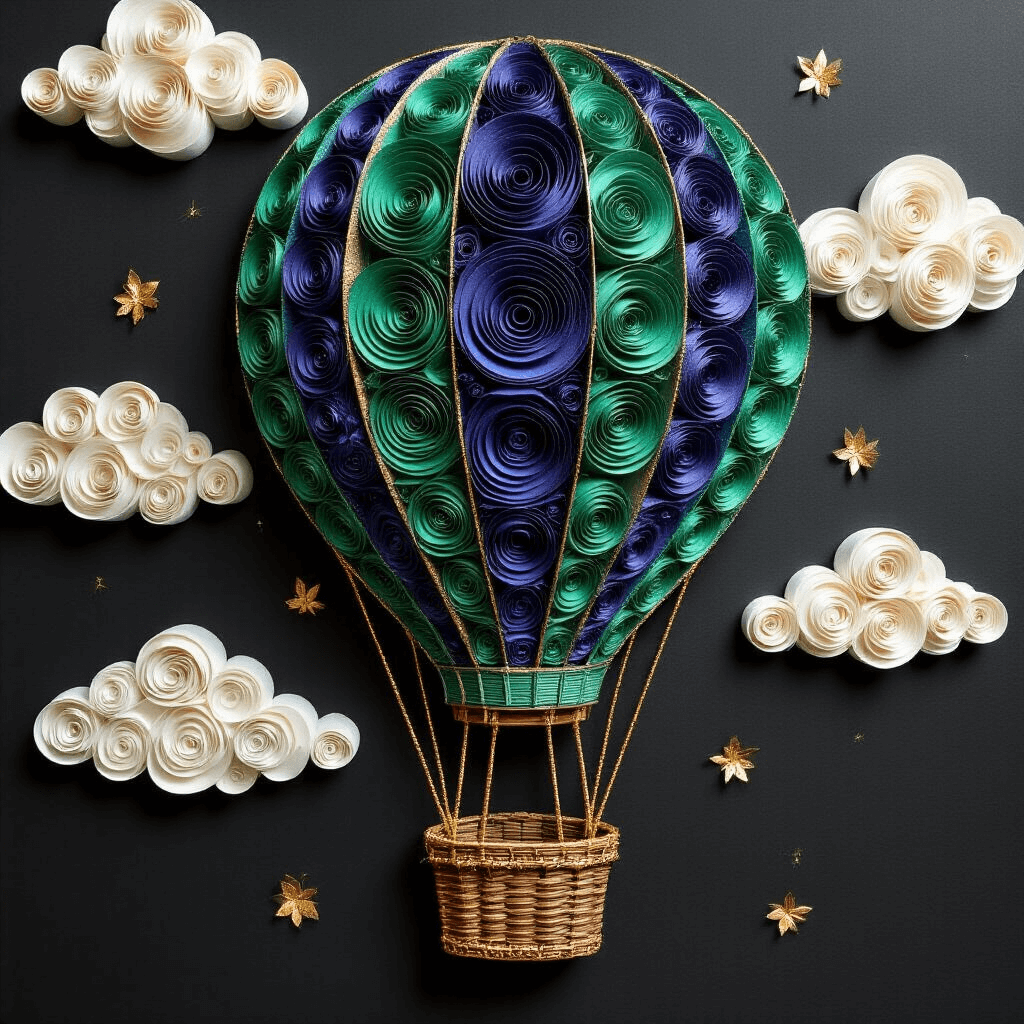
Paper Craft: The 3D Approach That Makes People Say “How Did You Do That?”
This technique surprised me the most.
I discovered on-edge paper rolling at a craft fair, and it completely changed how I thought about dimensional art.
The Rolling Method:
Materials you’ll need:
- Colored cardstock or craft paper strips
- White glue or craft adhesive
- Scissors or paper trimmer
- Background canvas or heavy paper
Creating texture:
- Cut paper strips about 1cm wide
- Roll strips into tight coils
- Let them relax slightly for loose coils
- Pinch ends for teardrop shapes
Assembly:
- Sketch your balloon outline lightly on background
- Glue coils on-edge to fill balloon sections
- Use different colors for each panel
- Create basket with tighter, darker coils
- Add dimensional clouds with white coils
The result looks like it took days. It actually takes about two hours once you get the hang of rolling.
Mixed Media: Combining Techniques for Maximum Impact
Here’s where things get really interesting.
Why choose one medium when you can combine several?
My favorite mixed media approach:
- Paint background with liquid watercolors (wet-on-wet)
- Cut balloon shapes from separately painted paper
- Add yarn or twine for balloon ropes
- Create baskets from construction paper or cardboard
- Use poly-fil batting for textured clouds</li