
Elegant Wedding Centerpieces That Look Designer (Luxury Ideas for 2026)
Your reception tables deserve the same thoughtful attention as your ceremony backdrop and bridal bouquet. Wedding centerpieces serve as the visual anchor for your celebration, framing conversations and creating atmosphere throughout the evening. They’re the décor element guests will sit beside for hours, appearing in countless photographs and setting the tone for your entire reception.
Designer-quality centerpieces don’t require unlimited budgets or celebrity florists. The secret lies in understanding scale, proportion, color theory, and how to select premium materials that photograph beautifully. Whether you’re drawn to timeless white florals, modern minimalist arrangements, or organic textured designs, the right centerpiece transforms ordinary tables into unforgettable tablescapes.
This comprehensive guide showcases forty elegant wedding centerpieces that embody luxury and refinement for 2026. From tall dramatic installations to intimate bud vase collections, these ideas blend current trends with classic sophistication. You’ll discover styling strategies used by top wedding designers, learn which materials elevate any arrangement, and find inspiration that matches your unique vision.
Table of Contents
Contents
- Table of Contents
- Why Elegant Wedding Centerpieces Make Such a Big Impact
- How to Choose Elegant Wedding Centerpieces
- 40 Elegant Wedding Centerpieces That Look Designer
- All-White Luxury Floral Centerpieces
- White and Green Timeless Garden Arrangements
- Monochrome Modern Centerpieces
- Romantic Blush and Ivory Designs
- Dark Romantic Floral Centerpieces
- Single-Stem Sculptural Centerpieces
- Greenery-Only Table Runners
- Glass Vase Minimalist Designs
- Neutral Ceramic Vessel Arrangements
- Elevated Floral Installations
- Candle-Heavy Tall Centerpieces
- Modern Structured Metal Stands
- Earth-Tone Centerpieces
- Wildflower-Inspired Elegant Designs
- Olive Branch and Greenery Tables
- Cascading Floral Waterfall Centerpieces
- Tall Trumpet Vase Arrangements
- Low Lush Compote Centerpieces
- Mixed Height Cluster Centerpieces
- Textured Neutral Flower Combinations
- Dried Botanical Modern Centerpieces
- Candlelit Garden Rose Centerpieces
- Geometric Glass Terrarium Centerpieces
- Floating Candle and Submerged Floral Centerpieces
- Asymmetrical Modern Arrangements
- Birch Branch and Floral Centerpieces
- Mercury Glass Votive Collections
- Marble Platform Centerpieces
- Vintage Brass and Copper Vessels
- Succulent and Greenery Gardens
- Orchid and Bamboo Modern Centerpieces
- Herb Garden Fragrant Centerpieces
- Crystal and Glass Candelabra Centerpieces
- Citrus and Floral Mediterranean Centerpieces
- Velvet Ribbon and Floral Accents
- Antique Book Stack Centerpieces
- Agate Slice and Crystal Accents
- Dusty Blue and Mauve Romantic Arrangements
- Magnolia Leaf and White Flower Southern Centerpieces
- Gold-Dipped Feather Accents
- Ikebana-Inspired Minimalist Arrangements
- Tall vs Low Wedding Centerpieces: Which Looks More Elegant?
- Budget vs Mid-Range vs Luxury Wedding Centerpieces
- Elements That Elevate Wedding Centerpieces
- Elegant Wedding Centerpieces by Season
- Designer Styling Tips for Elegant Wedding Centerpieces
- More Elegant Wedding Décor Ideas
- Elegant Wedding Centerpiece FAQs
- How much do wedding centerpieces cost?
- Are tall centerpieces more expensive than low centerpieces?
- What flowers look the most luxurious in wedding centerpieces?
- Can elegant centerpieces be done on a budget?
- How many candles should be on each wedding reception table?
- What size centerpiece works best for round tables?
- Should wedding centerpieces match the bridal bouquet?
- When should I finalize my wedding centerpiece design?
- Save These Elegant Wedding Centerpiece Ideas for Later
- Why Elegant Wedding Centerpieces Make Such a Big Impact
- How to Choose Elegant Wedding Centerpieces
- 40 Elegant Wedding Centerpieces That Look Designer
- Tall vs Low Wedding Centerpieces: Which Looks More Elegant?
- Budget vs Mid-Range vs Luxury Wedding Centerpieces
- Elements That Elevate Wedding Centerpieces
- Elegant Wedding Centerpieces by Season
- Designer Styling Tips for Elegant Wedding Centerpieces
- More Elegant Wedding Décor Ideas
- Elegant Wedding Centerpiece FAQs
- Save These Elegant Wedding Centerpiece Ideas for Later
Why Elegant Wedding Centerpieces Make Such a Big Impact
Reception tables occupy more visual real estate than any other décor element at your wedding. While ceremony backdrops create one focal point and your cake table draws attention during dessert, centerpieces work continuously throughout your celebration. Guests spend three to four hours seated at their tables during dinner, toasts, and dancing breaks, making these arrangements the most viewed décor investment you’ll make.
Professional wedding photographers understand this reality. Browse any wedding gallery and notice how centerpieces frame nearly every reception photograph. They appear behind the couple during toasts, in candid guest shots, and in styled tablescape images that define your wedding aesthetic. A well-designed centerpiece elevates every photo, while a poorly executed arrangement detracts from otherwise beautiful moments.
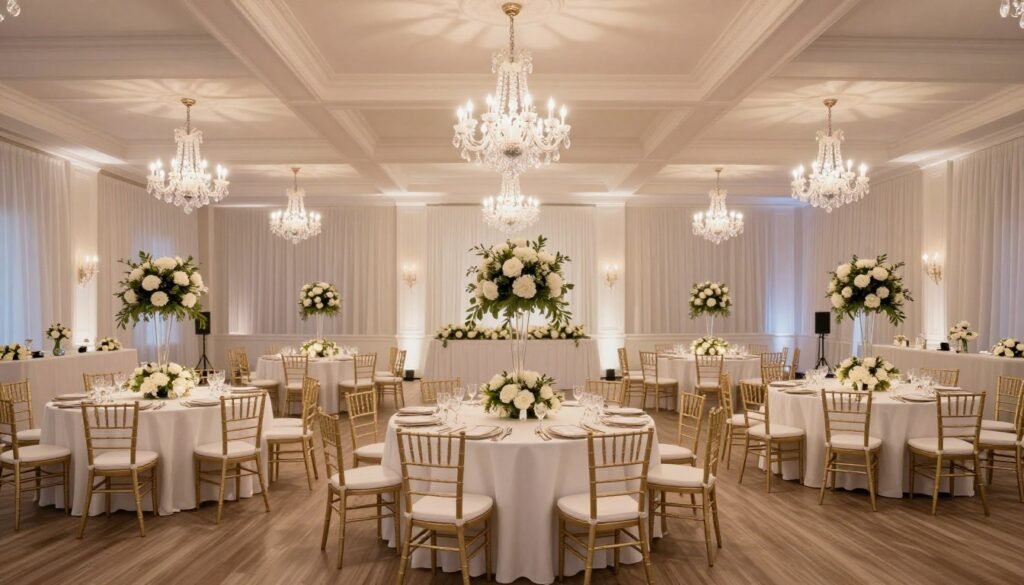
Scale and proportion determine whether centerpieces feel luxurious or lacking. Designers consider ceiling height, table size, and surrounding architecture when planning arrangements. A petite bud vase on a sixty-inch round table in a ballroom with twenty-foot ceilings feels lost and underwhelming. Conversely, a towering floral installation in an intimate garden setting overwhelms the space. Elegant centerpieces strike the perfect balance, commanding attention without dominating.
The difference between DIY-looking and designer-inspired centerpieces comes down to editing and cohesion. Amateur arrangements often include too many flower varieties, competing colors, or mismatched vessels. Professional designs exercise restraint, limiting palettes to three complementary hues and selecting vessels that enhance rather than distract. This refined approach creates tablescapes that photograph beautifully and feel intentionally curated.
Guests notice centerpieces first when entering your reception space. These arrangements communicate your wedding style before anyone reads a menu or hears your first dance song. Romantic couples might choose lush garden roses with candlelight, while modern pairs opt for sculptural arrangements with clean lines. Your centerpieces tell your love story through visual language, making them worth careful consideration and thoughtful investment.
How to Choose Elegant Wedding Centerpieces
Your venue’s architecture dictates many centerpiece decisions before you select a single flower. Start by assessing ceiling height, as this determines whether tall arrangements will feel dramatic or overwhelming. Ballrooms and tents with ceilings above twelve feet accommodate elevated designs beautifully, while historic homes and restaurants with lower ceilings showcase low arrangements more effectively. Visit your venue at the same time of day as your reception to understand natural light and how it will illuminate your tables.
Table shape significantly influences centerpiece design. Round tables traditionally feature centered compote arrangements or cluster centerpieces that create visual interest from every angle. Long rectangular tables offer opportunities for runner-style centerpieces that stretch the table’s length, creating dramatic impact through repetition and abundance. Consider guest count per table as well. Tables seating ten or more guests need larger centerpieces to maintain proper proportion, while intimate tables of six can feature more modest arrangements.
Floral density versus negative space represents a fundamental design choice. Lush, tightly packed arrangements exude romance and opulence, perfect for garden-inspired or traditional weddings. Arrangements with breathing room between stems create modern, editorial aesthetics suited to minimalist or contemporary celebrations. Neither approach costs more inherently; designers can create luxury looks through abundance or through carefully curated sparseness.
Budget considerations should focus on value rather than cost alone. Three strategic investments elevate any centerpiece: premium containers, professional mechanics, and statement blooms used sparingly. A single showstopping orchid stem in an elegant vase creates more impact than a dozen supermarket flowers in a basic glass cylinder. Similarly, renting high-quality vessels for one day often costs less than purchasing mediocre containers you’ll never use again.
Lighting integration transforms good centerpieces into unforgettable ones. Taper candles add vertical interest and warm glow, while votives scattered around arrangements create ambient sparkle. Consider how candlelight will photograph as evening progresses and natural light fades. Many designers recommend incorporating both tall tapers and low votives to create layered lighting that remains beautiful from cocktail hour through last dance. Always confirm your venue allows open flames or plan for high-quality flameless alternatives if necessary.
40 Elegant Wedding Centerpieces That Look Designer
All-White Luxury Floral Centerpieces
Monochromatic white arrangements represent timeless elegance that never falls from favor. Combine white roses, ranunculus, and peonies in varying bloom sizes to create depth and texture within a single color palette. The key to preventing all-white centerpieces from feeling flat lies in incorporating multiple white tones, from bright white to cream to ivory, alongside textured greenery that adds visual complexity.
White and Green Timeless Garden Arrangements
This classic combination channels English garden sophistication through balanced color contrast. Lush white blooms gain definition when paired with various greenery textures, from delicate ferns to structural eucalyptus. The green elements prevent white flowers from blending into white linens while maintaining the refined, elegant aesthetic that photographs beautifully in any lighting condition.

Monochrome Modern Centerpieces
Contemporary couples embrace single-color centerpieces in unexpected hues like deep burgundy, rich navy, or soft sage. These arrangements make bold statements through color saturation rather than variety, creating cohesive tablescapes that feel editorial and refined. Select one primary bloom like dahlias or garden roses and let their natural beauty shine without competing elements.
Romantic Blush and Ivory Designs
Soft pink tones paired with warm ivory create romance without excessive sweetness. This palette works year-round and complements most skin tones in photographs, making it enduringly popular for weddings. Layer different pink shades from pale blush to dusty rose for dimensional arrangements that feel curated rather than predictable, especially beautiful when displayed in gold or brass vessels.
Dark Romantic Floral Centerpieces
Rich jewel tones like burgundy, plum, and deep wine create drama and sophistication for evening celebrations. These moody centerpieces incorporate dark florals such as burgundy dahlias, chocolate cosmos, and deep red garden roses alongside unexpected elements like blackberries or dark foliage. The dramatic palette photographs stunningly in candlelight and establishes immediate ambiance in your reception space.
Single-Stem Sculptural Centerpieces
Minimalist arrangements featuring one perfect bloom per vessel embody modern luxury through restraint. Select architectural flowers like amaryllis, calla lilies, or anthuriums that command attention independently. Display multiple single-stem vases down table centers, varying vessel heights to create rhythm while maintaining the clean aesthetic that defines contemporary design.

Greenery-Only Table Runners
Lush greenery garlands offer budget-friendly elegance that never feels cheap when executed properly. Combine multiple foliage textures like Italian ruscus, seeded eucalyptus, and olive branches to create dimensional runners that flow naturally down table centers. This botanical approach works beautifully for garden weddings, bringing outdoor freshness to any reception venue while allowing other elements like candles and tableware to contribute color.
Glass Vase Minimalist Designs
Clear glass vessels let stems become part of the design, creating transparent elegance that suits modern aesthetics. This approach works particularly well with flowers featuring interesting stems or when displaying branches and greenery. The see-through quality prevents arrangements from feeling heavy on tables while showcasing the natural architecture of your chosen botanicals in a way opaque containers cannot.
Neutral Ceramic Vessel Arrangements
Handmade ceramic vessels in cream, taupe, and soft gray tones add artisanal sophistication to wedding tables. These containers provide visual weight and texture that elevate simple arrangements into designer territory. The matte finish photographs beautifully and complements both traditional and modern wedding styles, while the neutral palette allows florals to claim center stage.
Elevated Floral Installations
Suspending arrangements above tables creates drama while preserving conversation sight lines. This designer technique involves mounting centerpieces on clear acrylic or metal stands that lift blooms eighteen to thirty inches above table surfaces. Guests enjoy unobstructed views across tables while lush florals create overhead impact, offering the best of both tall and low centerpiece approaches.

Candle-Heavy Tall Centerpieces
Multiple heights of taper candles clustered together create elegant, cost-effective centerpieces with minimal floral investment. Mix brass, gold, and crystal candlesticks in varying heights from eight to twenty-four inches, filling gaps with small floral accents. The abundance of candlelight creates romantic ambiance as evening progresses, while the mixed metallics add luxury without overwhelming budgets.
Modern Structured Metal Stands
Geometric metal frameworks in brass, copper, or matte black provide contemporary structure for minimalist arrangements. These stands hold glass vessels or votive candles within their architectural forms, creating centerpieces that feel sculptural even with modest floral content. The modern industrial aesthetic appeals to couples seeking unique alternatives to traditional compote arrangements.
Earth-Tone Centerpieces
Warm caramel, rust, and terracotta hues create organic elegance perfect for autumn celebrations or bohemian aesthetics. Incorporate textured elements like protea, dried grasses, and warm-toned florals in apricot or burnt orange. These earthy palettes photograph beautifully in natural light and complement wood tables and neutral linens for cohesive, grounded tablescapes.
Wildflower-Inspired Elegant Designs
Cultivated wildflower arrangements offer organic beauty with refined execution. Designers select garden-grown varieties like ranunculus, anemones, and sweet peas, arranging them loosely to mimic meadow growth patterns while maintaining proper proportion and structure. This approach delivers romantic, just-picked aesthetics without the unpolished appearance of actual wildflowers, creating centerpieces that feel effortless yet elegant.
Olive Branch and Greenery Tables
Mediterranean-inspired arrangements featuring olive branches and silvery foliage create sophisticated, understated centerpieces. The gray-green palette feels fresh and timeless, working beautifully for outdoor celebrations or destination weddings. Combine olive branches with white or cream blooms and natural linen runners for tablescapes that evoke Italian villa elegance.

Cascading Floral Waterfall Centerpieces
Abundant arrangements that spill over vessel edges and flow onto tables create opulent, garden-party ambiance. These lush centerpieces require significant floral volume but deliver unmatched visual impact, perfect for luxury weddings where budget allows extravagance. Designers create the cascading effect through careful stem placement and using heavier blooms at the arrangement base with lighter flowers flowing outward.
Tall Trumpet Vase Arrangements
Elongated glass trumpet vases elevate flowers three to four feet above tables, creating impressive height without massive floral volume. These vessels work particularly well with long-stemmed flowers like roses, calla lilies, or delphiniums that showcase their full stem length. The vertical emphasis draws the eye upward while maintaining slim profiles that don’t dominate table space.
Low Lush Compote Centerpieces
Traditional compote vessels hold generous floral arrangements at a moderate height that satisfies both sides of the tall-versus-low debate. These elevated but not towering centerpieces typically rise twelve to eighteen inches, providing visual interest without blocking conversation. The classic silhouette suits formal weddings and allows designers to create abundant arrangements within a manageable height range.
Mixed Height Cluster Centerpieces
Grouping vessels of varying heights creates dynamic tablescapes with visual rhythm and movement. Combine tall bud vases with medium compotes and low votives for arrangements that work from every viewing angle. This designer technique allows you to use fewer flowers than single large arrangements while creating more interesting, dimensional centerpieces that photograph beautifully from multiple perspectives.
Textured Neutral Flower Combinations
Monochromatic arrangements gain interest through texture variety rather than color contrast. Combine smooth garden roses with ruffled ranunculus, spiky scabiosa pods, and feathery astilbe, all within cream and ivory tones. The varied petal shapes and flower structures create depth that prevents neutral centerpieces from appearing flat or boring, delivering sophisticated elegance through thoughtful flower selection.

Dried Botanical Modern Centerpieces
Preserved and dried florals offer year-round availability and unique textures impossible with fresh flowers. Pampas grass, dried palm leaves, and preserved roses in neutral tones create bohemian-modern centerpieces that work across seasons. The muted color palette and organic shapes deliver contemporary elegance while eliminating weather and seasonality concerns that affect fresh flowers.
Candlelit Garden Rose Centerpieces
Few combinations feel more timelessly elegant than garden roses surrounded by candlelight. These romantic centerpieces balance lush florals with practical illumination, creating ambiance that intensifies as daylight fades. Select premium roses in classic colors like ivory, blush, or deep red, displaying them in low arrangements that allow candle glow to enhance rather than compete with the blooms.
Geometric Glass Terrarium Centerpieces
Modern glass terrariums in geometric shapes house miniature garden centerpieces that feel contemporary and unexpected. These vessels allow creative freedom, from succulent gardens to moss and air plant compositions. The architectural containers serve as sculptures themselves, requiring minimal content to create impact, making them cost-effective options for design-forward couples.
Floating Candle and Submerged Floral Centerpieces
Water-filled cylinder vases with submerged flowers and floating candles create ethereal centerpieces with unique visual interest. This technique works beautifully with orchids, dendrobium stems, or rose heads suspended in water, topped with floating votive candles. The underwater element adds dimension and sophistication while keeping floral costs moderate, as submerged stems require fewer blooms.
Asymmetrical Modern Arrangements
Breaking from traditional centered compositions, asymmetrical centerpieces feel editorial and fashion-forward. These arrangements intentionally place visual weight to one side, creating dynamic tension and movement. The modern approach suits contemporary weddings and allows designers to create interesting shapes that photograph beautifully from multiple angles, offering more visual variety than symmetrical designs.

Birch Branch and Floral Centerpieces
Natural birch branches provide organic structure for arrangements that feel woodland-inspired yet refined. These versatile elements work across seasons, adding height and visual interest while requiring fewer flowers than traditional arrangements. Wrap branches with delicate blooms or hang small votive candles from branches for enchanted forest centerpieces that balance rustic and elegant aesthetics.
Mercury Glass Votive Collections
Clustered mercury glass votives create sparkle and romance through reflection and candlelight multiplication. These vintage-inspired vessels catch and amplify light beautifully, transforming simple candles into elegant centerpieces. Mix various sizes and heights, spacing votives down table centers with minimal floral accents for cost-effective elegance that delivers maximum visual impact through lighting alone.
Marble Platform Centerpieces
Luxurious marble slabs or rounds serve as sophisticated bases for floral arrangements and candle groupings. The natural stone adds instant elegance and grounds arrangements visually, creating cohesive tablescapes when paired with marble chargers or other stone elements. This designer detail elevates simple arrangements, making modest floral investments appear more substantial and intentional.
Vintage Brass and Copper Vessels
Collected vintage metal vessels in warm tones add character and sophistication impossible with new containers. These patinated pieces tell stories while providing substantial visual weight that elevates simple floral arrangements. Mix various shapes and sizes down long tables for eclectic elegance, or use matching sets for more formal presentations. The warm metallic tones complement most color palettes beautifully.
Succulent and Greenery Gardens
Living succulent arrangements provide long-lasting centerpieces that guests can take home as favors. These low-maintenance plants work year-round and suit various wedding styles from desert modern to garden romantic. Designers combine multiple succulent varieties with moss and stones in wooden boxes or ceramic containers, creating miniature gardens that feel special without requiring fresh flowers.

Orchid and Bamboo Modern Centerpieces
Sleek phalaenopsis orchids paired with bamboo create sophisticated centerpieces with Asian-inspired minimalism. These long-lasting flowers deliver luxury for extended events while requiring little space or volume. The clean lines and architectural growth patterns suit modern weddings perfectly, and white orchids coordinate with virtually any color palette for versatile elegance.
Herb Garden Fragrant Centerpieces
Potted herbs like lavender, rosemary, and basil create aromatic centerpieces that engage multiple senses. These living centerpieces double as guest favors and suit garden-party or farm-to-table wedding themes. The natural texture and informal beauty of herb plants feel charming yet elevated when displayed in quality terra cotta or ceramic pots with subtle florals tucked among the greenery.
Crystal and Glass Candelabra Centerpieces
Ornate crystal candelabras deliver traditional elegance and dramatic height through candlelight alone. These statement pieces require minimal floral enhancement, perhaps just greenery garlands wrapped around bases. The sparkling crystal catches candlelight beautifully, creating old-world glamour perfect for ballroom weddings and formal evening celebrations where opulence is the goal.
Citrus and Floral Mediterranean Centerpieces
Fresh citrus fruits incorporated into floral arrangements add color, texture, and Mediterranean charm. Lemons, oranges, and kumquats bring vibrant hues and organic shapes that feel festive and sophisticated. Designers nestle fruits among blooms or display them on platters surrounding vases, creating abundant tablescapes that evoke Italian coastline elegance and summer garden parties.
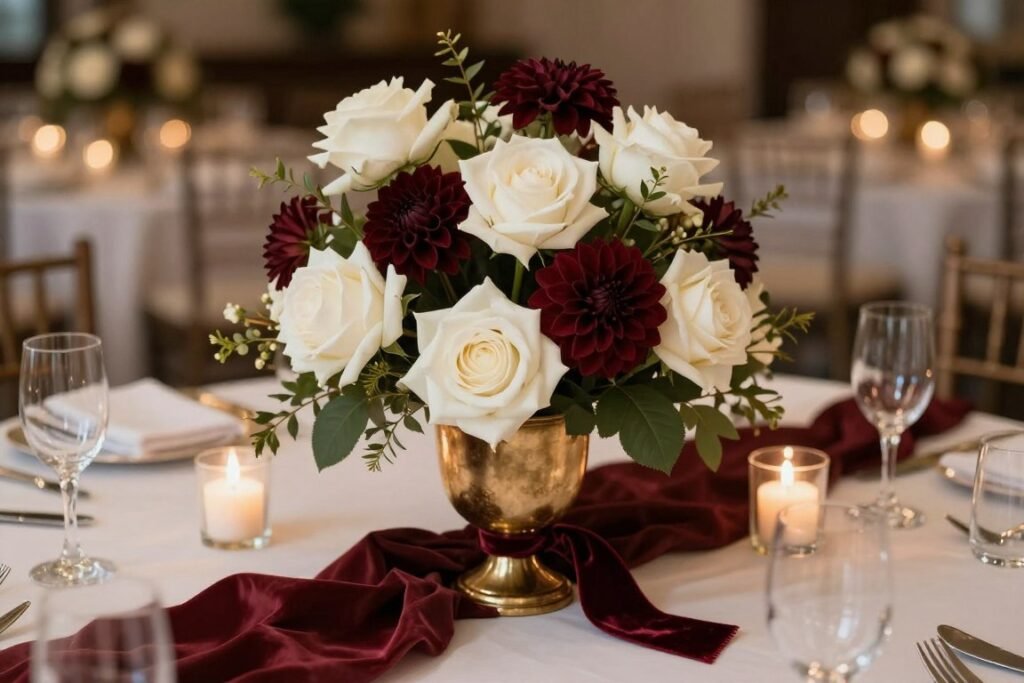
Velvet Ribbon and Floral Accents
Luxurious velvet ribbons in jewel tones add textile richness to floral centerpieces. Designers wrap vessel bases, trail ribbons from arrangements, or create bows that add color and texture. This simple addition transforms standard arrangements into something more personal and designed, perfect for autumn and winter weddings where rich fabrics enhance cozy elegance.
Antique Book Stack Centerpieces
Vintage books stacked as centerpiece bases add literary charm and height variation. Top book stacks with bud vases, candles, or small floral arrangements for unique centerpieces with personality. This approach works beautifully for library weddings, literary-themed celebrations, or couples who want non-traditional elements that spark conversation while maintaining sophisticated aesthetics.
Agate Slice and Crystal Accents
Natural agate slices in various colors serve as elegant coasters for vases or decorative elements themselves. These geological wonders add organic luxury and can be paired with crystals and geodes for centerpieces with earthy glamour. The natural patterns and colors within each slice ensure no two centerpieces look identical, creating intentional variety across your reception space.
Dusty Blue and Mauve Romantic Arrangements
This sophisticated color combination delivers romance without typical pink overload. Dusty blue flowers like delphinium and tweedia pair beautifully with mauve roses and purple accents, creating centerpieces that feel current and elegant. The muted tones photograph wonderfully and work across seasons, offering versatile beauty for couples seeking something beyond traditional palettes.
Magnolia Leaf and White Flower Southern Centerpieces
Glossy magnolia leaves provide structural foundation for elegant Southern-inspired arrangements. The large leaves add substantial presence while their deep green color makes white flowers appear brighter and more luminous. This classic combination suits both rustic barn weddings and refined garden celebrations, channeling plantation elegance through simple, beautiful natural elements.
Gold-Dipped Feather Accents
Decorative feathers with gold-leafed tips add unexpected glamour and movement to centerpieces. These dramatic accents work particularly well for art deco or Gatsby-inspired weddings, bringing 1920s elegance to modern celebrations. Designers incorporate gold feathers sparingly among florals or create full feather-based centerpieces for truly unique, showstopping tablescapes that guests will remember.
Ikebana-Inspired Minimalist Arrangements
The Japanese art of ikebana emphasizes negative space and intentional stem placement, creating sophisticated centerpieces through restraint. These arrangements use minimal flowers positioned precisely within low vessels, each stem contributing to overall composition. The philosophy creates calm, beautiful centerpieces perfect for zen-inspired weddings or couples who appreciate the elegance of less-is-more design principles.
Tall vs Low Wedding Centerpieces: Which Looks More Elegant?
Neither tall nor low centerpieces inherently possess more elegance. The question instead becomes which height suits your specific venue, table configuration, and wedding vision. Tall centerpieces, typically rising twenty-four inches or higher, create drama and draw eyes upward, making them ideal for venues with high ceilings and grand architecture. They photograph impressively in wide reception shots and allow designers to create statement moments that define your space.
Guest comfort remains the primary practical consideration when choosing centerpiece height. Low arrangements under twelve inches ensure everyone at the table can see and converse easily, creating intimate dining experiences. Tall arrangements must rise high enough that guests comfortably see beneath them, typically requiring elevation above thirty inches to avoid obstructing sight lines. Half-height centerpieces between these ranges often create the most problems, blocking views without providing dramatic overhead impact.
Budget differences between tall and low centerpieces depend more on execution than height itself. Tall arrangements don’t automatically cost more. A tall branch arrangement with minimal florals can cost significantly less than a lush, low compote overflowing with premium roses. The determining factor is floral volume and flower variety rather than physical height. Discuss both options with your florist to understand pricing for your specific vision.
Mixing heights strategically delivers the most sophisticated results. Many designers recommend alternating tall and low centerpieces on different tables, creating visual rhythm throughout your reception space. This approach offers variety in photographs while allowing you to allocate budget strategically. Perhaps tall dramatic arrangements grace your head table and key focal tables, while low elegant centerpieces dress guest tables, creating cohesion without monotony.

Budget vs Mid-Range vs Luxury Wedding Centerpieces
Budget-conscious centerpieces achieve elegance through smart substitutions rather than cheap materials. Greenery-heavy designs using locally available foliage like eucalyptus paired with a few statement blooms create lush looks at fraction of all-floral costs. Candles become your primary décor, with arrangements of mixed-height taper candles and votives creating ambiance that costs pennies per table. Consider potted plants or herbs that guests take home as favors, serving dual purposes while maintaining sophisticated presentation in quality vessels.
Mid-range centerpieces typically invest in more premium flowers while making strategic choices about vessel rentals and design complexity. At this tier, you might feature garden roses as your primary flower supplemented with more affordable blooms and greenery. Mixing fresh and dried elements extends budgets while adding textural interest. Renting high-quality vases instead of purchasing them allows you to access designer vessels without ownership costs, elevating your overall aesthetic considerably.
Luxury centerpieces showcase abundant premium blooms in generous proportions with little filler. These installations might include peonies, orchids, and French tulips in overflowing arrangements with cascading elements. Designer vessels in mixed metallics or hand-thrown ceramics become part of the overall investment. Luxury centerpieces often incorporate lighting elements beyond candles, such as small rechargeable lamps or uplighting within arrangements that create ethereal glowing effects as evening progresses.
The biggest differentiator across budget levels isn’t necessarily what guests see but how long arrangements last and how much design expertise shapes their creation. Premium flowers last longer in arrangements and open more beautifully over your event. Professional designers at luxury price points bring years of experience creating perfectly proportioned, mechanically sound arrangements that photograph flawlessly. However, couples working with talented emerging designers or skilled DIYers can absolutely create elegant centerpieces at lower price points through creativity and careful planning.
Elements That Elevate Wedding Centerpieces
Premium florals separate good centerpieces from exceptional ones, with certain flowers conveying luxury regardless of arrangement style. Garden roses with their abundant petals and romantic fragrance instantly elevate designs, as do peonies when in season. Orchids bring tropical elegance and surprising longevity, while ranunculus offer texture and color saturation. Investing your floral budget in fewer premium blooms creates more impact than filling arrangements with numerous budget flowers. Quality over quantity proves itself in every photograph.
Candles and lighting transform centerpieces from daytime decorations into evening ambiance creators. Taper candles in varying heights add elegant verticality while providing warm glow as natural light fades. Consider gold taper candle holders for adding metallic warmth that photographs beautifully. Votives scattered around arrangements multiply light through reflection, particularly when displayed in mercury glass votives that catch and amplify candlelight. Check Price on quality options that will elevate your tablescape lighting.

High-quality linens provide foundation that makes every centerpiece appear more refined. Crisp white linens remain classic, but consider textured options like Belgian linen in natural tones for organic elegance. Runners in complementary colors add dimension, particularly when paired with contrasting napkins. Table runners in natural linen create sophisticated bases for centerpieces while adding texture. The fabric quality guests touch throughout dinner contributes significantly to their perception of your wedding’s overall refinement.
Chargers and tableware contribute substantially to centerpiece presentation through color and material coordination. Gold or brass chargers add warmth and luxury, reflecting candlelight beautifully. Consider glass charger plates for modern elegance that doesn’t compete with centerpieces. Check Price on charger options that complement your chosen vessel materials. China patterns influence whether centerpieces should be bold or subdued, ornate china calling for simpler arrangements while plain white china accommodates more elaborate centerpieces.
Metal and glass accents in vessels and surrounding elements determine much of your centerpiece aesthetic. Brass and gold create warm, romantic feels perfect for candlelit celebrations. Silver and mercury glass lean more formal and traditional. Clear glass maintains modern minimalism while showcasing stems and mechanics. Invest in or rent quality vessels rather than purchasing cheap options that photograph poorly. Even if you’re DIYing arrangements, professional-grade tall glass cylinder vases or gold compote vases will dramatically improve results. Check Price on these designer-favorite vessel styles that florists use for luxury weddings.
Designer-Quality Materials for Your Centerpieces
Professional florists rely on quality vessels and accessories to create elegant arrangements. These same pieces can elevate your DIY centerpieces or serve as inspiration when working with your wedding florist.
Elegant Wedding Centerpieces by Season
Spring Light Florals
Spring weddings embrace fresh, airy centerpieces featuring the season’s most romantic blooms. Tulips, ranunculus, and cherry blossoms create elegant arrangements in soft pastels and pure whites. These delicate flowers pair beautifully with light greenery like dusty miller and eucalyptus, creating centerpieces that feel like garden cuttings brought indoors. Light-colored vessels in ceramic or glass maintain the season’s fresh, clean aesthetic without visual heaviness.
Summer Garden Elegance
Summer centerpieces can embrace either lush abundance or edited simplicity depending on your vision. Garden roses, peonies, and hydrangeas create romantic, overflowing arrangements perfect for outdoor celebrations. Alternatively, tropical elements like monstera leaves and bird of paradise bring architectural drama to modern summer weddings. Consider incorporating lavender or herbs for fragrance that enhances outdoor dining experiences without overwhelming guests.

Fall Warm Neutrals
Autumn centerpieces showcase the season’s rich color palette through warm neutrals and jewel tones. Burgundy dahlias, rust-colored roses, and chocolate cosmos create moody elegance perfect for candlelit receptions. Incorporate textural elements like amaranthus, dried grasses, or seasonal fruits like pomegranates and pears. The warm earth tones photograph beautifully and complement the cozy atmosphere of fall celebrations, particularly when displayed in brass or copper vessels.
Winter White and Candle-Heavy Designs
Winter weddings embrace dramatic elegance through white florals and abundant candlelight. Amaryllis, white roses, and frosted greenery create sophisticated seasonal centerpieces that feel festive without being overtly holiday-themed. Multiple candle heights in silver or crystal holders generate warmth and sparkle essential for darker winter evenings. Consider incorporating metallic accents through spray-painted branches or silver-leafed elements that catch light beautifully and add winter magic to your tables.
Designer Styling Tips for Elegant Wedding Centerpieces
Limiting color palettes creates sophisticated cohesion that defines professional design. Choose three colors maximum for your centerpieces, including greenery as one color. This restraint prevents arrangements from feeling busy or chaotic, allowing each element to contribute meaningfully. Even within a limited palette, vary shades and tones to add depth. For example, a white and green palette might include bright white, cream, ivory, sage green, and deep forest green for dimensional interest within defined parameters.
Using repetition for cohesion ensures your reception feels intentionally designed rather than randomly decorated. If you’re mixing centerpiece styles, repeat key elements across all tables. Perhaps every table includes the same candle holders even if floral arrangements vary, or all vessels share the same metallic finish. This repetition creates visual threads that tie your design together, allowing variety without chaos. Guests subconsciously recognize these patterns, perceiving thoughtful curation even without consciously identifying specific repeated elements.
Embracing negative space separates amateur arrangements from designer work. The instinct to fill every gap leads to overcrowded centerpieces that lack breathing room. Professional designers intentionally leave space between elements, allowing individual components to shine. This principle applies to flowers within arrangements, spacing between vessels in cluster centerpieces, and bare table visible around arrangements. The emptiness provides visual rest that makes filled areas appear more luxurious by contrast.

Layering textures adds sophistication without requiring color variety or additional expense. Combine smooth petals with ruffled blooms, glossy leaves with matte foliage, rough vessels with smooth linens. These textural contrasts create visual interest that engages viewers subconsciously, making centerpieces feel more complex and designed. Pay attention to every surface guests see, from tablecloth weave to candle finish to flower petal texture, ensuring variety that prevents monotony.
Prioritizing lighting transforms good centerpieces into unforgettable ones as your reception progresses from day to night. Plan arrangements knowing they’ll be viewed in changing light conditions. Flowers that appear pale in afternoon sun glow beautifully in candlelight. Metallic accents that seem subtle during cocktail hour sparkle dramatically after sunset. Consider how shadows from tall arrangements will fall once uplighting activates. Professional designers visit venues at the same time as events to understand exactly how light will interact with their creations throughout celebrations.
Elegant Wedding Centerpiece FAQs
How much do wedding centerpieces cost?
Wedding centerpieces typically range from fifty to three hundred dollars per table depending on size, floral content, and design complexity. Budget centerpieces featuring primarily greenery with minimal blooms start around fifty to seventy-five dollars per table. Mid-range arrangements with mixed flowers and quality vessels cost one hundred fifty to two hundred dollars per table. Luxury centerpieces with abundant premium flowers like peonies and garden roses in designer vessels can exceed three hundred dollars per table. For a wedding with fifteen tables, expect to invest between seven hundred fifty and four thousand five hundred dollars on centerpieces alone, representing a significant portion of your overall floral budget.
Are tall centerpieces more expensive than low centerpieces?
Height doesn’t automatically determine centerpiece cost. Tall arrangements can actually cost less if they use branches or minimal florals elevated in trumpet vases, while low arrangements packed with premium roses can be quite expensive. The determining factors are floral volume, flower variety, and vessel rental costs rather than physical height. Tall centerpieces do require special structural mechanics to remain stable, which can add modest labor costs. Discuss both tall and low options with your florist to understand pricing for your specific vision, as either approach can fit various budget levels depending on execution.
What flowers look the most luxurious in wedding centerpieces?
Garden roses top the luxury flower list with their abundant petals, romantic fragrance, and premium price point. Peonies signal high-end weddings due to their short season and dramatic blooms. Orchids provide tropical elegance and impressive longevity. Ranunculus offer layered texture and saturated colors that photograph beautifully. French tulips and parrot tulips bring architectural interest. Dahlias provide substantial presence and rich colors. These premium flowers convey luxury regardless of arrangement style, making them worthwhile investments even when used sparingly. A few statement blooms create more impact than numerous budget flowers, so prioritize quality over quantity when selecting flowers.
Can elegant centerpieces be done on a budget?
Absolutely. Elegance comes from editing and cohesion rather than expense alone. Create budget-friendly elegant centerpieces by choosing greenery-heavy designs with a few statement blooms, using candles as primary décor, or incorporating potted plants that double as guest favors. Select in-season flowers to reduce costs significantly. Rent quality vessels rather than purchasing cheap ones that photograph poorly. Consider DIY arrangements if you have time and creativity, using professional mechanics and design principles. Limit your color palette to three hues maximum for sophisticated cohesion. Focus your budget on one or two luxury elements per table rather than filling arrangements with numerous mediocre components.
How many candles should be on each wedding reception table?
For sixty-inch round tables seating eight to ten guests, plan for five to nine candles of varying heights to create balanced lighting without overcrowding. This might include three taper candles in different heights plus four to six votives scattered around the floral arrangement. Long rectangular tables benefit from candles spaced every eighteen to twenty-four inches down the center, alternating taper candles with votives for rhythm and variety. Always confirm your venue allows open flames, as many have restrictions. High-quality flameless candles provide convincing alternatives when necessary. Remember that candlelight becomes more important as evening progresses, so plan quantities that will create sufficient glow during dinner and dancing without appearing excessive during cocktail hour.
What size centerpiece works best for round tables?
For standard sixty-inch round tables seating eight to ten guests, centerpieces should be twelve to eighteen inches in diameter to maintain proper proportion without overwhelming the table or preventing serving dishes from fitting comfortably. Low arrangements typically rise ten to fourteen inches above the table surface, while tall centerpieces should elevate above thirty inches so guests can see beneath them. Smaller forty-eight-inch rounds for intimate guest counts can accommodate eight to twelve-inch diameter centerpieces. Larger seventy-two-inch rounds need more substantial centerpieces, eighteen to twenty-four inches across, to avoid appearing too small for the table size. Always leave adequate space around centerpieces for place settings, serving dishes, and guests to reach across tables comfortably.
Should wedding centerpieces match the bridal bouquet?
Centerpieces and bouquets should coordinate without matching exactly. They can share similar color palettes, include some of the same flowers, or echo design styles while remaining distinct. Your bouquet serves as a personal accessory carried throughout the day, while centerpieces function as interior design elements viewed from distance. Bouquets often feature more compact, rounded shapes suitable for carrying, while centerpieces explore varied forms and larger scales. Many brides choose slightly different flowers for each, perhaps featuring expensive peonies primarily in their bouquet with more budget-friendly options in centerpieces, united through consistent color stories and similar greenery selections.
When should I finalize my wedding centerpiece design?
Begin discussing centerpiece concepts with your florist six to eight months before your wedding, especially for peak season dates when popular designers book quickly. Finalize your design three to four months out, allowing time for your florist to source specialized vessels or uncommon flowers. Make final decisions on quantities and minor details six to eight weeks before your wedding once you have accurate guest counts and final table configurations. Some flexibility helps accommodate seasonal flower availability, so trust your florist to make approved substitutions if specific varieties become unavailable. Expect one final confirmation call or meeting two weeks before your wedding to review all details and address any last-minute adjustments.
Save These Elegant Wedding Centerpiece Ideas for Later
Planning a wedding involves countless decisions and endless inspiration. Don’t lose track of the centerpiece ideas that speak to your vision. Save this guide to your wedding Pinterest boards so you can reference these designer-quality concepts as your planning progresses. Create dedicated boards for your favorite styles, whether that’s romantic florals, modern minimalism, or organic textures.
Share these centerpiece ideas with your wedding planner and florist during initial consultations. Having visual references streamlines communication and helps professionals understand your aesthetic preferences quickly. Pin individual centerpiece styles that match your venue’s architecture and your overall wedding theme, creating a curated collection that guides your décor decisions.
Your wedding centerpieces will set the tone for your entire reception, appearing in photographs you’ll treasure for decades. Take time to explore these forty elegant ideas, noting which elements resonate with your personal style. The most beautiful centerpieces reflect couples’ authentic preferences rather than following trends blindly, so trust your instincts as you plan these important details.

Remember that the most elegant centerpieces aren’t necessarily the most expensive or elaborate. They’re the ones that perfectly suit your venue, coordinate with your overall design, and create the atmosphere you envision for your celebration. Whether you choose towering floral installations or intimate candlelit arrangements, let these ideas inspire centerpieces that will make your wedding reception truly unforgettable.