
Round Wedding Table Centerpieces: The Complete Guide to Creating Stunning Focal Points That Actually Work
Round Wedding Table Centerpieces: The Complete Guide to Creating Stunning Focal Points That Actually Work
Contents
You’re staring at Pinterest for the hundredth time, wondering how on earth you’re going to make your round wedding tables look magazine-worthy without bankrupting yourself or blocking your guests’ views of each other.
That nagging worry is totally valid. Round wedding table centerpieces are one of those things that looks effortless in photos but requires actual strategy to pull off.
I learned this the hard way at my cousin’s wedding when she spent a fortune on towering arrangements that turned the reception into a game of peek-a-boo for everyone seated at the tables.
The good news? Getting round wedding table centerpieces right isn’t rocket science—it’s about understanding a few core principles and then making smart choices based on your budget, your venue, and honestly, how much time you want to spend fussing with flowers on wedding day.
Let me walk you through exactly what works, what doesn’t, and how to create centerpieces that’ll have your guests actually enjoying their meals and conversations instead of leaning sideways to see the person across from them.
What Actually Works for Round Tables (And Why)
Round tables are genuinely different from rectangular ones, and that matters more than you’d think.
A rectangular table naturally draws the eye down its length, making a single tall centerpiece the obvious choice.
Round tables? They need a completely different approach because people are sitting all the way around the circle, staring at whatever you put in the middle from multiple angles simultaneously.
This is where most people mess up. They plop a giant arrangement in the center and call it a day, not realizing they’ve just created a privacy wall that separates dinner companions.
The magic of round wedding table centerpieces lives in understanding height variation and sightlines.
You want guests to feel connected, not isolated. You want the centerpiece to enhance the table, not hijack it. And you absolutely want people to actually enjoy their food and conversation, which won’t happen if they’re craning their necks around a floral fortress.
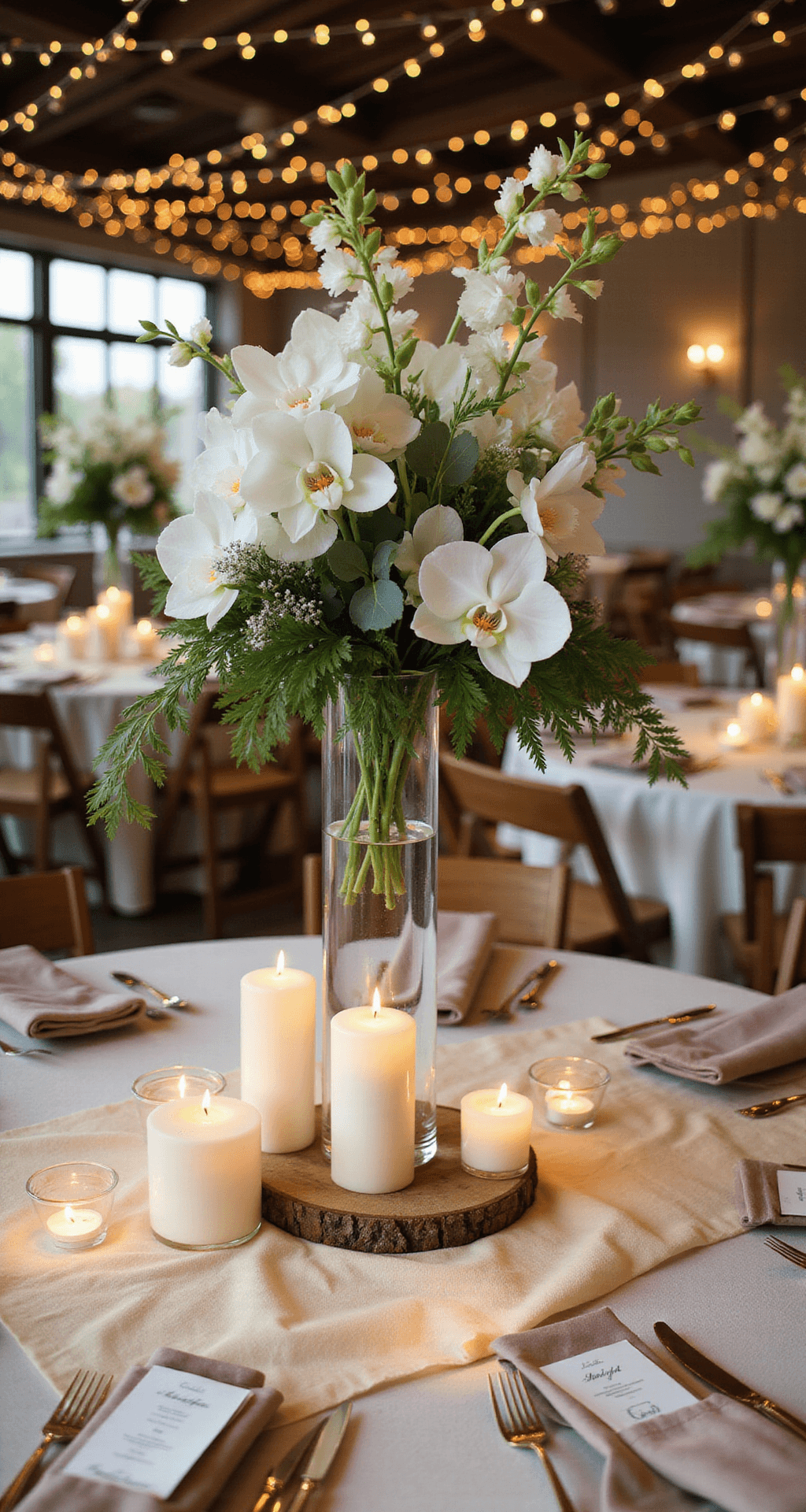
The Height Game Changes Everything
Here’s what I’ve learned from watching countless wedding setups: the height of your centerpiece matters exponentially more than the cost or complexity of the flowers themselves.
A low arrangement done beautifully will always outshine a tall one that blocks sightlines.
Low typically means anything under 12 inches tall, which keeps the table feeling open and inclusive.
From a seated perspective, guests can easily see over and around it while still having a gorgeous focal point to admire.
If you’re dead set on height—and plenty of people are because tall arrangements feel more dramatic and wedding-y—you need to work within specific constraints.
Tall arrangements should generally sit between 20 and 30 inches, which elevates them high enough that guests can see under them rather than around them.
The key word here is under.
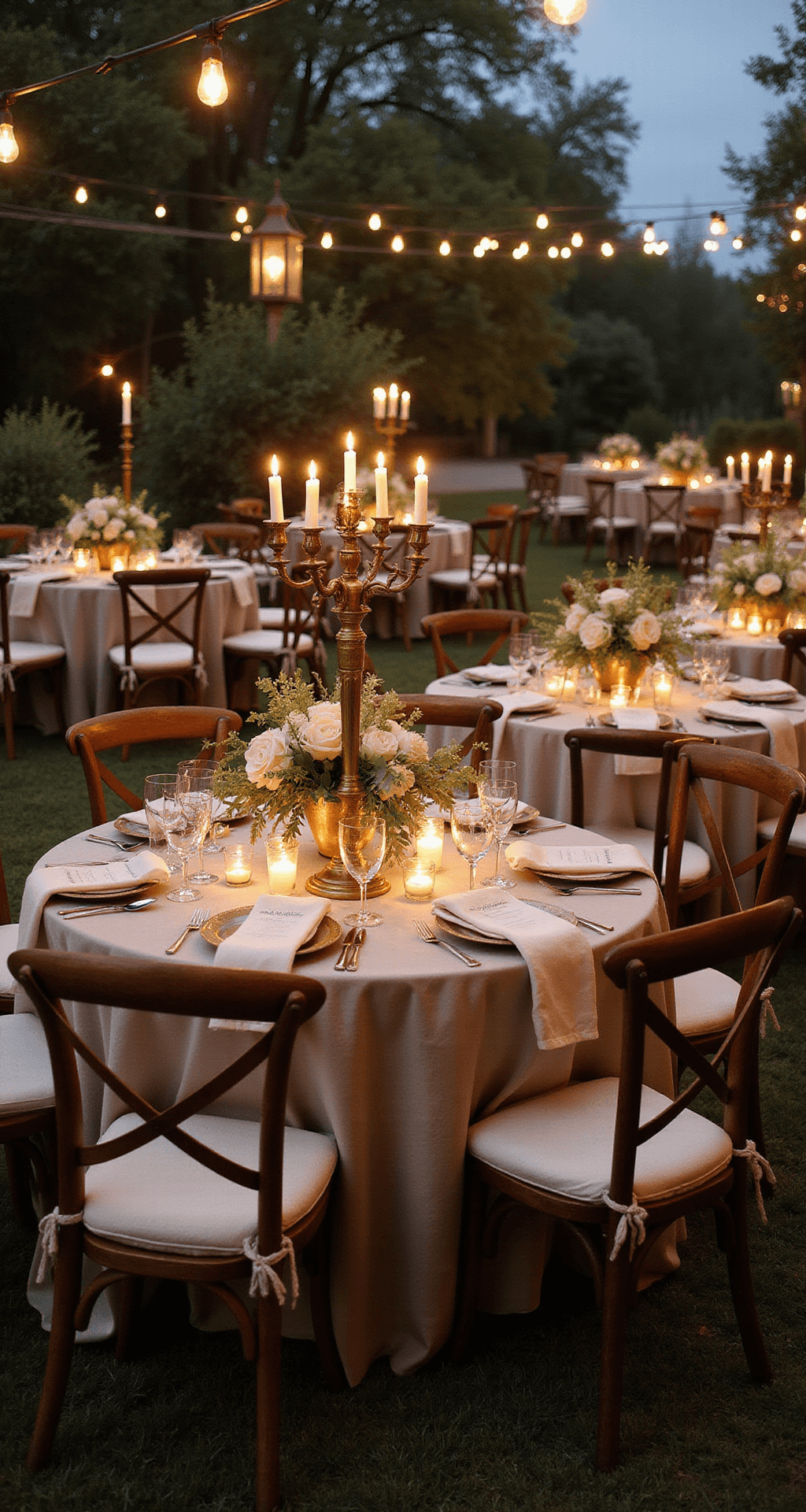
Odd Numbers Create Better Balance (Seriously, This Matters)
This is one of those design principles that feels weird until you actually see it in action.
When you’re arranging items on a round table—whether that’s candles, flowers, or decorative elements—odd numbers create more visual interest than even numbers.
Three candles feel intentional and balanced. Four candles feel like someone ran out of ideas halfway through.
Five flowers in a grouping look curated and thoughtful. Six feel static and predictable.
I don’t have a scientific explanation for why our brains respond better to odd numbers (though I’m sure there’s something in evolutionary psychology about it), but I can tell you from experience that it’s absolutely true.
When I’m styling tables, I always think in threes and fives rather than twos and fours.
Three vases clustered together at varying heights. Five candles scattered across the table surface.
It’s a small shift, but it makes a massive difference in how finished and intentional your round wedding table centerpieces look.
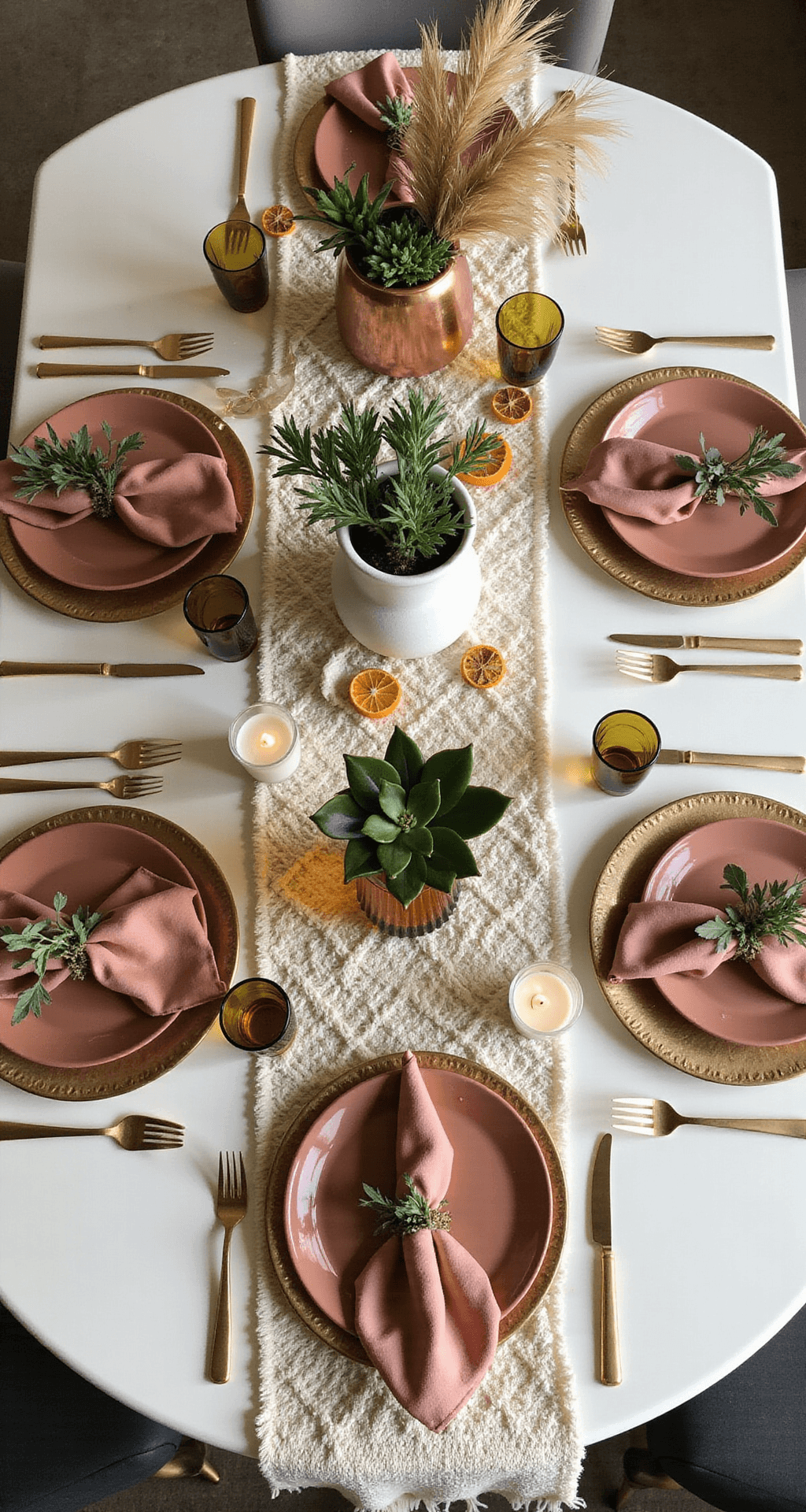
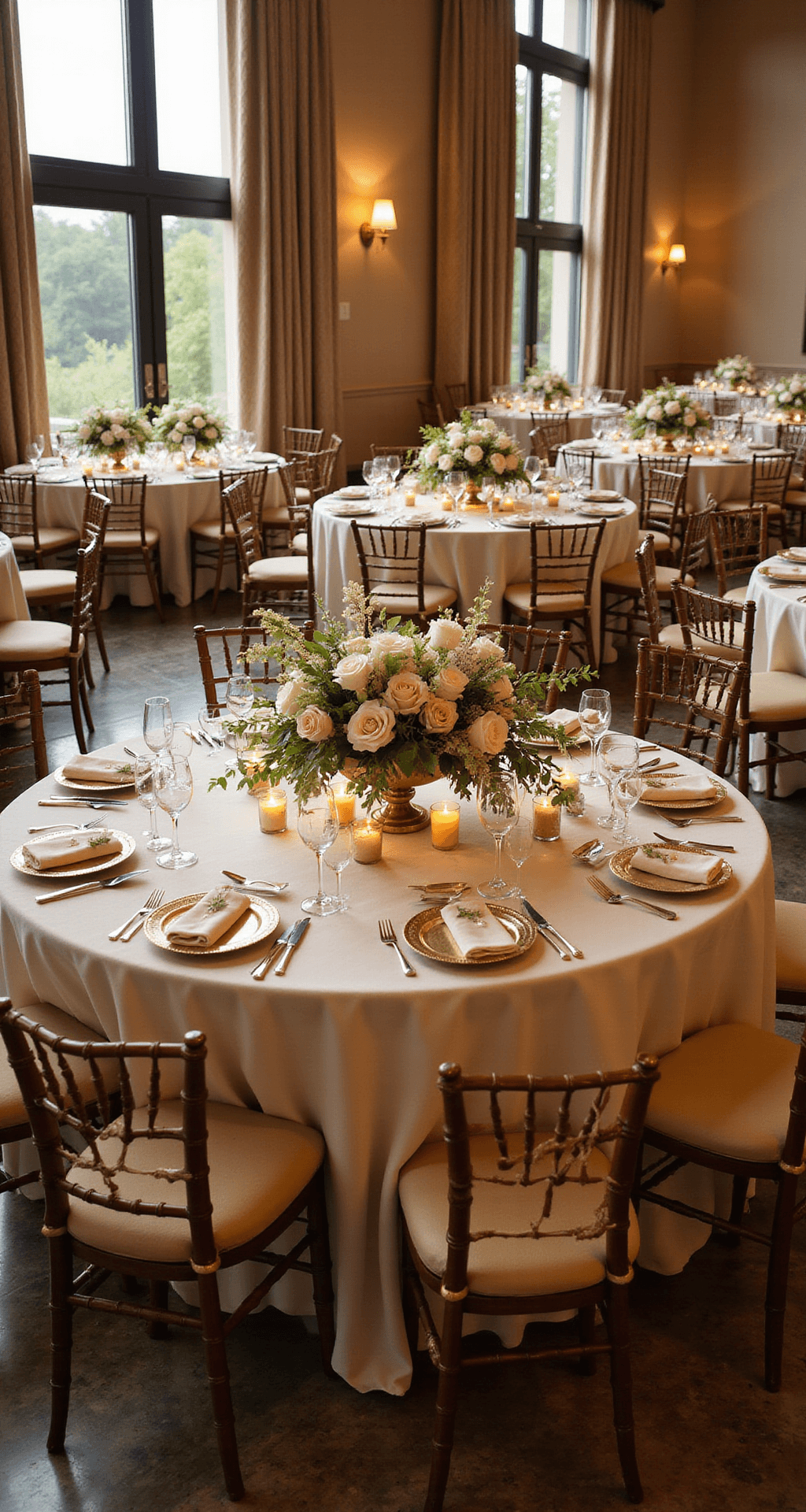
🌟 Steal This Look
- Paint Color: Benjamin Moore Simply White OC-117
- Furniture: round reception tables with gold chiavari chairs and ivory linens
- Lighting: crystal chandeliers with uplighting and pin spotting on centerpieces
- Materials: crisp white linens, metallic charger plates, crystal glassware, and fresh florals
Round wedding tables create the most intimate dining experience when done right, fostering natural conversation flow that rectangular tables simply can’t match. The key is designing centerpieces that enhance connection rather than hinder it.
The Centerpiece Styles That Actually Deliver
Not all round wedding table centerpiece designs are created equal.
Some are genuinely stunning and work beautifully with round tables. Others look great in photos but fail spectacularly in person, especially when humans are actually trying to eat dinner around them.
Here are the styles that consistently knock it out of the park.
Low and Lush: The Romance Option
This is probably my favorite style, and I’m not ashamed to admit it.
A low and lush centerpiece uses a mix of flowers—think roses, ranunculuses, garden roses, and delicate filler flowers—arranged in a loose, organic way that feels abundant without being structured.
The arrangement sits low enough that guests can easily converse across the table.
The blooms get illuminated from above by ambient lighting and from within by small taper candles tucked throughout the flowers.
When the sun sets and the room shifts to candlelight, the entire centerpiece glows with this warm, romantic quality that photographs beautifully and feels genuinely magical to experience in person.
The genius of this style is that it works with almost any color palette, any venue, and any wedding aesthetic from romantic garden party to modern minimalist.
You can scale the cost up or down by choosing premium florals or more budget-friendly options, and it still looks intentional.
Why this works for round tables:
- It encourages conversation because nothing blocks sightlines.
- The soft, organic arrangement feels inviting rather than formal or stuffy.
- Low arrangements mean guests aren’t jostling flowers to reach their plates.
- The visual interest comes from texture and color variation rather than height, which works perfectly for 360-degree viewing.
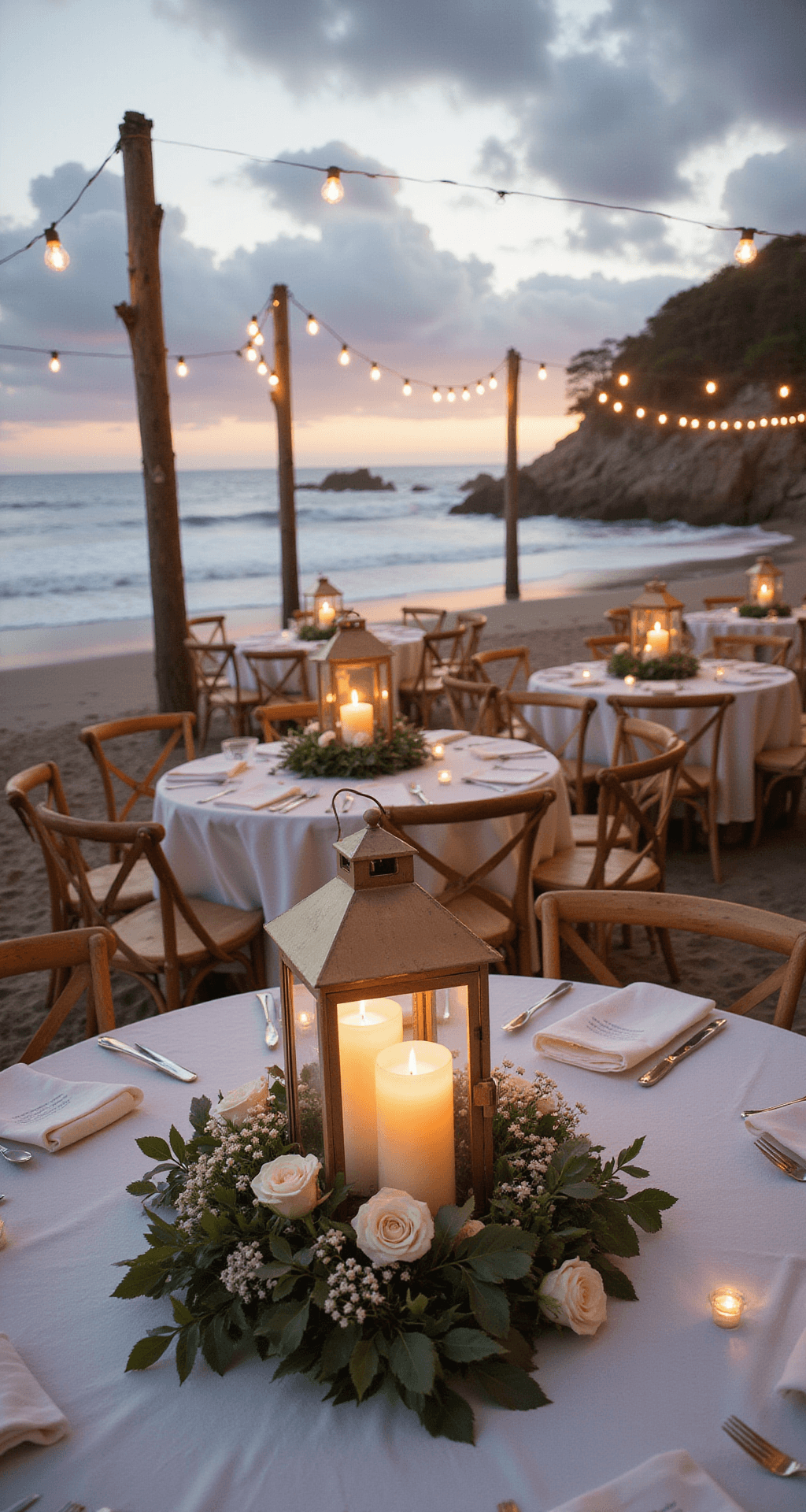
Tall with Texture: Drama Without the Downsides
If you’re craving height and drama—and honestly, who isn’t sometimes?—tall arrangements with rich greenery and cascading elements can absolutely work for round tables, as long as you follow the rules.
The sweet spot is creating a tall arrangement that’s narrow enough to see through or under.
Imagine a tall vase with a single statement flower—maybe a cascading orchid or a dramatic protea
🏠 Steal This Look
- Paint Color: Farrow & Ball Pointing No. 2003 – a warm, sophisticated off-white that enhances floral centerpieces without competing
- Furniture: round dining tables in natural wood or white lacquer with gold chiavari chairs or ghost chairs for unobstructed centerpiece views
- Lighting: warm overhead pendant lighting or chandeliers positioned to illuminate centerpieces from above
- Materials: natural linen table runners, gold or brass charger plates, crystal glassware, and organic floral arrangements
There’s something magical about low, lush florals that seem to spill naturally across a round table – they create intimacy without obstruction. The best wedding centerpieces feel effortless even when they’re meticulously planned.