
Round Wedding Tables: The Complete Guide to Creating Show-Stopping Centerpieces That’ll Have Your Guests Talking
Round Wedding Tables: The Complete Guide to Creating Show-Stopping Centerpieces That’ll Have Your Guests Talking
Round wedding tables are the unsung heroes of reception design. They’re intimate, they’re elegant, and honestly, they’re where most of your guests will spend the majority of the evening. Yet so many couples stress over getting them just right—wondering if their centerpiece will be too tall (blocking sightlines), too short (looking cheap), or just plain boring.
I get it. I’ve styled hundreds of round tables across everything from intimate garden ceremonies to grand ballroom receptions. And I’ve learned that nailing round table decor isn’t about following rigid rules. It’s about understanding what actually works, why it works, and how to adapt those principles to your specific vision and budget. So let me walk you through exactly how to create round wedding tables that look magazine-worthy and feel authentically you.
What You Need to Know Before You Start: The Honest Truth About Round Table Styling
Here’s what nobody tells you: the difference between a table that looks “nice” and one that looks stunning comes down to about five key decisions. And I’m going to break down every single one.
First, let’s talk about the real-world logistics.
Most standard round reception tables are between 60 and 72 inches in diameter. That means 8 to 12 guests per table, depending on your venue and comfort level. The bigger your table, the more dramatic your centerpiece needs to be—but also the more space you have to work with.
Here’s what actually matters when planning round wedding tables:
- Height matters more than you think — A centerpiece that’s too tall forces your guests to lean around it to make eye contact. Too short, and it gets lost on a big round table.
- Candles are non-negotiable — I don’t care what your theme is. Candlelight transforms a table from “nice” to “magical.” Period.
- Negative space is your friend — You need room for dinner plates, glassware, and place settings. Overcrowding the center looks cluttered, not lush.
- The view from all angles matters — Unlike a rectangular table where there’s a clear head and foot, every seat at a round table should feel equally important. Your centerpiece needs to look good from every direction.
- Florals and greenery aren’t the only options — Some of the most stunning round tables I’ve styled use minimal flowers and lean hard into greenery, candles, and unexpected elements like books, crystals, or seasonal produce.
How Much Time, Space, and Budget Do You Actually Need?
Let me give you the real numbers so you can plan accordingly.
Styling Time:
For each individual round table, budget 10 to 20 minutes depending on complexity. If you’re doing something simple—a low lush arrangement with a few votives and a table number—you’re looking at the shorter end. If you’re building layered place settings with menu cards, napkin rings, and multiple centerpiece elements, you’re creeping toward 20 minutes. For a full room of 10 to 20 tables, that’s 2 to 4 hours of hands-on styling time. Add another 2 to 5 hours if your florist is installing custom centerpieces on-site.
Photography Time:
- 60 to 90 minutes for dedicated detail shots of tablescapes and centerpieces
- 3 to 6 hours for full event coverage including ceremony and reception
- 30 to 45 minutes for behind-the-scenes styling and pre-guest setup shots
Post-Production Time:
Save this article
Enter your email and we'll send it straight to your inbox.
Once you’re done shooting, expect 8 to 15 hours for editing, color correction, and creating social media content. This includes cropping different aspect ratios for Pinterest, Instagram, and blog posts.
Space Requirements:
- Intimate reception: 4 to 6 round tables (40 to 60 guests)
- Medium reception: 8 to 15 round tables (80 to 150 guests)
- Grand ballroom or large venue: 20+ round tables (200+ guests)
Budget Ranges (Per Table):
- Budget-friendly: $30 to $75 per table (greenery rings, bud vases, basic candles)
- Mid-range: $75 to $200 per table (mixed florals, layered candles, quality linens, charger plates)
- Luxury: $200 to $500+ per table (premium blooms like garden roses and orchids, tall installations, custom linens, elevated vessels)
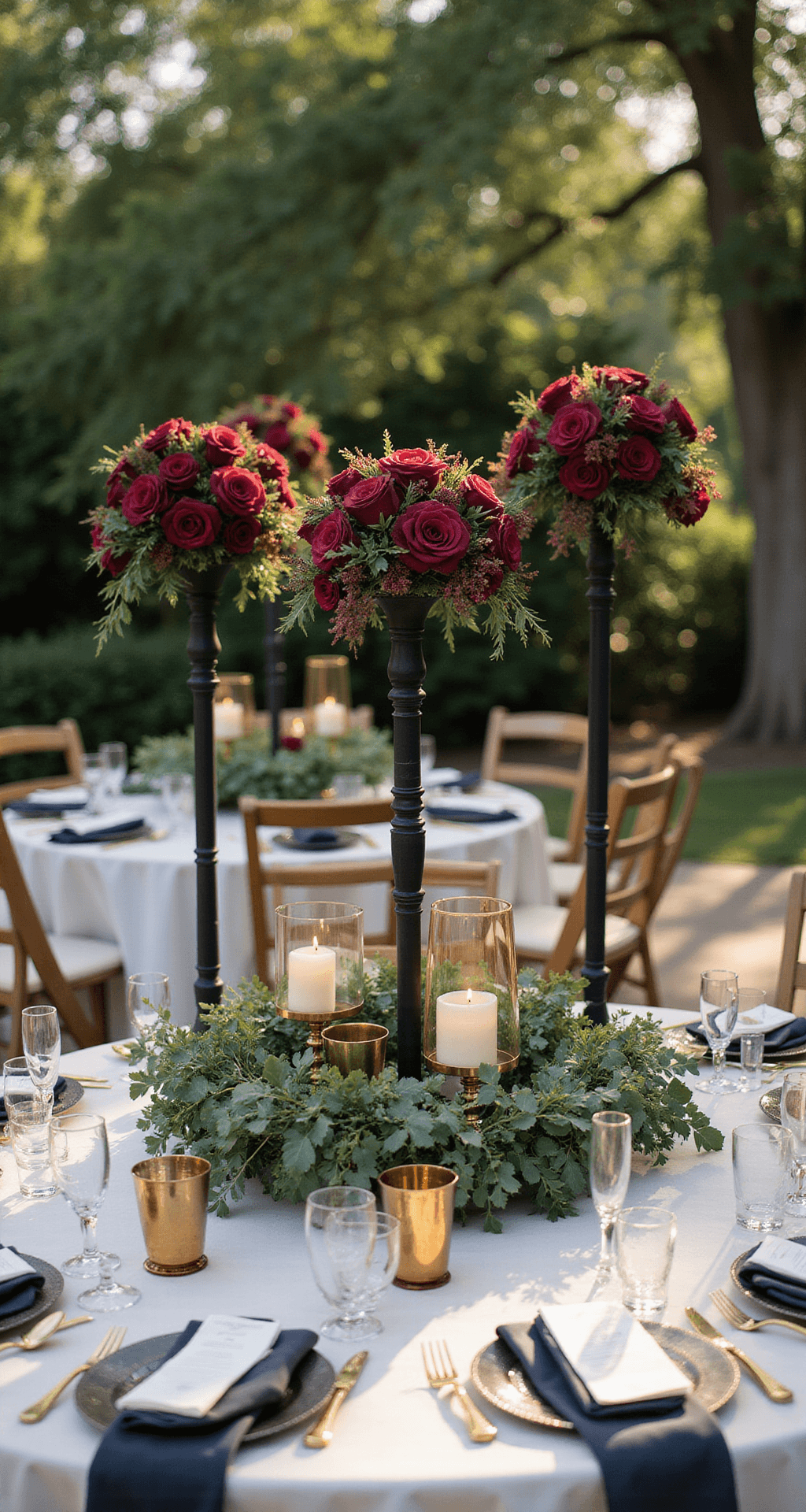
The Three Main Styles of Round Table Centerpieces (And How to Execute Each One)
I break round table centerpieces into three categories based on what I see working best in real weddings. Understanding these helps you know which direction to go, even if you end up mixing and matching.
Low and Lush: The Classic Romantic Approach
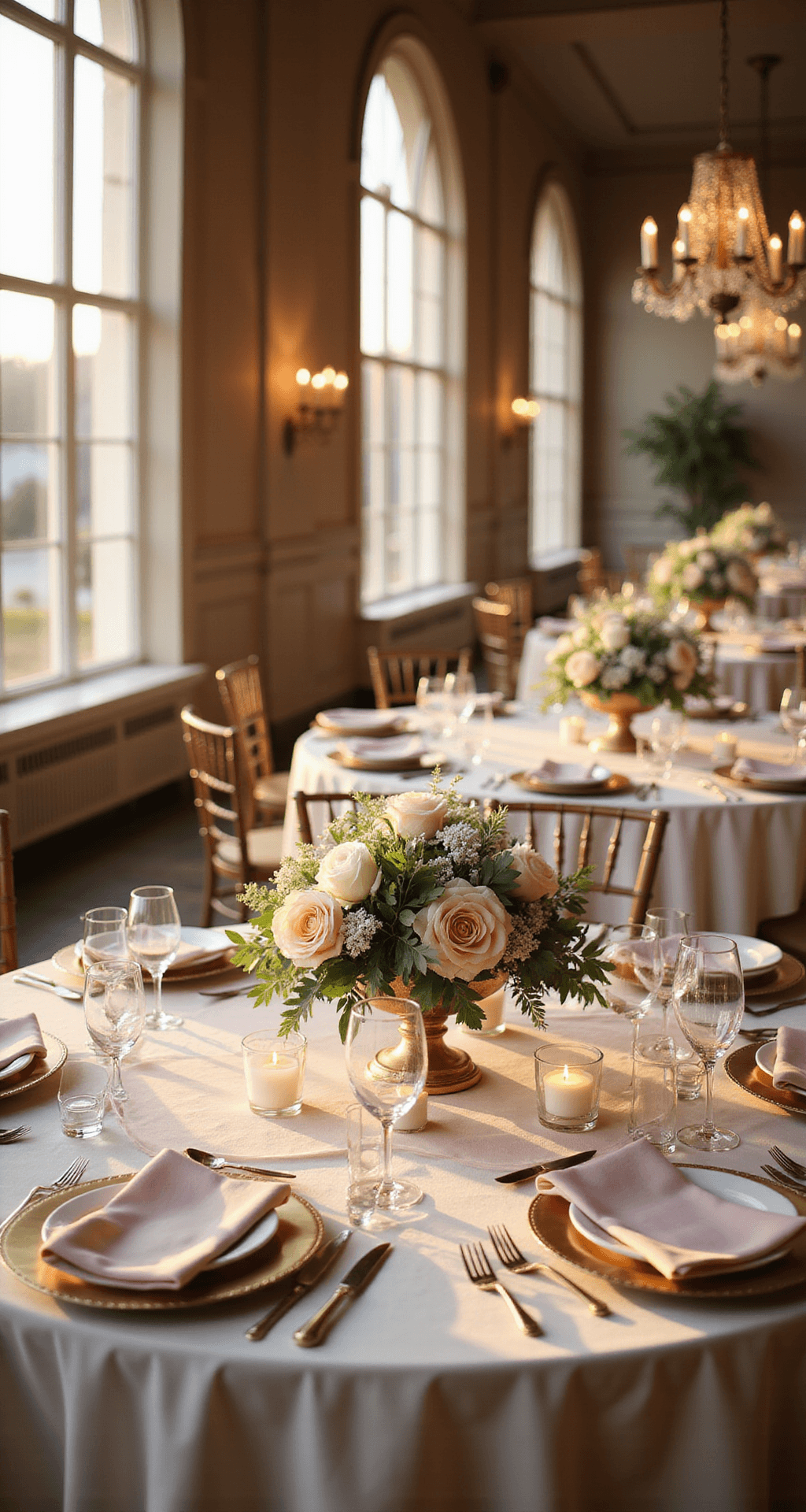
This is the safe bet that almost always works. You’re creating a dense, garden-like arrangement that sits low on the table—typically 12 to 18 inches tall—so sightlines stay clear.
Why this works:
- Guests can actually see and talk to each other across the table
- It’s visually abundant without being intimidating
- Candles placed around it create intimate pools of light
- It works with almost any color palette or theme
How to build one:
Start with a low compote bowl or a floral foam base in a shallow vessel. Fill it with greenery first—this is your base layer and it should be generous. Think eucalyptus, Italian ruscus, seeded eucalyptus, or whatever green material matches your palette. Then layer in your focal flowers—these are your statement blooms that people will notice. Garden roses, ranunculus, peonies, dahlias, or even simple roses work beautifully here. Tuck smaller filler flowers (astilbe, statice, waxflower) into the gaps. Add candles around the arrangement in odd numbers (3 or 5) at varying heights. Mix tapers in candlestick holders with votives and pillars. The variation in height looks intentional and expensive.
Pro tip: Place your low lush arrangement slightly off-center on the table. It creates better sight lines and looks more intentional than dead-center positioning.
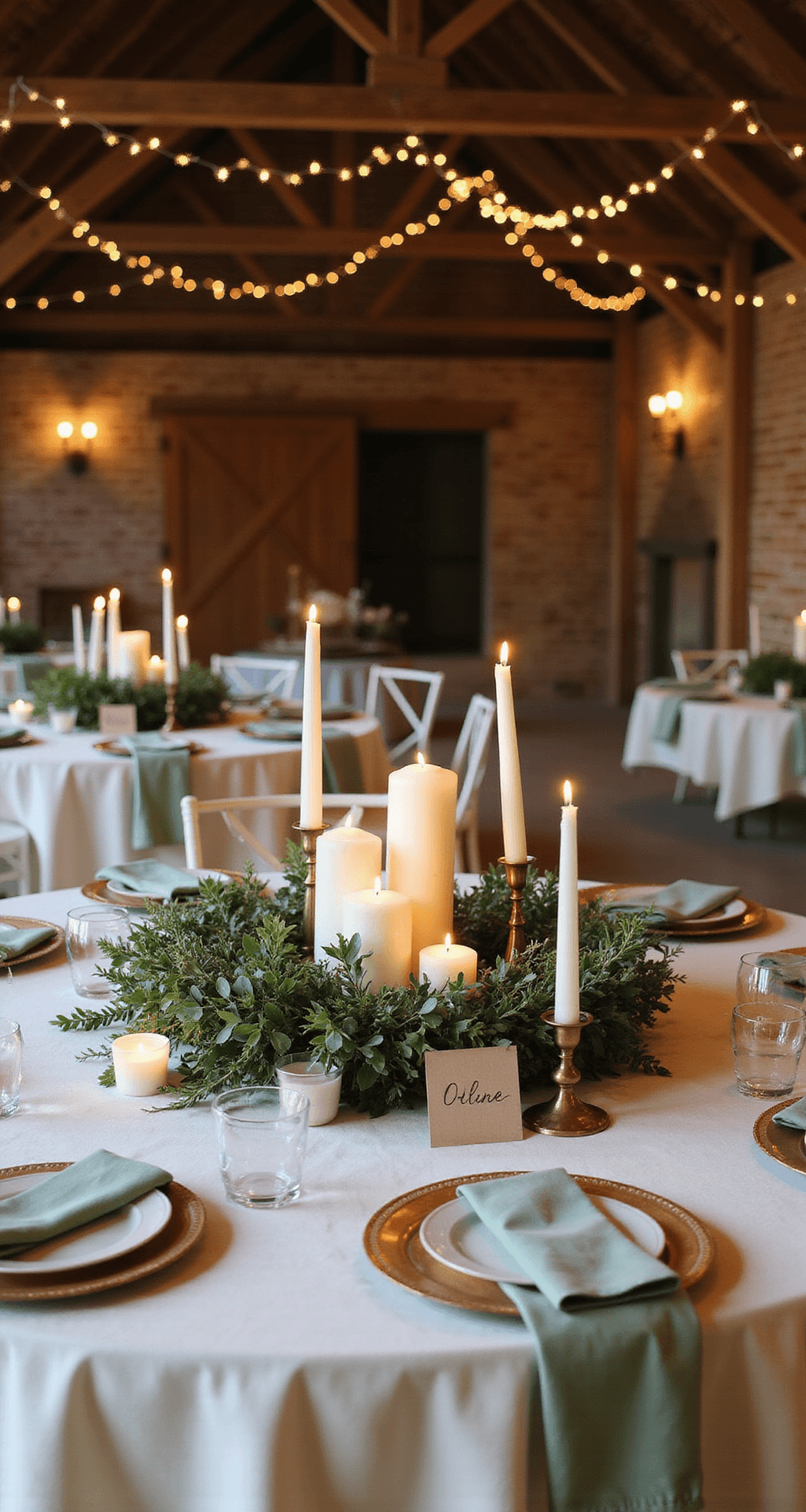
Tall and Airy: The “Harlow Stand” Moment
These are the Instagram-famous centerpieces where flowers appear to be floating in mid-air. They’re technically called Harlow stands—tall, thin structures (usually
Want to keep this one?
We'll email you the link so you can find it again later.