
Church Wedding Decor: The Complete Guide to Transforming Your Ceremony Space
The Truth About Church Wedding Decorations (What Nobody Tells You)
Here’s what caught me off guard when I started planning church decorations: every single church has different rules.
One church I worked with banned anything attached to pews. Another allowed only real flowers, no silk. A third church wanted all candles extinguished immediately after the ceremony.
Before you buy a single flower, before you spend a dollar, you need church approval.
I learned this the hard way (and so did the bride whose decorations I had to completely remove mid-setup).
The good news? Once you know the rules, decorating a church becomes straightforward, affordable, and honestly, one of the most satisfying parts of wedding planning.
Understanding Your Three Decorating Zones
Think of church decoration like painting a triptych: you have three distinct focal points that work together to tell your story.
The Altar (Your Main Stage)
This is where the magic happens. Your guests will stare at this space for 20-45 minutes while you exchange vows, so every detail matters.
The altar is your blank canvas—and it’s the one zone worth splurging on if budget is tight.
What makes an altar stand out:
- Height variation creates visual interest (tall arrangements on sides, lower pieces at center)
- Color coordination with the bride’s bouquet feels intentional and elegant
- Architectural framing (arches, garland swags, backdrop fabric) draws eyes to the couple
- Lighting elements like candelabras add warmth and romance
- Strategic space leaves room for the bride, groom, and officiant to stand comfortably
Decoration types that work:
- Floral arrangements (fresh or premium silk)
- Fabric-draped arches or freestanding backdrops
- Cascading greenery garlands
- Candles in hurricane holders or candelabras
- Elevated floral stands or urns
- String lights or soft uplighting (if the church allows it)
Real example:
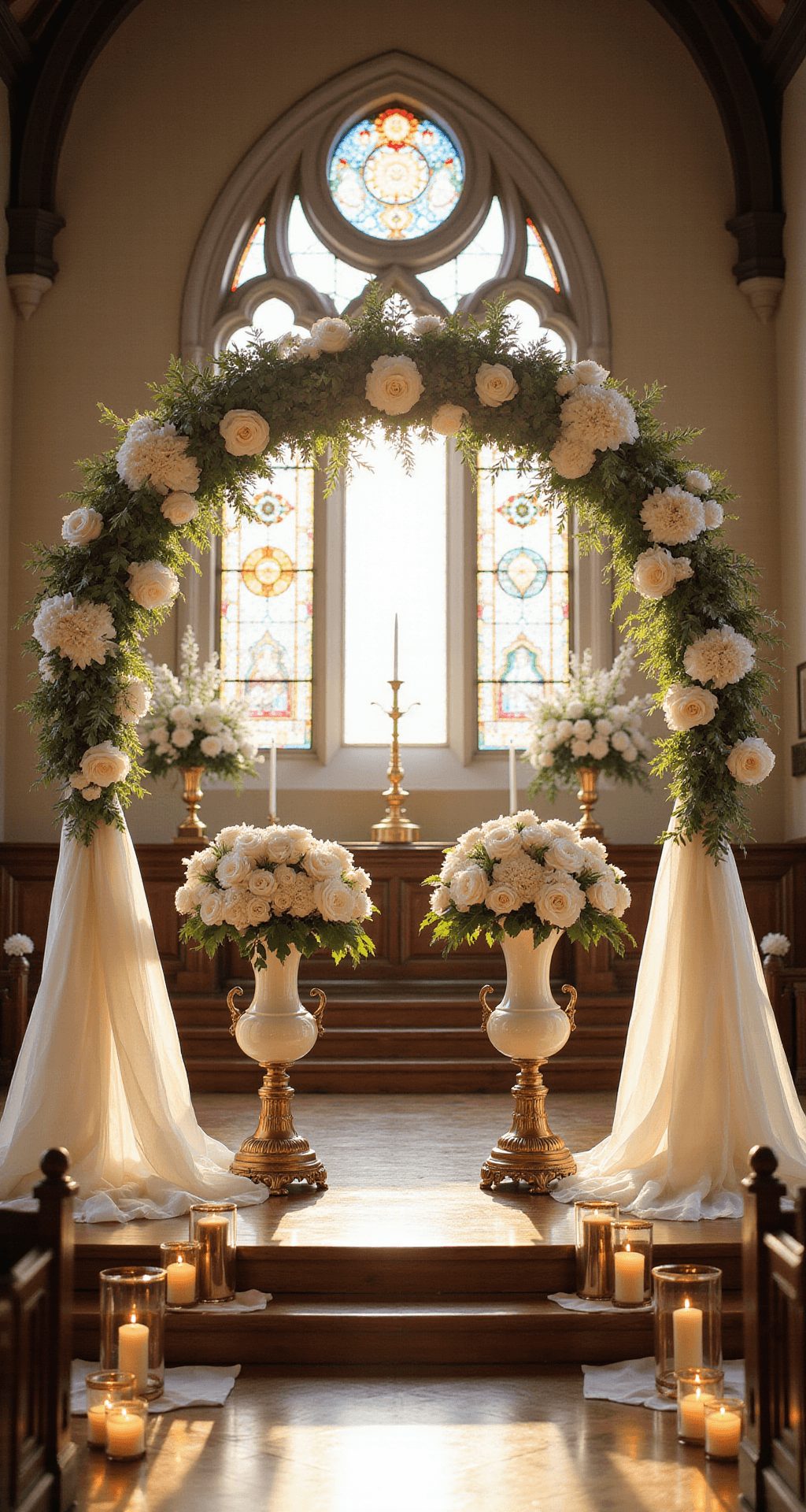
Last year, I decorated a small chapel with a 12-foot altar space. Instead of covering it with flowers, we created a simple linen-draped arch (10 feet wide, 8 feet tall) and positioned two large white urns with cascading white roses on either side.
The bride’s bouquet was white roses with silver eucalyptus, which matched perfectly. We added two brass candelabras with white taper candles in front of each urn.
Total cost: $800. The visual impact? Absolutely stunning—the altar felt sophisticated without looking overdone.
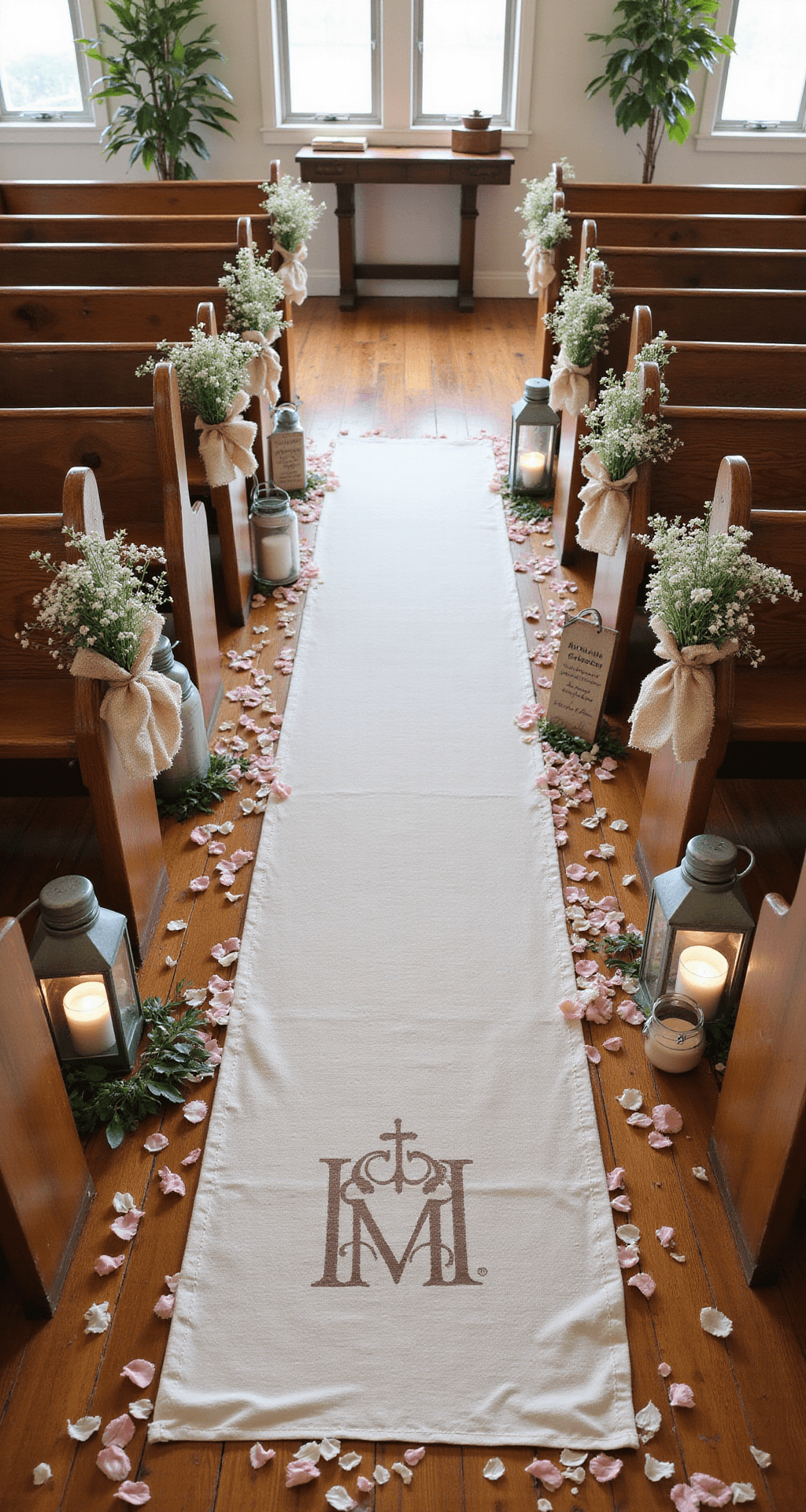
The Aisle (Where Emotion Lives)
The aisle is where memories happen. This is where the bride walks, where guests turn to look, where the photographer captures raw emotion.
Your aisle decoration sets the mood from that very first moment.
Save this article
Enter your email and we'll send it straight to your inbox.
Key aisle elements:
- Aisle runner (optional but impactful) guides the eye and adds formality
- Pew decorations (small nosegays, ribbon bows, or garland swags) create rhythm
- Candlelight lining (safely placed in holders) creates romance
- Floral entrance accents signal ceremony space to guests
Pew decoration options by budget:
Budget-friendly ($300-500):
- Simple satin ribbon bows tied to pews (white, blush, or gold)
- DIY tulle bows with ribbon tails
- Greenery garland swags (no flowers)
- Candles in paper bags with sand (the “luminarias” look)
Mid-range ($600-1,200):
- Small nosegay bouquets in vases with ribbon handles
- Ribbon bows with floral accent sprigs
- Garland with scattered greenery
- Hurricane candles every 3-4 pews
Luxury ($1,300+):
- Custom floral nosegays matching the bride’s bouquet
- Premium silk flowers (reusable for centerpieces later)
- Hand-tied garland with premium blooms
- Scented candles in custom holders
Pro tip that saves money:
Most guests notice pew decorations for about 3 seconds. Invest heavily in the altar and entryway where guests spend time looking. For pews, simple ribbon bows or minimal greenery looks elegant and costs a fraction of elaborate nosegays.
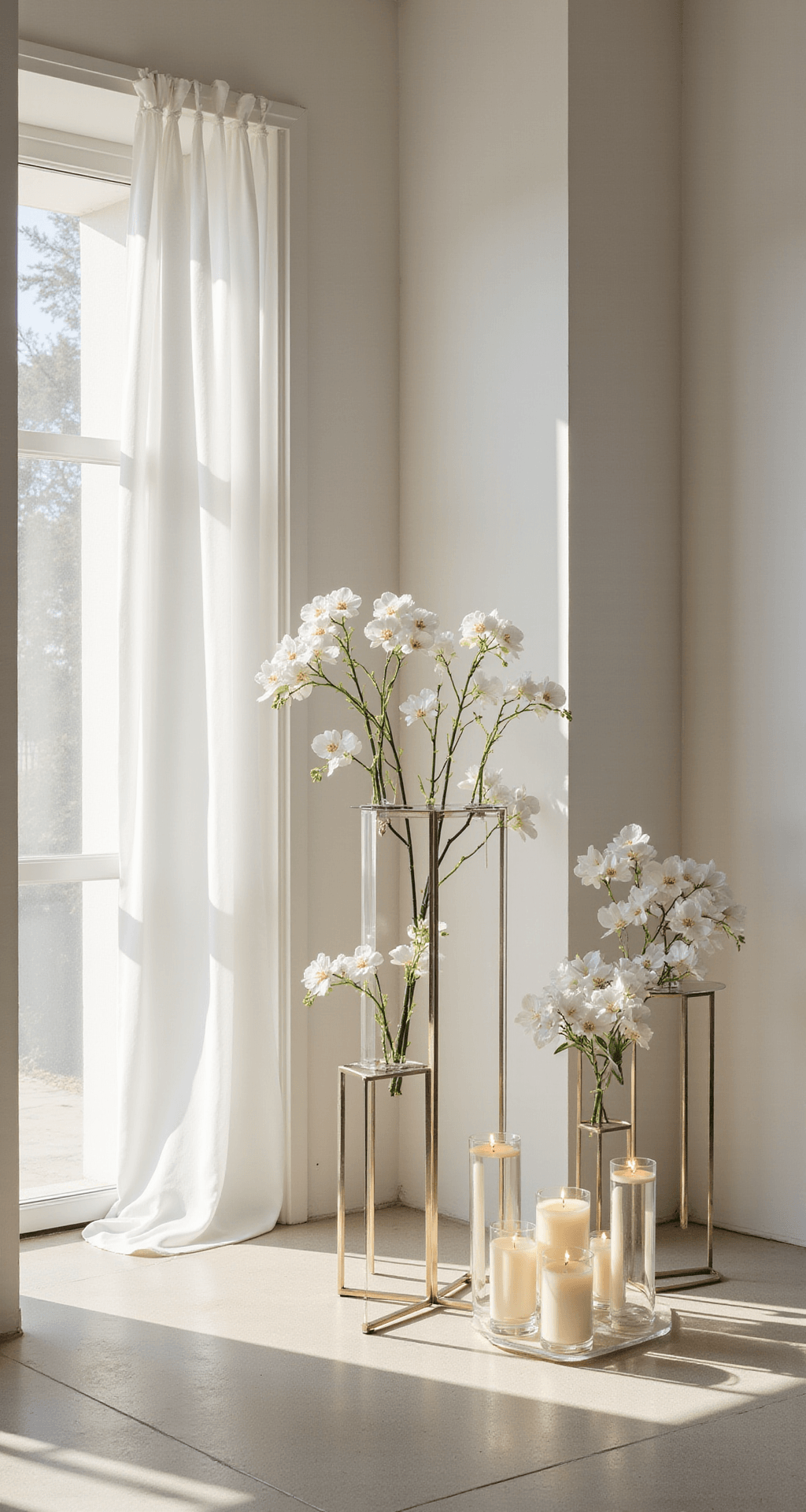
The Entryway (The First Impression)
This is where your wedding begins for guests. The entryway decoration sets expectations before they step inside.
It’s also where you’ll have your first photos as guests arrive—so make it count.
Entryway decoration strategy:
- Symmetrical placement (matching arrangements on both sides) feels formal and traditional
- Varying heights (tall arrangements, garland swags, lanterns) creates visual drama
- Welcoming statement (wreaths, signage, dramatic florals) announces the celebration
- Adequate lighting for evening weddings (uplighting, lanterns with candles, string lights)
Decoration styles by aesthetic:
Elegant/Traditional:
- Large white flower arrangements in urns on both sides
- Garland swags on handrails
- Ribbon bows or monogrammed signage
- Candle lanterns flanking the entrance
Rustic/Garden:
- Wildflower and greenery arrangements
- Wooden signage or easels
- Burlap ribbon accents
- Mason jar arrangements or galvanized metal containers
- Lanterns with battery-operated candles
Modern/Minimalist:
- Geometric arch with sparse florals
- Sleek metal planters with greenery only
- Monogrammed acrylic signage
- Uplighting in wedding colors
- Minimal, strategic placement
<img src="https://purelycelebrations.com/wp-content/uploads/2026/05/929luxury-church-ceremony-candlelit-floral
Want to keep this one?
We'll email you the link so you can find it again later.