
Planning a Chinese Wedding? Master These Traditional Decorations That’ll Make Your Celebration Unforgettable
Planning a Chinese Wedding? Master These Traditional Decorations That’ll Make Your Celebration Unforgettable
You’re staring at Pinterest, scrolling through dozens of wedding inspo boards, and suddenly it hits you—how do you blend the cultural traditions your family cherishes with the modern wedding vibe you actually want?
That nagging feeling that you’re missing something important?
Here’s the truth: Chinese wedding decorations aren’t just pretty things you throw around your venue.
Each symbol, every color choice, carries centuries of meaning behind it.
Get it right, and your celebration honors your heritage while wowing your guests.
Get it wrong, and you’re basically leaving luck on the table.
I’ve been there—researching late into the night, confused about which traditions actually matter and which ones are negotiable, wondering if I could blend old and new without offending anyone.
Let me walk you through exactly what you need to know.
The Five Pillars of Chinese Wedding Decorations That Actually Matter
When you’re planning Chinese wedding decor, you’re really working with five core elements that form the backbone of everything else.
Understanding these isn’t about being traditional for tradition’s sake.
It’s about knowing what speaks to your family, what creates genuine magic in your space, and what gives your celebration authentic meaning.
Red: The Color That Does All the Heavy Lifting
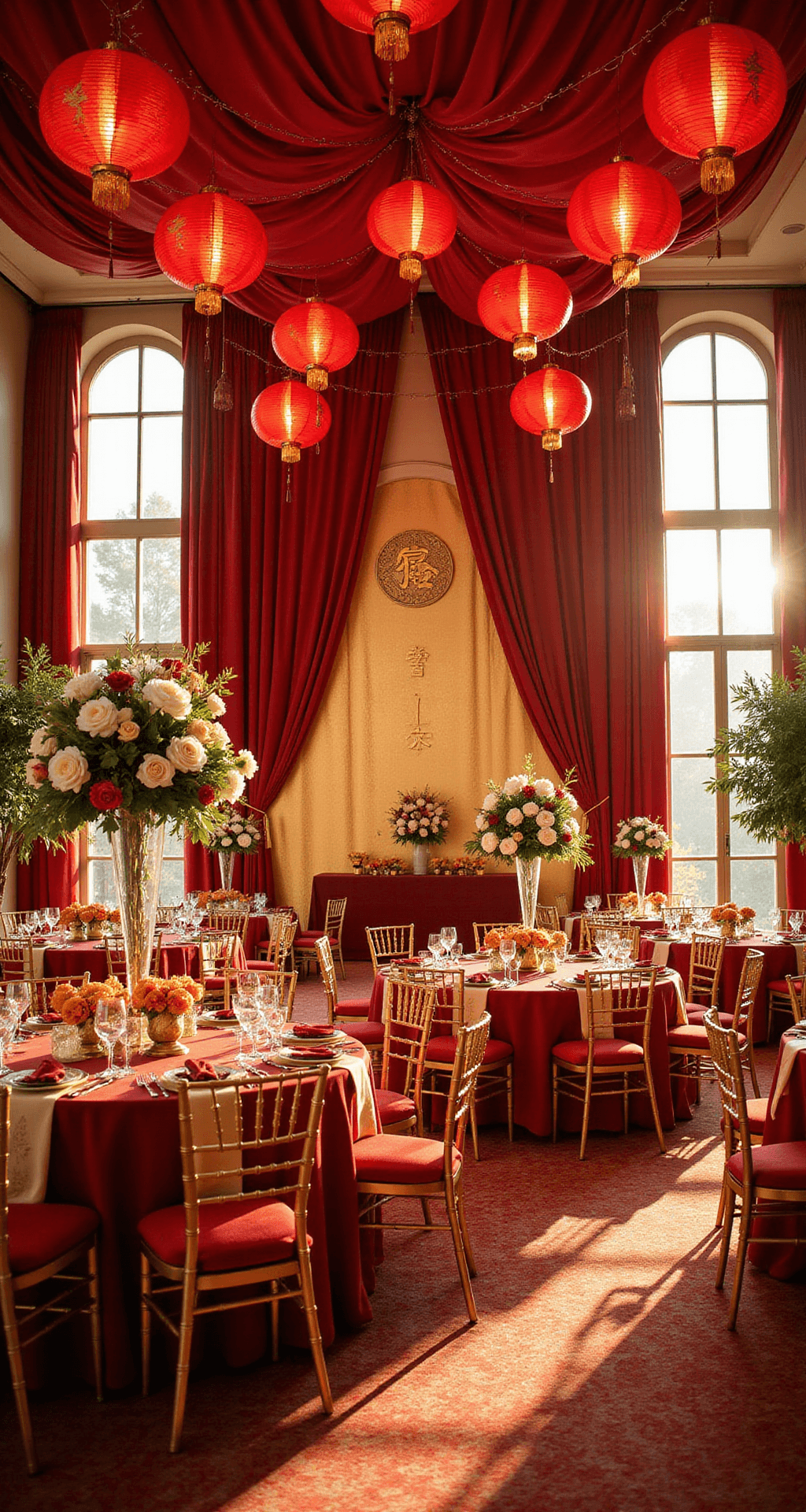
Red isn’t just a color choice at a Chinese wedding—it’s practically the main character.
This color screams joy, good fortune, and happiness.
Your guests expect it, your family wants it, and honestly, it photographs beautifully.
Where red shows up in your celebration:
- Your color palette anchors everything else around it
- Backdrops for ceremony and photo moments
- Lantern displays throughout the venue
- Table runners and linens
- Floral arrangements mixed with neutrals
- Guest favors and small gifts
- Invitation suites and paper goods
Here’s what I learned: you don’t need everything to be red.
Mixing red with gold, ivory, or blush creates sophistication while keeping that lucky, celebratory feeling alive.
The Double Happiness Symbol: Simple, Powerful, Unmistakably Chinese
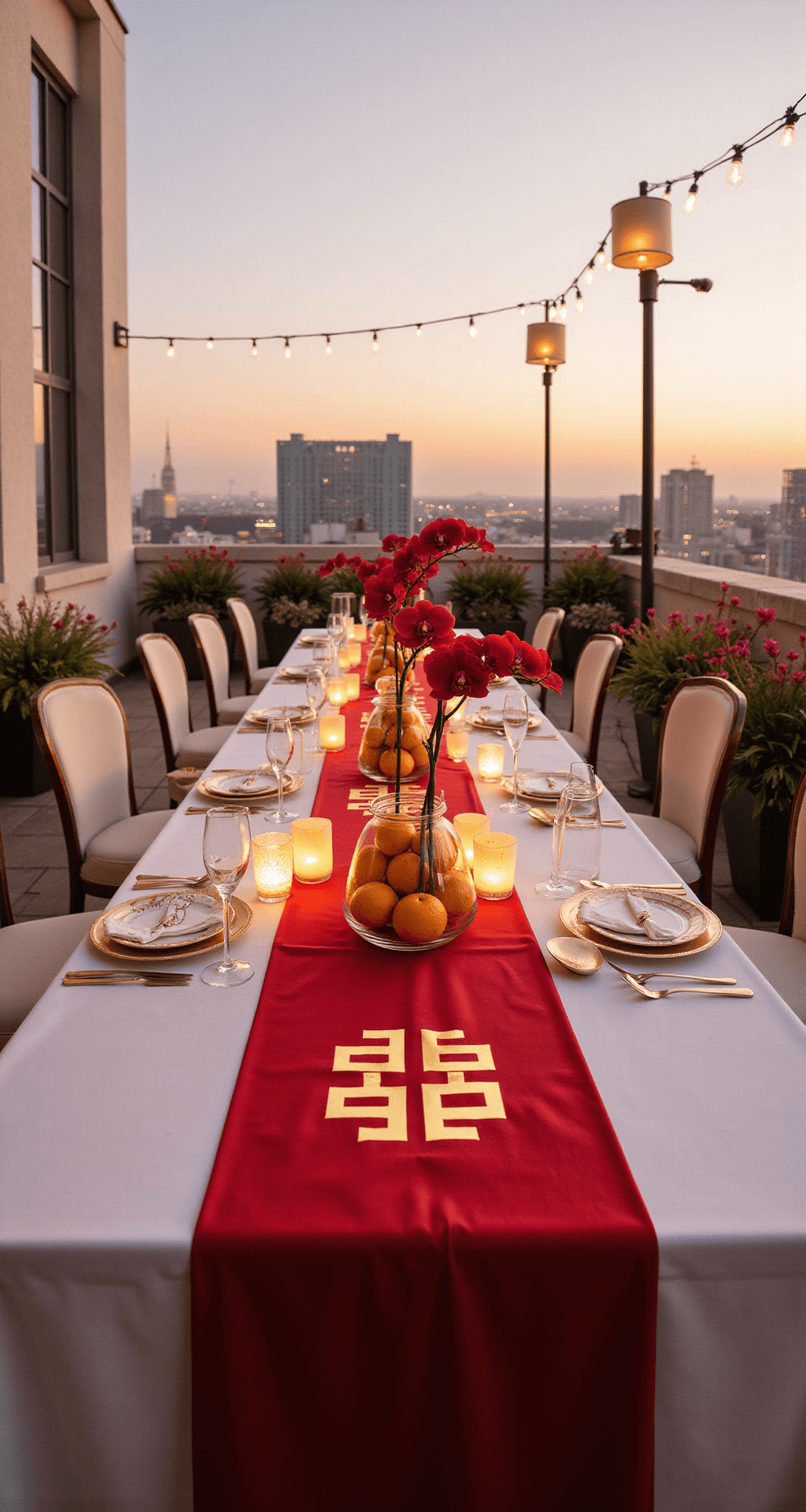
The double happiness symbol—two identical Chinese characters for “Xi” (喜) placed together—represents exactly what it sounds like.
Doubled joy. Doubled luck. Doubled good fortune for the marriage ahead.
What makes this symbol brilliant is its symmetry.
It naturally represents balance, harmony, and the union of two people becoming one.
You’ll see it on:
- Ceremony backdrops as a focal point
- Wedding invitations and stationery
- Decorative signage throughout your venue
- Custom placemats and table cards
- Printed details on napkins and programs
- Guest favors and thank-you cards
- Embroidered elements on cushions or runners
The modern twist?
Designers now create double happiness symbols using unconventional materials—neon lights, wooden designs, living green walls, or metallic installations.
Save this article
Enter your email and we'll send it straight to your inbox.
These feel fresh while honoring the tradition completely.
Phoenix and Dragon: The Power Couple of Symbols
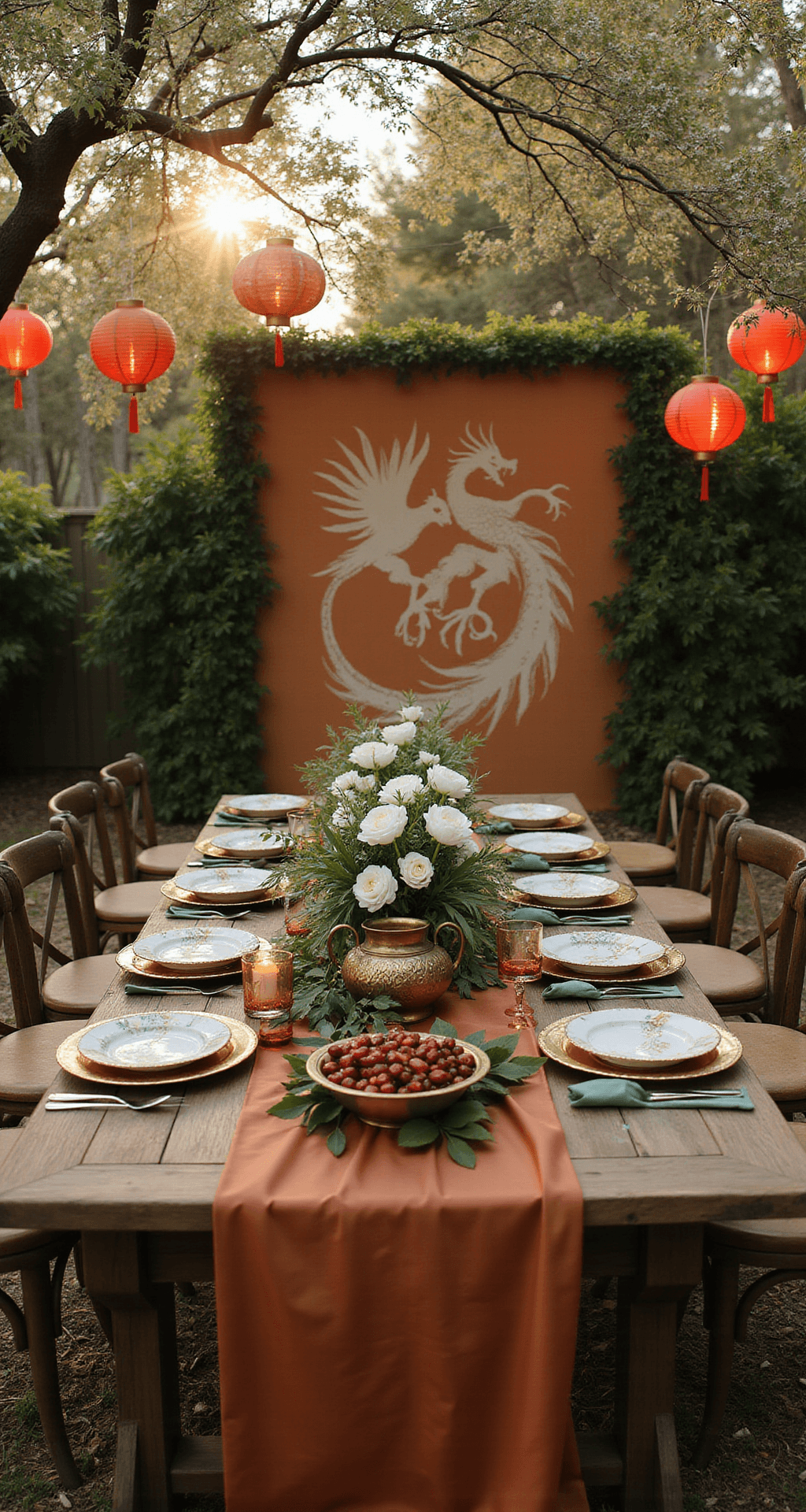
Here’s something beautiful about Chinese culture: the phoenix and dragon together represent the ultimate partnership.
The dragon symbolizes the groom (strength, power, good fortune).
The phoenix symbolizes the bride (grace, beauty, renewal).
Together, they represent Yin and Yang—balance, completeness, and perfect harmony.
Traditionally, these symbols appear embroidered on the bride’s and groom’s clothing during ceremonies.
Modern venues incorporate them through:
- Embroidered details on ceremony cushions or pillows
- Hand-painted or printed backdrop designs
- Custom tea ceremony cups and serving pieces
- Decorative panels or screens throughout the venue
- Floral arrangements shaped or styled around these forms
- Customized cake toppers or dessert display designs
- Engraved details on gifts or favors
I’ve seen couples use these symbols so creatively—one bride had phoenix and dragon silhouettes cut from mirrors that caught light beautifully during the evening celebration.
Lanterns: Your Wish-Granting Decorative Powerhouse
Lanterns symbolize joy, brightness, and illuminated futures.
They’re also incredibly versatile for modern celebrations.
Forget just hanging paper lanterns from the ceiling (though that works too).
Modern lantern applications include:
- Statement installations at ceremony entrances
- Floating lanterns released during evening receptions
- Lantern-lined walkways or aisle decorations
- Hanging installations at varied heights creating depth
- Lanterns as centerpiece components with flowers inside
- LED lanterns for safety and modern aesthetic
- Oversized lanterns as photo backdrop elements
Decorative paper lanterns come in every size imaginable, from delicate table additions to dramatic ceremony statements.
Pro tip: LED versions mean you don’t have to worry about fire codes or safety concerns.
Lucky Fruits: The Edible Good Fortune
Lucky fruits are quietly powerful decor elements because they’re functional and symbolic simultaneously.
Oranges represent gold and wealth.
Pomegranates symbolize fertility and many blessings.
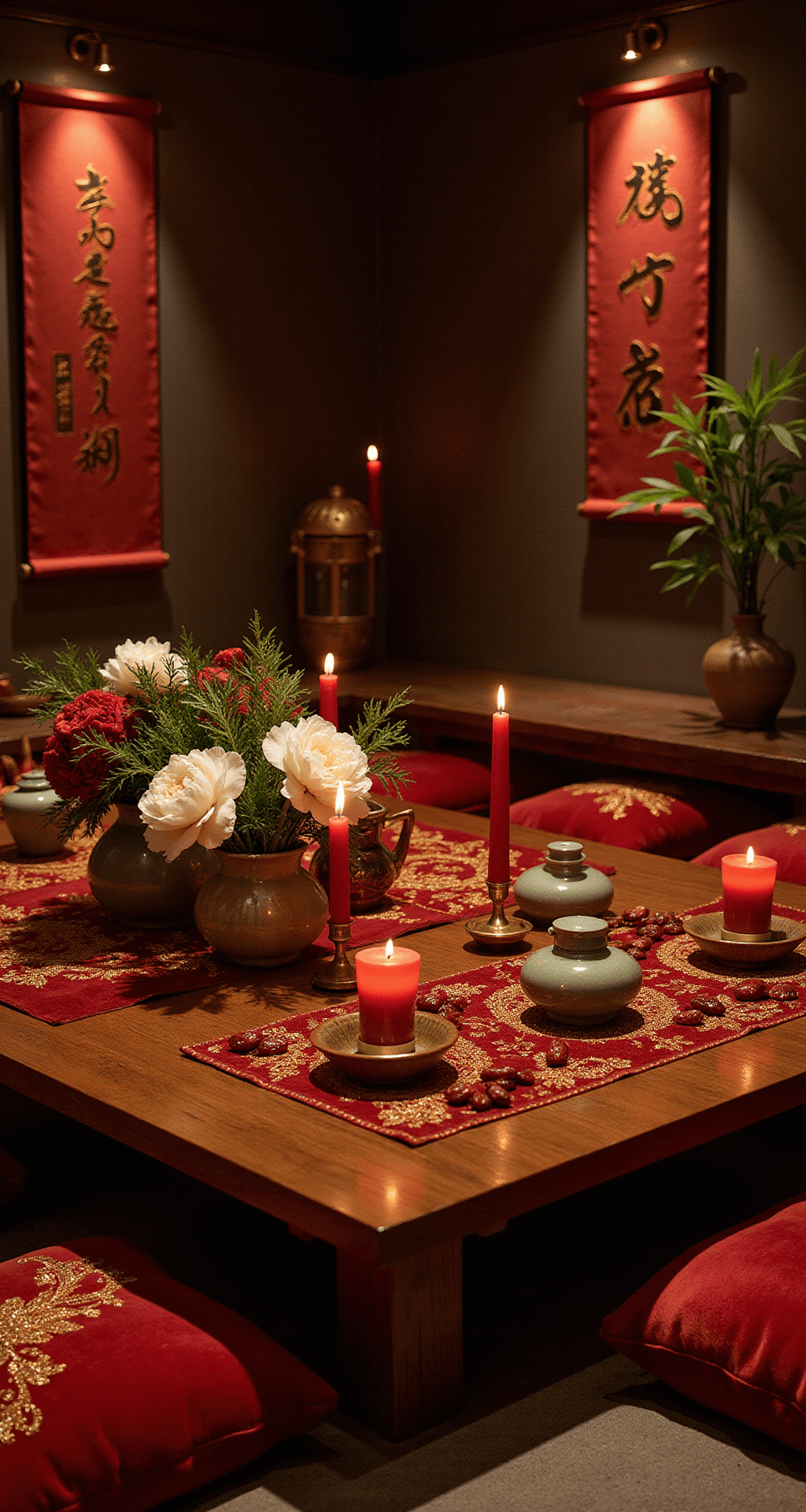
Red dates (jujubes) represent prosperity and sweet futures.
Ways to incorporate lucky fruits:
- Displayed on dessert tables as part of your sweets presentation
- Incorporated into wedding cake design or decoration
- Arranged in decorative bowls as centerpiece elements
- Mixed into floral arrangements for texture and symbolism
- Featured on fruit-focused dessert tables or candy bars
- Presented during tea ceremonies
- Given as wedding favors to guests
One couple I know created an entire “luck wall” featuring baskets of these fruits, which guests
Want to keep this one?
We'll email you the link so you can find it again later.