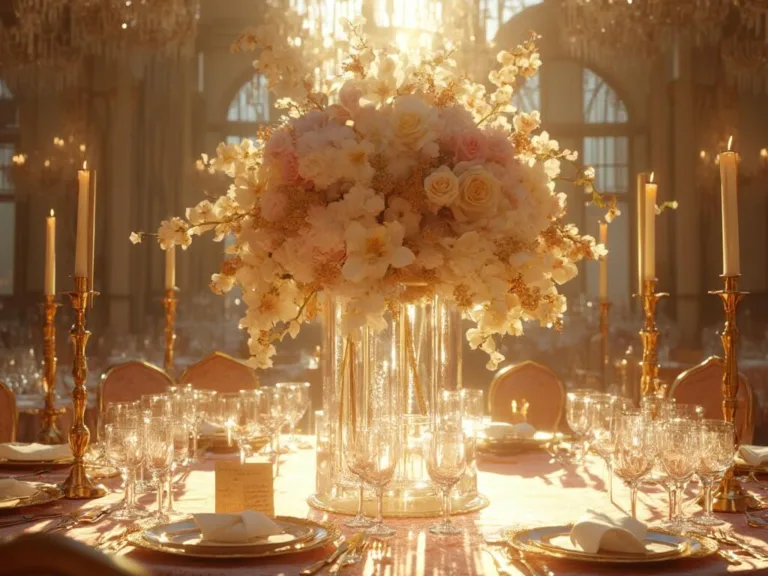

Black Tie Wedding Décor Ideas (Elegant & Formal Luxury Inspiration for 2026)
Black Tie Wedding Décor Ideas to help you create a refined, formal aesthetic for your wedding day. A black tie celebration calls for décor that reads as sophisticated, dramatic, and timeless—every detail from linens to lighting should support that elevated look.
Classic color palettes anchor every strong black tie wedding: think a disciplined monochrome of black and white with metallic accents like gold, silver, or warm champagne. These tones create visual harmony while preserving the formal tone your guests expect.
The venue establishes your foundation. Grand ballrooms, historic estates, luxury hotels, and stately manors already offer architectural gravitas that complements black tie styling—allow your décor to enhance those features rather than compete. Ready to get started? Jump to the table of contents below to explore palettes, tablescapes, lighting, and designer tips.
Table of Contents
Contents
- Table of Contents
- What Makes Wedding Décor Truly “Black Tie”?
- How to Design Black Tie Wedding Décor That Feels Luxurious
- 40 Black Tie Wedding Décor Ideas
- 1. Dramatic Draped Ceiling Treatment
- 2. Monochrome Ceremony Aisle
- 3. Mirrored Reception Tables
- 4. Floor-to-Ceiling Floral Installation
- 5. Crystal Chandelier Centerpieces
- 6. Black Velvet Aisle Runner
- 7. Gold Chiavari Chairs
- 8. Tall Taper Candle Groupings
- 9. White Orchid Installations
- 10. Acrylic Ghost Chairs
- 11. Champagne Linen with Black Accents
- 12. Suspended Floral Installations
- 13. Black Satin Table Runners
- 14. Gold Geometric Centerpiece Vessels
- 15. White Uplighting on Draped Walls
- 16. Crystal Beaded Chargers
- 17. Monochromatic Rose Arrangements
- 18. Black and White Striped Dance Floor
- 19. Cascading Crystal Garlands
- 20. Tall White Gladiolus Arrangements
- 21. Gold-Rimmed Glassware
- 22. Black Napkins with Gold Rings
- 23. Candlelit Ceremony Aisle
- 24. White Hydrangea Clouds
- 25. Mirrored Table Numbers
- 26. Champagne Tower Display
- 27. Black Accent Wall Draping
- 28. Crystal Candelabras
- 29. White Amaryllis Blooms
- 30. Gold-Leafed Menus
- 31. Black-Framed Seating Chart
- 32. White Tulip Centerpieces
- 33. Gold Flatware Complete Settings
- 34. Black and White Photo Display
- 35. Illuminated White Columns
- 36. Mercury Glass Bud Vases
- 37. White Leather Guest Book
- 38. Black Table Linens with White Centerpieces
- 39. Crystal-Embellished Cake Stand
- 40. Gold-Foiled Place Cards
- Black Tie Wedding Table & Centerpiece Ideas
- Black Tie Wedding Color Palette Ideas
- Budget vs Mid-Range vs Luxury Black Tie Wedding Décor
- Materials That Make Black Tie Wedding Décor Look Expensive
- Modern vs Traditional Black Tie Wedding Décor
- Designer Tips for a Truly Elegant Black Tie Wedding
- Black Tie Wedding Décor FAQs
- What colors are appropriate for black tie weddings?
- Are black tie weddings always expensive to decorate?
- Can a black tie wedding be modern instead of traditional?
- What flowers work best for black tie décor?
- Are candles essential for black tie style?
- How do you avoid making black décor feel dark or depressing?
- What’s the difference between black tie and formal wedding décor?
- Do black tie weddings require professional decorators?
- Save These Black Tie Wedding Décor Ideas for Later
Quickly jump to the section you need—palettes, tablescapes, lighting, or designer tips—to shape your perfect black tie wedding look.
What Makes Wedding Décor Truly “Black Tie”?

Black tie wedding décor starts with intent: the level of formality you expect from guests should match every design choice. When attendees arrive in tuxedos and floor-length gowns, choose materials and arrangements that reflect that elevated attire.
Pick elevated materials wherever possible. Choose silk or satin linens over polyester, crystal stemware over basic glass, and gold flatware or polished metal accents at place settings. These tactile upgrades communicate luxury to guests through texture and shine.
Structured and Symmetrical Design
Favor structure and symmetry rather than casual, free‑form styling. Align centerpieces down table centers, mirror aisle arrangements, and place focal installations so sightlines read balanced from every seat. This disciplined approach creates the formal visual order expected at a black tie wedding.
Limit your color palette to two or three complementary tones—monochrome schemes with a metallic accent are classic. Restraint in color keeps the aesthetic cohesive and allows details like florals and linens to make a stronger impact.
The Role of Lighting and Atmosphere
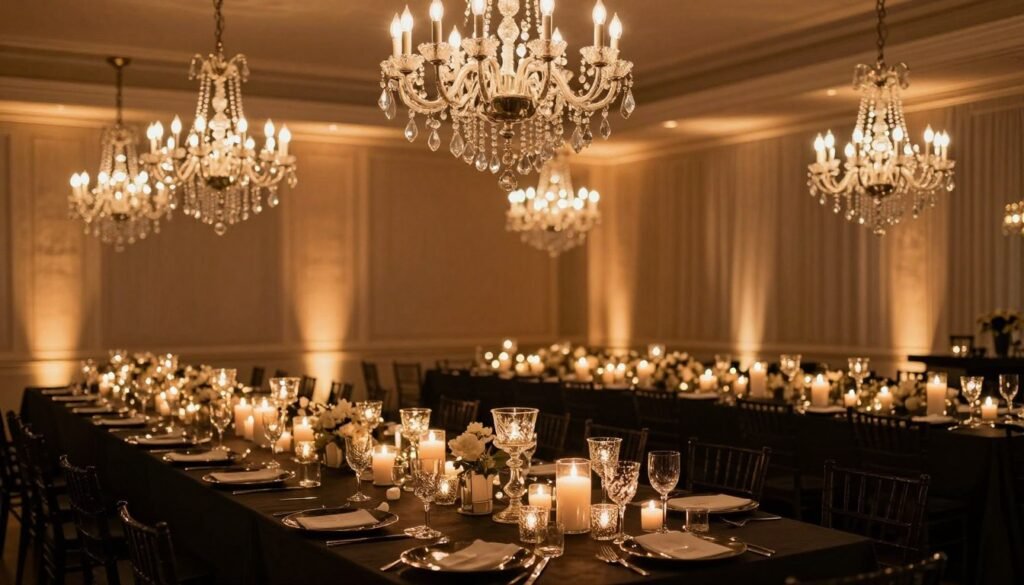
Lighting transforms a space into a true black tie venue. Crystal chandeliers provide ambient elegance, pin‑spotting highlights your focal pieces, and layered uplighting adds depth to architecture. Warm golden tones read more inviting and flattering than stark white light.
Candlelight adds essential intimacy—use hurricane‑protected pillars or enclosed votives where venues require flame containment. Always check venue fire rules before planning large candle installations.
Quick example: pair velvet runners with silk napkins and gold flatware to create a tactile, luxurious tablescape that photographs beautifully beneath chandelier glow.
How to Design Black Tie Wedding Décor That Feels Luxurious
Successful black tie wedding décor begins with the venue—your location sets the tone for every design decision. Grand ballrooms instantly read formal with high ceilings and ornate details; historic estates bring character and history; luxury hotels offer built-in polish and staff experience. Choose a venue that complements your aesthetic so your décor enhances, not competes, with the architecture.
Country estates and manor houses provide privacy and character, while luxury hotels simplify logistics and often require fewer décor upgrades. Whatever you choose, confirm rigging, lighting capabilities, and fire-code restrictions early so your plan for chandeliers, ceiling draping, or abundant candles is feasible.
Creating a Cohesive Formal Color Palette

Your color palette dictates the entire look. Classic black-and-white offers maximum drama; add gold for warmth, silver for cool sophistication, or champagne for softer warmth. Use silk or satin linens and consistent metallic accents to maintain a formal, unified aesthetic from invitations through reception tables.
Stick to the palette: carry it through linens, florals, printed goods, and even cocktail napkins. This disciplined approach creates a cohesive visual story that reads as intentional and elevated.
Essential Palette Considerations
- Limit to three primary colors maximum
- Choose one metallic accent (gold, silver, or rose gold)
- Account for permanent venue colors (walls, drapery, carpet)
- Always test swatches under venue lighting before ordering
- Apply the palette consistently across printed materials and signage
Mastering Layered Tablescapes
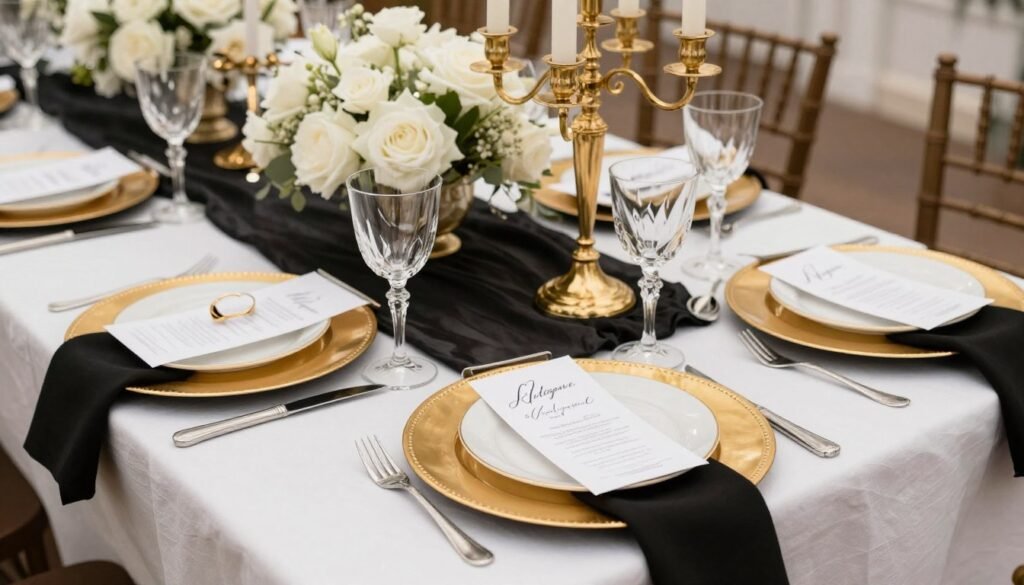
Layered tablescapes give black tie receptions their refined depth. Start with premium linens (silk or satin where possible), add charger plates, stack plates for dimension, and include full stemware for water, wine, and champagne. Cloth napkins in your accent color complete the tactile experience.
Gold charger plates immediately elevate a setting. If buying is expensive for your guest count, rent chargers and gold flatware to achieve the look affordably; buy only if you’ll reuse them. Prioritize quality chargers that withstand service and photograph well under candle and chandelier light.
Statement Lighting Strategy
Allocate a meaningful portion of your décor budget to lighting—well-planned illumination makes everything else sing. Chandeliers create overhead drama, uplighting sculpts walls, and pin‑spotting highlights focal points like the sweetheart table or the cake. Warm, golden lighting flatters skin tones and textiles more than harsh white light.
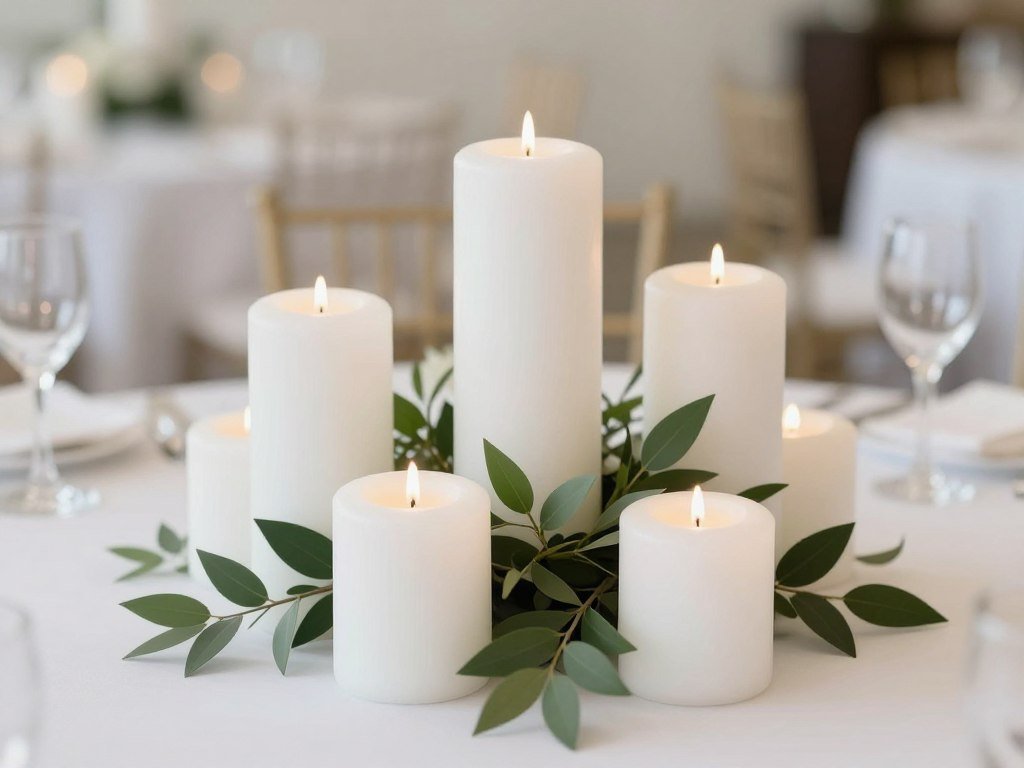
Candlelight remains essential for intimate ambiance. Mix pillar candles, taper candles, and votives at varying heights for layered glow, but always use hurricane glasses or enclosed votives where venues require flame containment. For safety and convenience, consider LED candles in secondary areas while keeping real flames at focal tables if permitted.
Avoiding Casual Elements
Certain décor choices contradict black tie formality. Steer clear of rustic materials like burlap, twine, and mason jars, and avoid chalkboard signage or casual kraft paper that undermines an elevated tone. Similarly, overly bright or primary colors will dilute the refined palette—reserve bolds for modern or themed alternatives, not classic black tie styling.
Before finalizing purchases, hold a short vendor review: confirm rentals (chairs, chargers), test linens in venue lighting, and ask your florist to present structured or symmetrical floral options that suit formal tables. This way you invest in items that make the biggest visual impact for your wedding day.
40 Black Tie Wedding Décor Ideas
These curated black tie wedding décor ideas cover ceremony styling, reception tablescapes, lighting, florals, and finishing details. Each suggestion preserves the formal elegance of a black tie celebration while offering ways to personalize the look for your wedding day.
1. Dramatic Draped Ceiling Treatment

Radiating fabric draping creates an intimate canopy in large ballrooms; white silk or chiffon catches chandelier light beautifully and adds architectural drama above your reception.
2. Monochrome Ceremony Aisle
Line the aisle in alternating black and white—black velvet runners with white rose petals or tall white arrangements on black pedestals make a powerful monochrome statement for the ceremony.
3. Mirrored Reception Tables

Mirrored tabletops amplify centerpieces and candlelight, creating doubled sparkle and a contemporary layer of glam that still reads formal and refined.
4. Floor-to-Ceiling Floral Installation
A wall of white blooms behind the sweetheart table becomes a show-stopping backdrop and photo moment—ideal for couples who want a dramatic floral focal point.
5. Crystal Chandelier Centerpieces

Mini crystal chandeliers suspended over tables catch light from every angle—surround bases with low florals and votives so guests can converse easily beneath them.
6. Black Velvet Aisle Runner
Swap a white runner for black velvet to create contrast that makes the bridal gown pop; velvet photographs luxuriously and adds a tactile sense of formality to processional moments.
7. Gold Chiavari Chairs
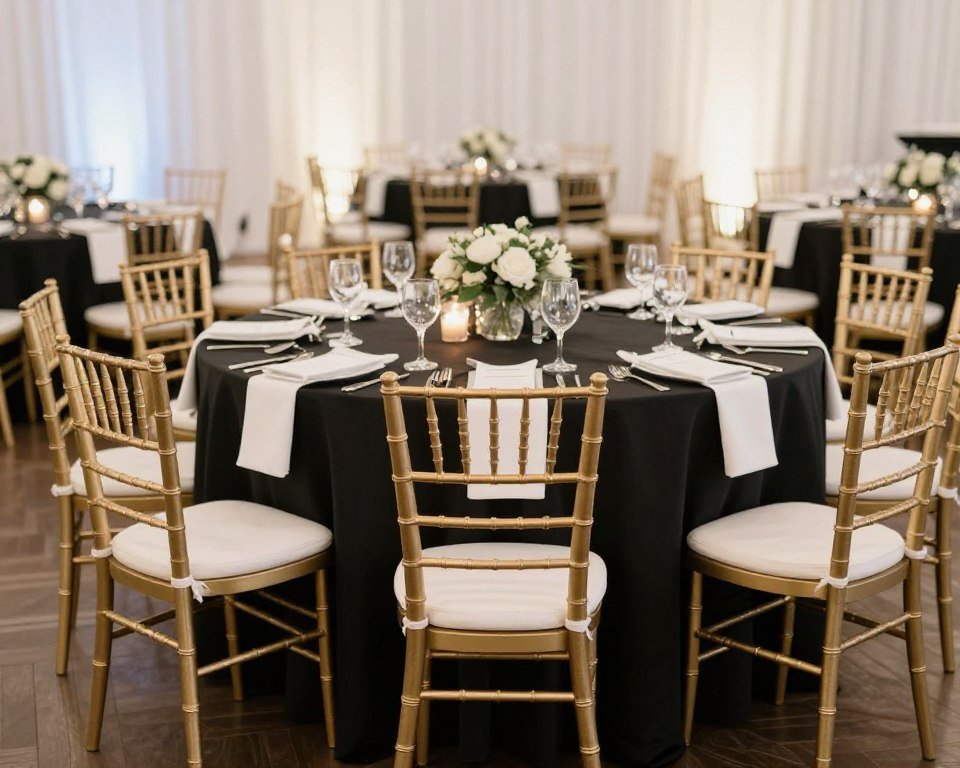
Gold Chiavari chairs add instant polish to seating and coordinate beautifully with gold flatware and charger accents for a cohesive formal tablescape.
8. Tall Taper Candle Groupings
Group tapered candles at varying heights for vertical drama. Shop or rent elegant taper holders in mixed metals to add texture—rentals are a practical way to get a coordinated look for the full guest count.
9. White Orchid Installations
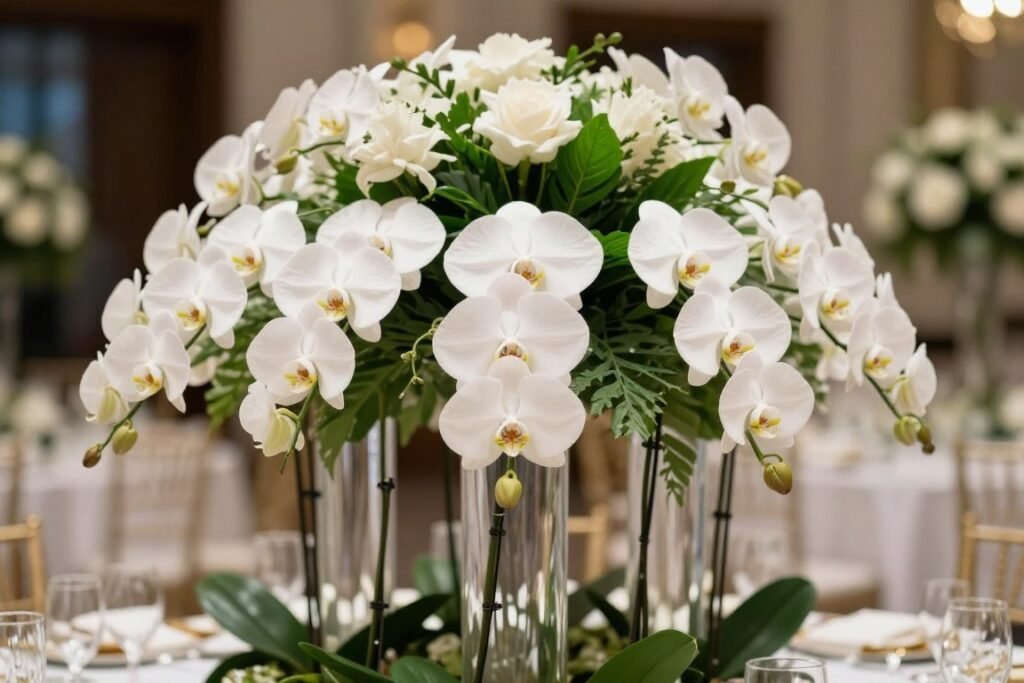
Phalaenopsis orchids read formal and sculptural; tall clear vases showcase stems and offer a clean, refined centerpiece option that lasts through long receptions.
10. Acrylic Ghost Chairs
Acrylic ghost chairs keep sightlines open and introduce modern elegance without visual weight—great for highlighting centerpieces and maintaining a sleek reception aesthetic.
11. Champagne Linen with Black Accents
Champagne linens softened by black napkins or runners create a warm, formal palette that’s less stark than black-and-white but just as refined.
12. Suspended Floral Installations

Hanging florals create ethereal, table-free focal points—ideal for maximizing table conversation while adding vertical interest and a sense of wonder.
13. Black Satin Table Runners
Black satin runners over white cloth add sheen and definition to banquet tables and reinforce the monochrome palette with elegant texture.
14. Gold Geometric Centerpiece Vessels

Polished gold geometric vessels add contemporary structure to classic white florals—combine with low candles for a modern yet formal tablescape.
15. White Uplighting on Draped Walls
Soft white uplighting on draped walls adds dimension and warmth, transforming plain surfaces into elegant reception backdrops.
16. Crystal Beaded Chargers
Crystal-beaded chargers introduce subtle sparkle at each place setting; rent sets to keep costs manageable while preserving a high-end look across all tables.
17. Monochromatic Rose Arrangements
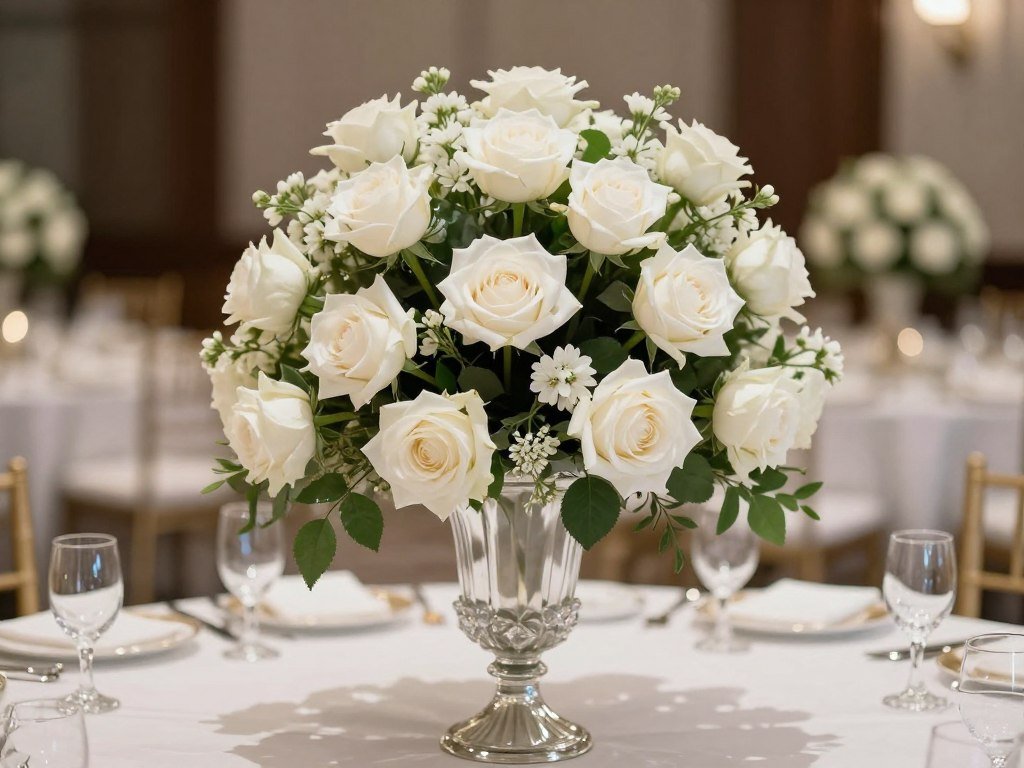
All-white rose domes remain timeless—mix garden and spray roses for texture and keep arrangements lush for maximum formal impact.
18. Black and White Striped Dance Floor
A bold black-and-white striped floor makes a graphic statement and draws guests to the dance floor; it photographs beautifully and becomes a memorable reception feature.
19. Cascading Crystal Garlands
Drape crystal bead strands from chandeliers toward tables to create a waterfall of sparkle that links ceiling décor with tabletops below.
20. Tall White Gladiolus Arrangements

Gladiolus add vertical drama with fewer stems; pair with silver or mercury-glass vessels for a formal, elongated centerpiece.
21. Gold-Rimmed Glassware
Gold-rimmed goblets and flutes tie into metallic accents and add a refined detail to every place setting.
22. Black Napkins with Gold Rings

Black cloth napkins with gold napkin rings are a small touch that provides consistent polish at each seat.
23. Candlelit Ceremony Aisle
Use pillar candles in hurricane glasses to line the aisle—protected flames give glowing ambiance without violating venue fire rules. Always confirm safety requirements before planning large candle installations.
24. White Hydrangea Clouds
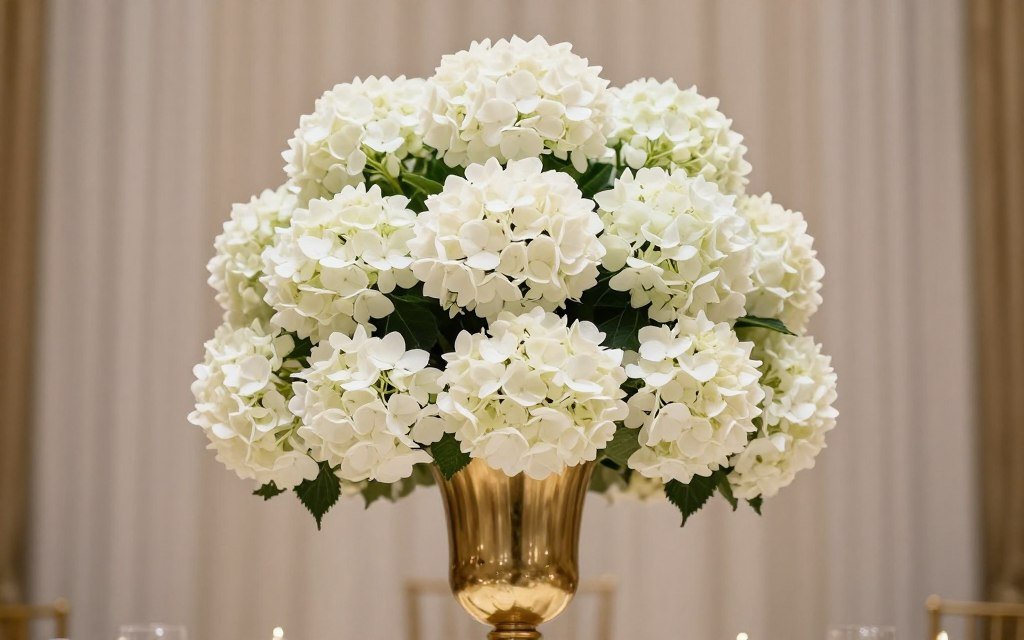
Hydrangeas create voluminous, cloud-like centerpieces that fill space affordably; elevate them with gold compotes for formal polish.
25. Mirrored Table Numbers
Place table numbers on small mirrored stands to add subtle glamour while maintaining readability and cohesion with metallic accents.
26. Champagne Tower Display
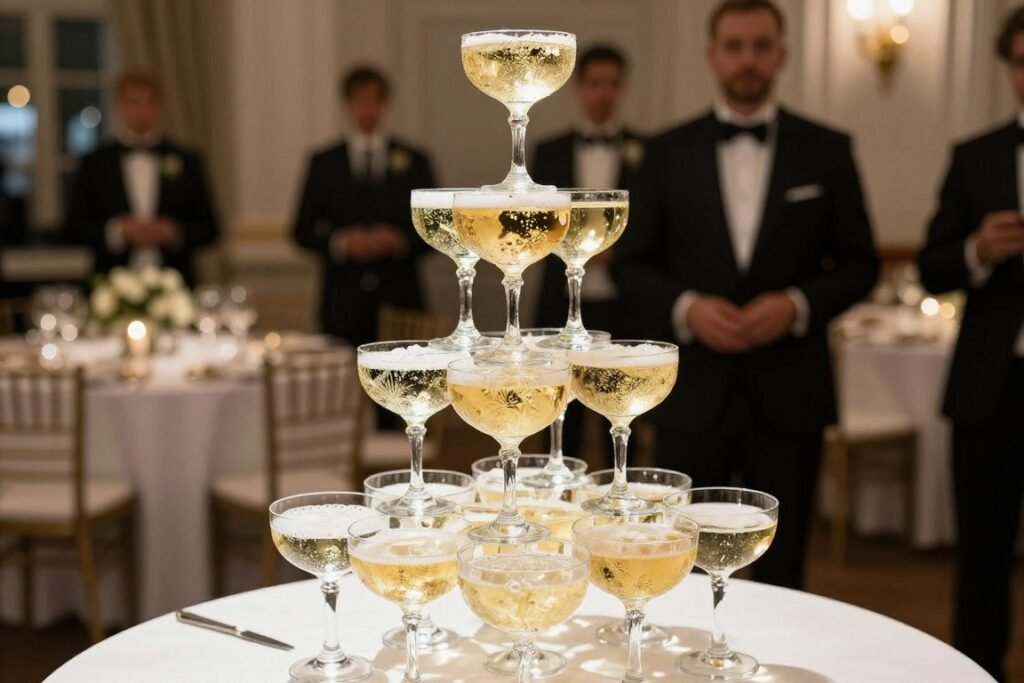
A champagne tower creates a ceremonial reception moment—coordinate with venue staff for safe setup and consider a staged photo moment to highlight the cascade.
27. Black Accent Wall Draping
Use black draping behind the head table for dramatic contrast; offset with pin-spotting so the backdrop reads elegant rather than heavy in photos.
28. Crystal Candelabras
Five-arm crystal candelabras provide vertical interest and light reflection—rent them for broad coverage across tables without the storage commitment of buying.
29. White Amaryllis Blooms

Amaryllis offer architectural blooms that make a statement with minimal stems—perfect for modern formal arrangements.
30. Gold-Leafed Menus
Add gold-foil or gold-leaf details to menus and place cards to echo metallic accents and enhance the tactile luxury of printed pieces.
31. Black-Framed Seating Chart
Display the seating chart in an ornate black frame with gold or white calligraphy for a functional piece that reads as décor at the reception entrance.
32. White Tulip Centerpieces
Simple white tulips in clear cylinders provide refined, seasonal centerpieces that align with modern black tie aesthetics.
33. Gold Flatware Complete Settings
Complete gold flatware sets elevate the multi-course experience—rent if budget or storage makes purchasing prohibitive, or buy for a keepsake you’ll reuse.
34. Black and White Photo Display

A gallery of black-and-white engagement photos in matching frames adds intimacy while keeping the display consistent with your palette.
35. Illuminated White Columns
Lit white columns frame ceremony altars or reception entrances and provide an architectural focal point that guides guest attention.
36. Mercury Glass Bud Vases
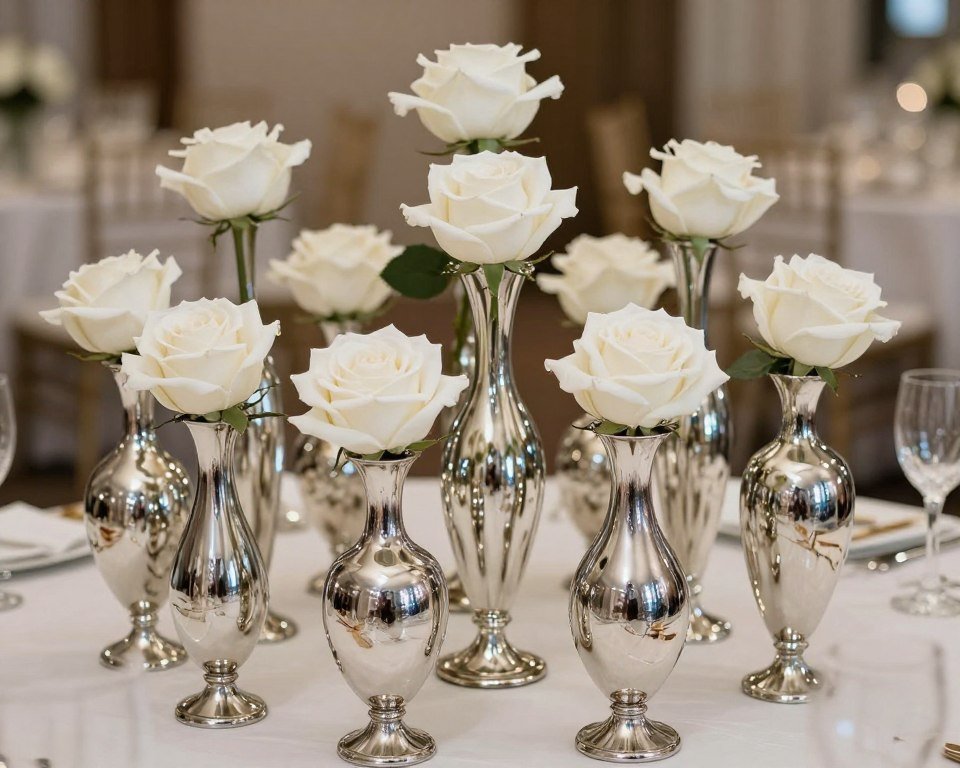
Cluster mercury glass bud vases at varying heights for affordable shimmer; choose mixed sizes to build layered, reflective table groupings.
37. White Leather Guest Book
A white leather guest book with gold embossing doubles as a keepsake and a style touch that coordinates with the rest of your stationery and place settings.
38. Black Table Linens with White Centerpieces

Invert the usual scheme with black tablecloths and all-white centerpieces to create high-contrast, photographically rich tablescapes.
39. Crystal-Embellished Cake Stand
Display the wedding cake on a crystal-embellished stand to continue the sparkle theme from chandeliers down to the dessert table.
40. Gold-Foiled Place Cards

Hand-calligraphed place cards with gold foil detail are a refined finishing touch that shows guest consideration and ties together metallic accents across the room.
Black Tie Wedding Table & Centerpiece Ideas
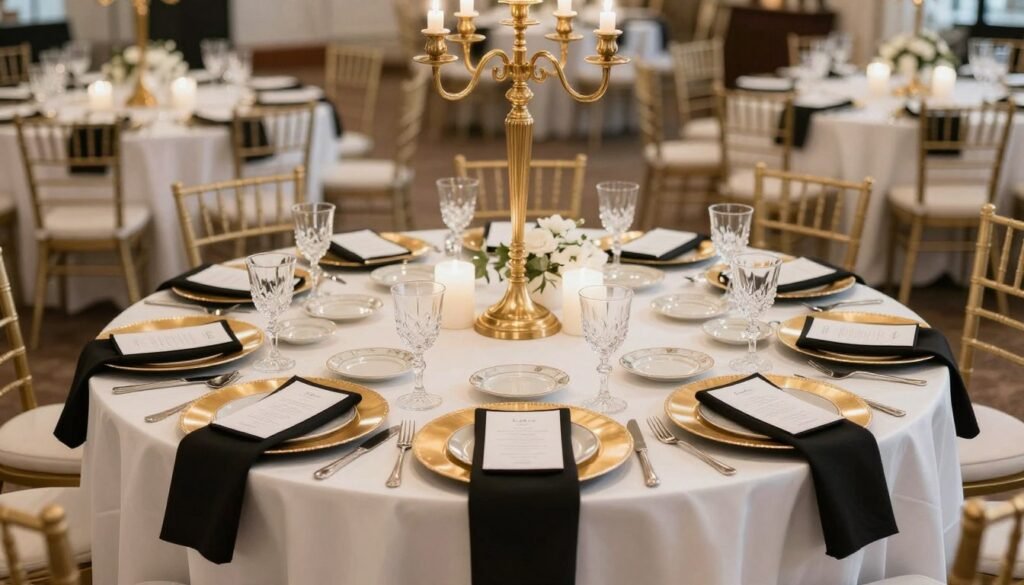
Your reception tables create the guest experience—black tie tablescapes require attention to every layer. Start with premium linens (silk or satin when the budget allows), add chargers for dimension, include full stemware and flatware, and finish with a statement centerpiece that reads formal from every seat.
Tall Versus Low Centerpiece Strategies
Tall centerpieces add drama and help ballroom ceilings feel loftier; aim for designs above ~24 inches when safe rigging and sightlines permit. Alternate tall and low arrangements across the room to create visual rhythm so guests aren’t blocked from conversation or photos.
Low centerpieces encourage intimate conversation—keep them below ~14 inches for unobstructed sightlines at rectangular or square tables. Many couples mix both heights: tall at key focal tables (head table, sweetheart table) and low on guest tables for balance.
Structured Floral Design Principles
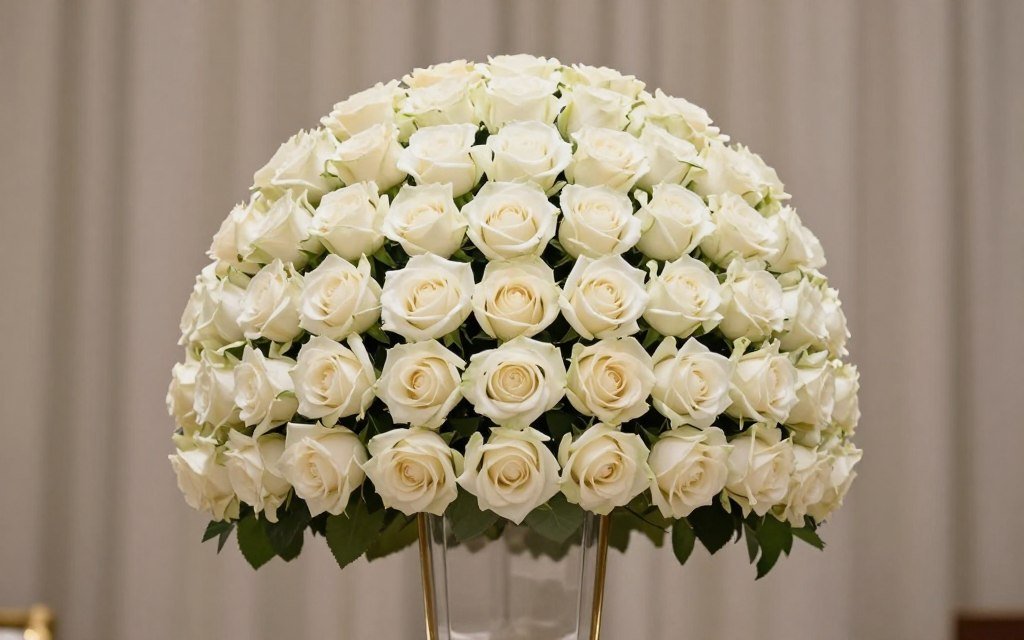
Black tie florals favor structure and symmetry over loose garden styling. Classic round domes read formal and polished; linear arrangements lend modern elegance. Ask your florist for structured designs that read well from all angles and photograph consistently across the room.
Keep color disciplined: monochromatic white arrangements are fail-safe, or introduce a single deep accent (burgundy, navy) sparingly. Avoid rainbow mixes that dilute the formal palette—less variety often creates more impact for a black tie wedding.
Candelabras and Taper Candle Displays
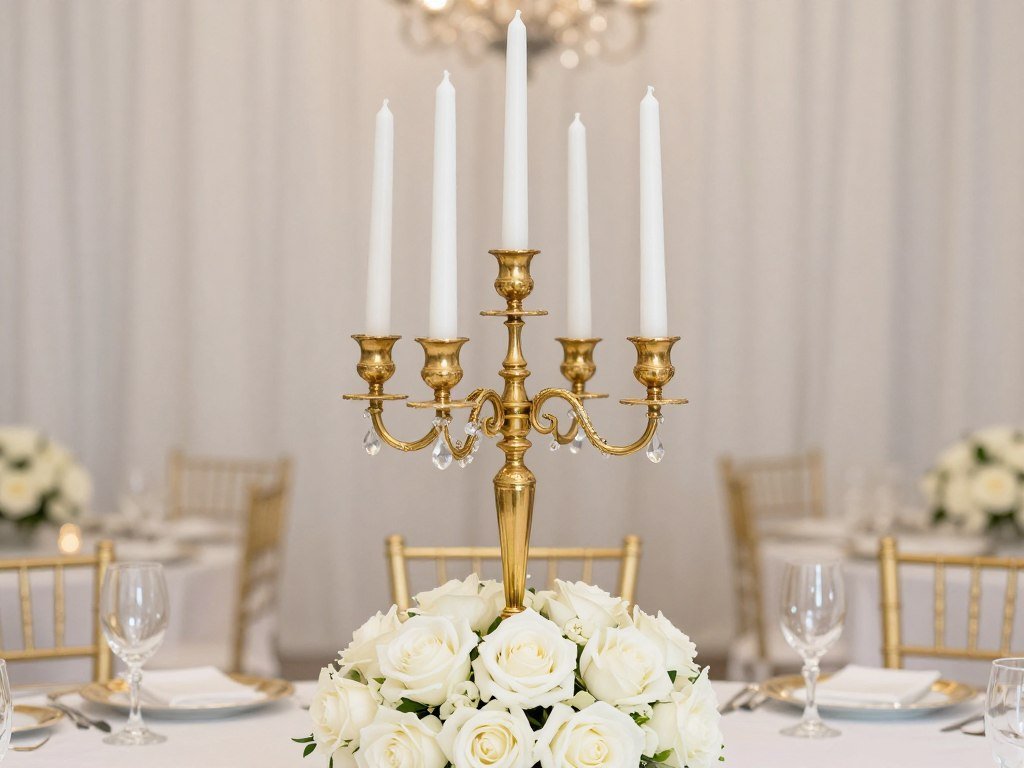
Candelabras instantly elevate tables—five-arm gold or crystal versions provide balanced proportion and reflect candlelight beautifully. Crystal candelabras offer maximum sparkle while metal finishes coordinate with other gold or silver accents.
Taper candles at varied heights create affordable vertical drama. Shop or rent coordinated gold taper candle holders in multiple heights to achieve a layered look without buying sets outright. Mix pillar candles with tapers (use hurricane glass or enclosed votives where venues require flame containment).
Tip: renting chargers, candelabras, or holders is often the most cost-effective way to outfit a large number of guest tables while keeping a cohesive, high-end appearance.
Charger Plates and Glassware Upgrades

Charger plates instantly formalize a place setting—gold brings warmth, silver lends cool sophistication, and glass or crystal chargers add subtle texture. Renting chargers keeps costs down for one-night events; purchase only if you’ll reuse them or want a keepsake.
Upgrade glassware to full sets (water goblet, wine glass, champagne flute) for a refined dining experience. Crystal stemware refracts light and adds sparkle, especially under chandelier and candle glow. Match glassware styles across all tables for visual cohesion.
Material checklist for a formal table: premium linen, charger, china, complete flatware set, coordinated stemware, cloth napkin. For a long banquet table, run continuous centerpieces or a rhythmic series of identical low arrangements; for round tables, alternate tall and low pieces to maintain sightlines and interest.
Black Tie Wedding Color Palette Ideas

Your color palette defines the black tie wedding aesthetic. The most successful formal celebrations limit themselves to two or three complementary tones—this discipline creates the cohesive, sophisticated look that separates black tie styling from more casual wedding themes.
Classic Black and White
Timeless and dramatic, black paired with crisp white gives maximum contrast and photographs beautifully. Sample pairing: black linens, white roses, and silver-rimmed glassware for a highly polished tablescape.
Balance the two tones so the room feels celebratory rather than somber—use more white overall and reserve black for accents like napkins, runners, or select décor pieces. White floral arrangements and linens keep the space luminous.
Black, White, and Gold

Adding gold to black and white brings warmth and luxurious sheen. Sample pairing: white silk linens, black satin runners, and gold flatware for a rich, formal tone that flatters evening lighting.
Vary gold finishes for depth—brushed gold for subtlety, polished gold for shine, or rose gold for a soft blush undertone. Choose one gold tone and repeat it across chargers, candle holders, and accents to keep the palette cohesive.
Black and Champagne
Champagne softens the palette while maintaining formality—this warm alternative to stark white feels romantic without losing sophistication. Sample pairing: champagne linens, black napkins, and amber-hued uplighting for a glowing reception atmosphere.
Layer multiple champagne tones (pale to deeper) for dimensional interest and add black elements through chairs or select centerpiece vessels. Gold accents complement champagne beautifully when used sparingly.
White and Silver

White and silver create a cool, modern palette—silver chargers, mercury glass, and crystal elements give a luminous, contemporary feel. Sample pairing: white linens, silver chargers, and crystal chandeliers for a winter-perfect aesthetic.
This palette is especially successful for winter weddings; icy tones and crystal accents create a luminous atmosphere that photographs with elegant clarity.
Deep Jewel Tones with Black
If you want richer color while keeping formality, use deep jewel tones as accents. Emerald, sapphire, or burgundy paired with black and white provide seasonal richness without overwhelming the formal aesthetic. Sample pairing: black linens, white roses, and deep jewel-toned napkins or a dramatic floral focal installation.
Jewel-toned florals against white make striking contrast; ground bold color choices with black linens and unify with consistent metallic accents like gold.
Palette Selection Tip: Always test your chosen colors inside your venue under both natural daylight and evening lighting. Colors shift dramatically under different light sources—what looks perfect during a daytime tour may read very differently during your evening reception.
Budget vs Mid-Range vs Luxury Black Tie Wedding Décor
Black tie styling can be achieved at many budget levels. Thoughtful trade-offs and strategic investments let you deliver a formal, elevated look whether you’re working with a modest or lavish budget. Note: budgets vary widely by region and guest count—treat the ranges below as approximate examples and request local vendor quotes for accurate pricing.
Budget-Conscious Black Tie Styling (~$3,000–$6,000)
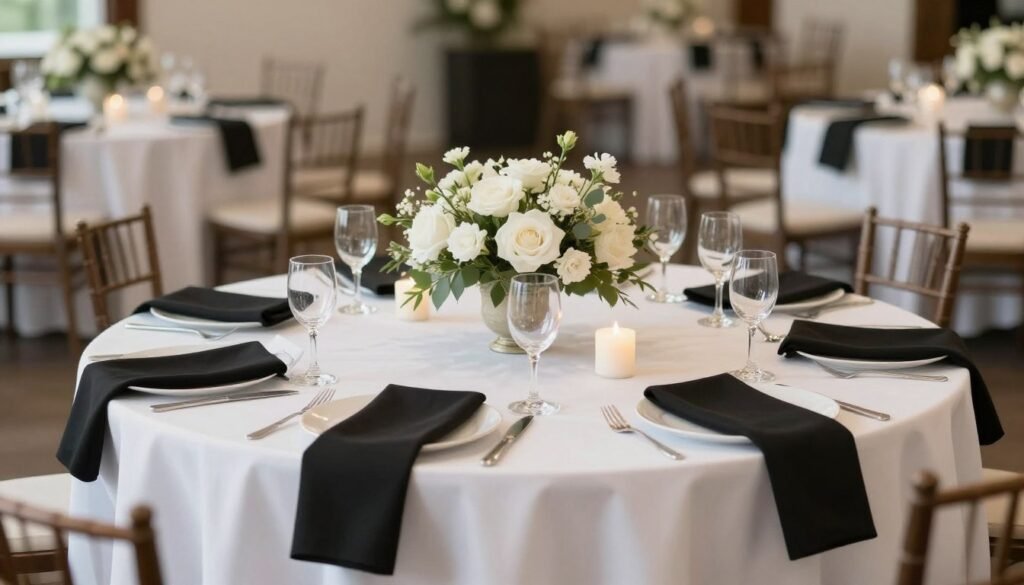
Focus spending on what guests touch and see up close. Quality linens and well-pressed tablecloths create an immediate luxe impression. Simple, repetitive centerpieces—tall cylinders with a single bloom or dense white carnations—keep cost down while reading formal. Floating candles in enclosed vessels add atmosphere without expensive mixed florals.
Budget-Friendly Décor Priorities
- Invest in linens over elaborate centerpieces
- Use abundant candlelight for atmosphere instead of costly lighting installs
- Make one statement floral area (ceremony or head table) rather than decorating every surface
- Rent metallic chargers or flatware rather than buying for one event
- Concentrate florals at the altar and head table
Mid-Range Black Tie Investment (~$6,000–$12,000)
This range lets you layer tablescapes with quality rentals: full sets of gold chargers at every seat, coordinated glassware, and multiple floral arrangements per table. Professional lighting (uplighting plus targeted pinspotting) begins to shape the venue architecture and lift the overall tone.
Mix tall statement pieces on some tables with lower lush designs on others to create depth without outfitting every table with high-cost tall installations. Prioritize focal areas—ceremony backdrop, head table, and dance floor surround—for the largest investments.
Luxury Black Tie Transformation (~$12,000–$30,000+)

At luxury budgets you can fully transform a venue: custom ceiling treatments with fabric and lighting, floor-to-ceiling floral installations, abundant premium blooms, and multiple crystal chandeliers or added fixtures. Professional lighting designers layer ambient, accent, and task lighting and can add gobos, monograms, or projection mapping for dramatic effect.
Premium florals appear throughout—grand entrance installations, dramatic ceremony backdrops, and overflowing reception centerpieces. This scale of investment changes the guest experience at every moment and creates those signature black tie wedding images.
Budget Allocation Guide (designer guideline): A common distribution is ~40–50% to florals, 20–25% to lighting, 15–20% to rentals (linens, chairs, tableware), and 10–15% to signage and finishing details. Use this as a starting point and adjust based on venue constraints and the elements that matter most to you.
How to scale with guest count: As guest count rises, floral and rental costs typically increase proportionally—if your guest list grows by ~25%, budget at least an additional 20–30% for florals and rentals as a rough estimate. Always request itemized vendor quotes for accurate scaling.
Materials That Make Black Tie Wedding Décor Look Expensive
Material choices distinguish truly elegant black tie weddings from attempts that fall short. High-quality fabrics, reflective surfaces, and thoughtful finishes communicate luxury through both touch and light—mix matte and shiny textures for layered depth.
Velvet and Satin Linens
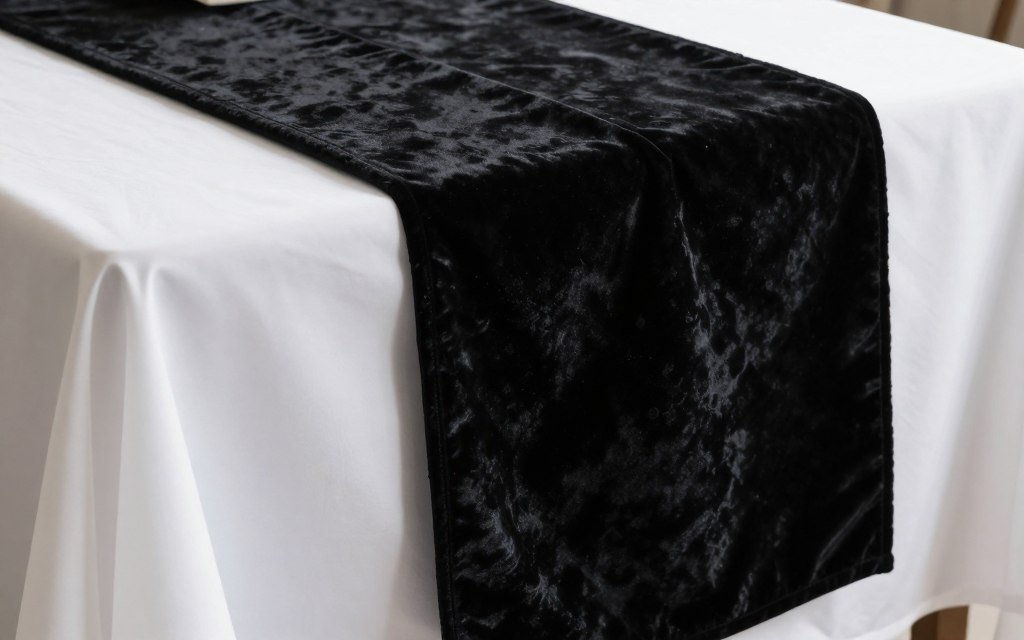
Velvet runners and satin linens instantly read luxe—their rich texture and light interaction elevate a table more effectively than standard polyester. Use velvet runners over satin tablecloths for contrast, or select silk napkins for a tactile, elegant finish.
Pro tip: rent velvet or satin if buying is cost-prohibitive; rentals give the same visual impact for a single event without storage concerns.
Crystal and Glass Elements
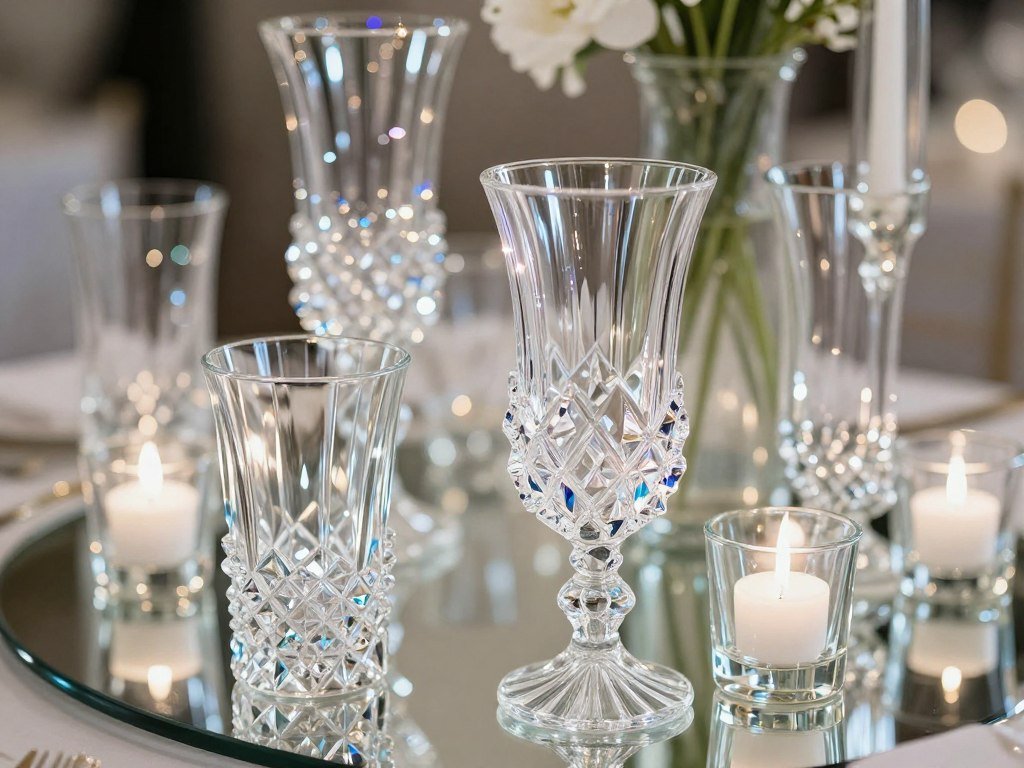
Crystal refracts light in a way few materials can: chandeliers create dramatic focal points, crystal vases lift centerpieces, and cut-stemware adds table-level sparkle. Clear glass cylinders showcase stems for a clean, modern look.
Mercury glass adds vintage shimmer and works beautifully for votives and bud vases—cluster varied sizes to build reflective layers across the table.
Ask your venue about rigging and load limits before planning heavy ceiling or chandelier installations to ensure safety and feasibility.
Gold and Silver Metal Accents
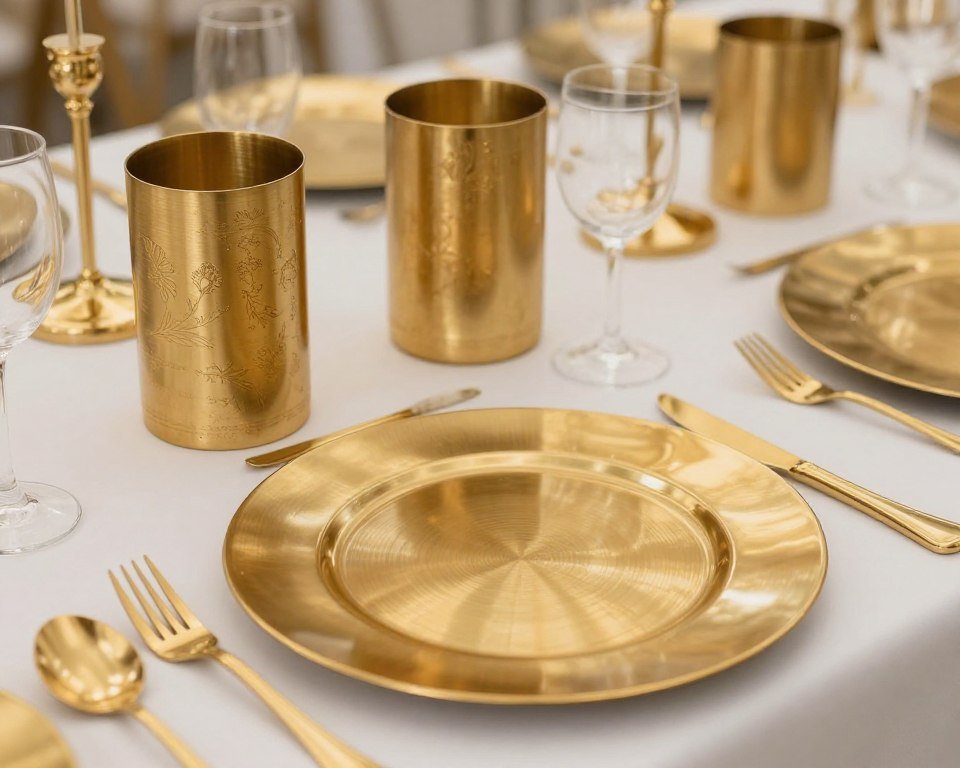
Metallics instantly telegraph luxury. Gold warms a palette and photographs beautifully; silver offers cool elegance; rose gold brings subtle romance. Choose one primary metallic and repeat it consistently across chargers, flatware, and candle holders.
Mix metals intentionally—warm tones (gold, brass) pair well together; cool tones (silver, chrome) coordinate smoothly. If you want variety, use one metal as the dominant finish and introduce another only as a minor accent.
Renting metallic pieces like candle holders or chargers is a practical way to achieve a cohesive high-end aesthetic without purchasing large sets.
Premium Floral Selections
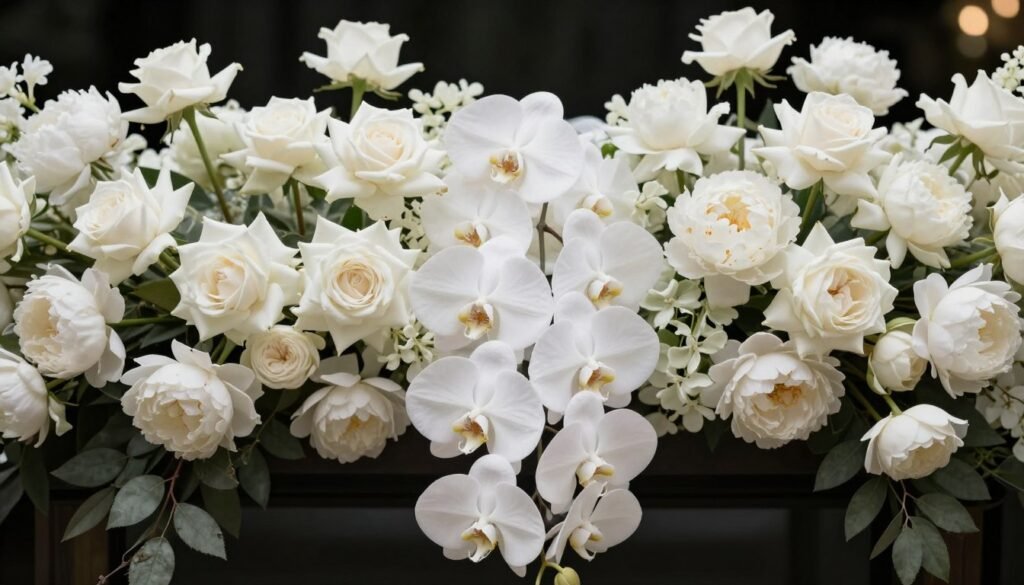
Certain blooms read luxurious by nature—peonies for fullness, orchids for sculptural elegance, garden roses for classic romance, and calla lilies for modern refinement. Large blooms create more visual impact per stem, helping florists achieve lush looks with fewer stems.
Discuss seasonal availability with your florist to balance cost and aesthetic—selecting peak-season premium blooms can be more budget-friendly than forcing out-of-season choices.
High-End Lighting Fixtures
Professional lighting transforms a venue: LED uplighting washes walls in your palette, pin‑spotting highlights centerpieces and the cake, and gobos or projections add custom patterns or monograms. String lights or market lights can create an intimate canopy when used at scale.
Crystal chandeliers remain a hallmark of black tie ambiance—their multifaceted drops refract light across the room and pair beautifully with candlelight for maximum sparkle.
Material Quality Checklist
Before purchasing or renting, ask these questions:
- Does this material reflect or absorb light in a flattering way?
- Will it photograph well under your planned lighting?
- Does the texture feel luxurious to the touch?
- Will it maintain its appearance throughout the event?
- Does it coordinate with other materials and finishes in the room?
- Is it appropriate for the season and venue constraints?
Modern vs Traditional Black Tie Wedding Décor

Black tie wedding décor can be interpreted in both traditional and modern ways. Clarifying which direction you prefer helps vendors deliver a cohesive aesthetic—both approaches remain formal, but they communicate elegance differently through shape, texture, and repetition.
Traditional Black Tie Characteristics
Traditional black tie leans on time‑tested elements: crystal chandeliers, gold ballroom chairs, lush floral arrangements, and round centerpieces in classic vessels. Example pairing: crystal candelabras, full white rose domes, and gold flatware for a timeless, opulent tablescape.
Symmetry and abundance define this style—mirrored arrangements, rows of matching tables, and layered place settings create order and visual harmony. In traditional black tie, more can be more when executed with high-quality materials and precise placement.
Modern Black Tie Styling Evolution
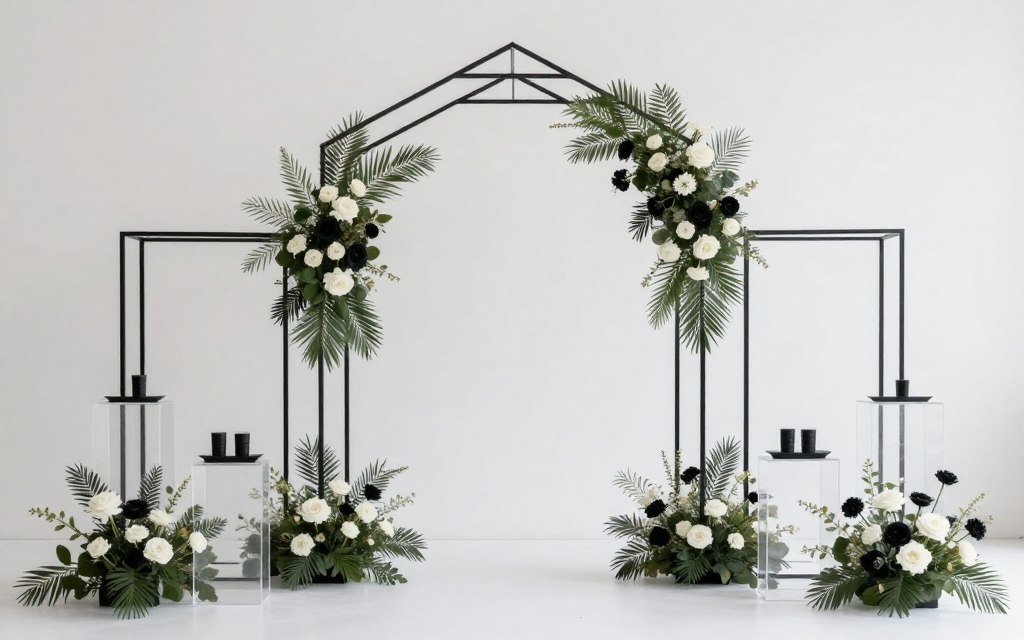
Modern black tie pares back excess while keeping formality intact. Clean lines, geometric vessels, and strategic negative space replace ornate fills. Example pairing: geometric gold vessels with single-variety white roses and acrylic seating for a sleek, contemporary tablescape.
Minimalist centerpieces and intentional asymmetry can read formal when made from premium materials and arranged with precision—quality and restraint are essential to prevent the look from feeling unfinished.
Contemporary Venue Adaptations
Non-traditional venues—industrial lofts, art galleries, or modern event spaces—work well with contemporary black tie. Let exposed brick, polished concrete, or city views act as part of the décor; enhance these features with refined lighting and high-end materials rather than covering them.
Work with your venue’s architecture: use minimal décor where views or features already provide drama. For example, floor‑to‑ceiling windows often need less ornamentation when the city skyline serves as a backdrop.

Mixing Modern Shapes with Formal Palettes
Pair modern forms with traditional palettes to bridge the two styles: geometric metal vessels filled with classic white roses marry contemporary shape with formal color. Acrylic furniture or ghost chairs maintain sightlines while keeping the focus on upscale materials and florals.
Asymmetry can work in black tie when executed deliberately—use it selectively alongside repeated elements to preserve cohesion and formality.
Keeping Black Tie Feeling Fresh

Update black tie touches without losing formality: swap polished gold for brushed brass, trade heavy round centerpieces for linear sculptural pieces, and choose modern typography for printed materials. These subtle swaps keep the wedding look current yet unmistakably formal.
Integrate technology thoughtfully—digital seating charts should have a printed alternative for guests who prefer physical copies, LED candles can replace open flames where venues restrict real flames, and projection mapping offers a modern ceiling treatment that doesn’t add physical décor clutter.
Ultimately, the best black tie wedding décor reflects your personal aesthetic while honoring the formality the dress code demands. Whether you favor traditional opulence or a modern, streamlined approach, keep materials, color palette, and repetition consistent to create a cohesive, sophisticated look.
Designer Tips for a Truly Elegant Black Tie Wedding
Professional designers rely on a few reliable principles to elevate black tie wedding décor from pretty to unforgettable. These insider strategies help you make choices that maximize impact while keeping the aesthetic cohesive and intentional.
Symmetry Creates Instant Formality

Symmetry reads as refined and orderly—mirror arrangements on either side of the ceremony aisle, center the head table, and space tall centerpieces evenly across the room. Example: matching candelabras flanking the altar create an immediate sense of formality.
Small details benefit from symmetry too: align place card displays, balance bar setups, and style gift tables with matching elements on both sides to reinforce the formal look.
Repetition Unifies Your Design
Repeat key elements throughout the venue to create visual rhythm. Carry the same color palette, vessels, or candle styles from ceremony to reception so guests experience a unified aesthetic.
Example: use the same floral variety in centerpieces, bouquets, and boutonnieres to tie areas together. Repetition helps guests move through the space comfortably and makes photos feel cohesive.
Palette Limitation Increases Impact
More colors can dilute sophistication. Limit your palette strictly—if you choose black, white, and gold, every element should fit those tones. Discipline creates the signature black tie look.
This is especially true for florals. White-only arrangements preserve purity; adding “just a touch” of color can undermine a monochromatic impact. If you include blush or jewel tones, commit to them and repeat them intentionally.
Train vendors to respect your palette—politely redirect suggestions that fall outside your chosen scheme so the final result remains cohesive.
Lighting Deserves Major Investment
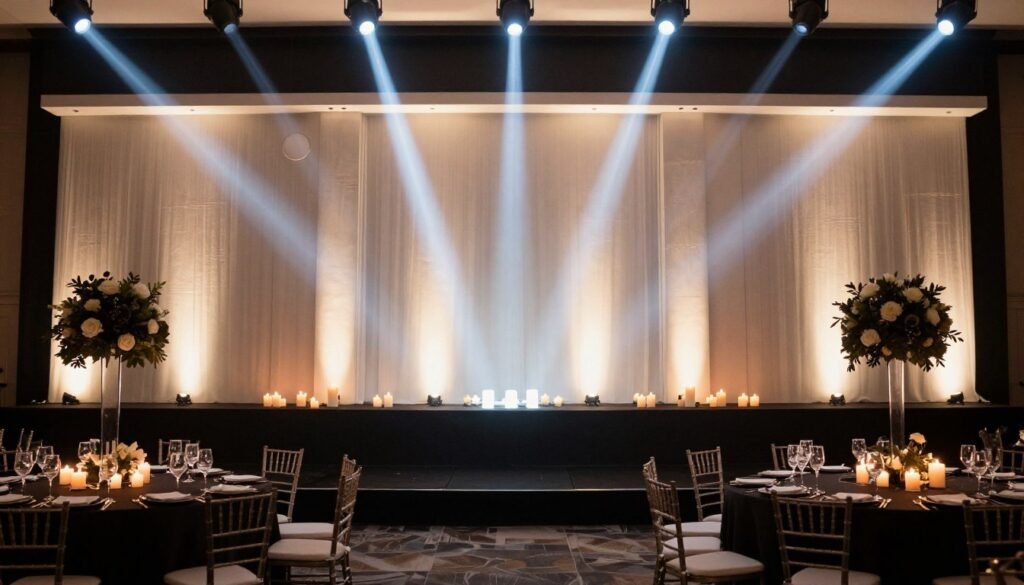
Lighting transforms a room—allocate meaningful budget here. Layer ambient, accent, and task lighting: chandeliers for general elegance, pin‑spotting for focal pieces, and uplighting to sculpt walls and colour wash the space. Professional lighting designers know how to balance these elements for a flattering tone.
Candlelight creates warmth that electric light alone can’t replicate. Use enclosed votives or hurricane glasses where venues require flame containment. For large events, bulk pillar candles can be economical—shop or rent quantities to match your table layout and safety rules.
Invest in Key Focal Points
Not every detail needs equal investment—identify focal points that appear in photos and receive extended guest attention and allocate budget accordingly. Typical focal points: the ceremony altar, entrance installation, head or sweetheart table, and the dance floor surround.
Focal point checklist (copyable): ceremony backdrop, head table arrangement, entrance installation, cake display, and dance floor treatment. Spend more on these and economize on less-visible areas to maximize perceived luxury.
Quality Over Quantity Always Wins
One spectacular centerpiece per table is better than several mediocre ones. Premium blooms in simple vessels or a single well-executed installation will read as higher-end than abundant but low-quality décor.
This approach also helps the budget: consider trimming guest count slightly to improve per‑person experience or choose fewer but taller centerpieces rather than small arrangements on every surface. Quality execution creates the perfect black tie impression.
Black Tie Wedding Décor FAQs
What colors are appropriate for black tie weddings?
Short answer: restrained, sophisticated palettes. Classic options include black and white, black with champagne, or white with gold or silver metallics. Deep jewel tones (emerald, sapphire, burgundy) work well as accent colors when paired with a black-and-white foundation. Avoid bright primaries or rainbow mixes—monochromatic or limited palettes read most formal.
Are black tie weddings always expensive to decorate?
Short answer: no—style depends more on material quality and design discipline than total spend. Designer guideline: a modest black tie look can be achieved with ~$3k–$6k by prioritizing linens, rentals, and candlelight; mid-range budgets (~$6k–$12k) allow layered tablescapes; luxury transformations often exceed ~$12k. Always get local vendor quotes—prices vary by region and guest count.
Can a black tie wedding be modern instead of traditional?
Short answer: absolutely. Modern black tie uses clean lines, geometric vessels, and restrained palettes while preserving formality. Contemporary elements—acrylic chairs, sculptural centerpieces, and minimal color—work particularly well in nontraditional venues like lofts or galleries; pair them with high‑quality materials to keep the aesthetic elevated.
What flowers work best for black tie décor?
Structured, premium blooms read most formal: roses, peonies, orchids, calla lilies, and hydrangeas. Large blooms create more impact per stem; monochromatic white arrangements are a reliable choice. Hire a florist experienced in formal, symmetrical designs rather than loose garden styling for the best black tie results.
Are candles essential for black tie style?
Short answer: highly recommended. Layered candlelight—pillars, tapers, and votives—creates the warm, intimate ambiance associated with black tie receptions. As a rough guideline, budget $200–$500 for sufficient candles at a medium-size event, and always confirm venue rules about open flames (use enclosed hurricanes or LED alternatives where required).
How do you avoid making black décor feel dark or depressing?
Balance black accents with abundant white and layered lighting. Use black sparingly (napkins, runners, accent walls) and rely on warm uplighting, mirrored or crystal elements, and candlelight to reflect light. Aim for layered illumination rather than relying on color alone to keep the space inviting.
What’s the difference between black tie and formal wedding décor?
Black tie is the most elevated level of formal décor—greater emphasis on premium materials (silk, velvet, crystal), strict palette discipline, symmetrical design, and meticulous lighting. Formal weddings may be elegant without meeting the stricter material and execution standards that define black tie.
Do black tie weddings require professional decorators?
Not strictly, but professionals help realize the precision black tie demands. Designers manage proportions, symmetry, and vendor coordination—critical for complex elements like lighting, ceiling treatments, and large floral installations. If you DIY, at minimum hire pros for lighting and large-scale installs and keep simpler elements in-house.
Save These Black Tie Wedding Décor Ideas for Later

Planning a black tie wedding is an evolving process—save, pin, or download this guide to your preferred planning boards so you can reference palettes, tablescapes, and lighting as your vision develops. Create separate collections for ceremony styling, reception tables, and lighting to keep ideas organized.
These visual boards are useful communication tools for vendors. Share your selections with your florist, rental company, and venue coordinator so everyone understands your aesthetic and executes your vision precisely.
Start Your Black Tie Wedding Planning Board
Collect your favorite black tie wedding décor ideas—ceremony looks, reception tablescapes, lighting concepts, and color palettes—and share them with vendors to ensure a cohesive final result.
Black tie wedding décor is the signature of a formal celebration: disciplined color palettes, thoughtful material choices, layered lighting, and attention to detail create the perfect black tie moment your guests will remember. From invitations to the last dance, consistency and quality make your wedding day feel intentionally luxurious.
Before finalizing plans, confirm venue restrictions for candles, ceiling installations, and alcohol service so your designs are beautiful and permitted on the day.